U.
HomeRegionsLanguagesEmotionsCollections
Find Your Word

“The limits of my language mean the limits of my world.”

— Ludwig Wittgenstein, Philosopher

Untranslatable

A curated collection of the world's most beautiful expressions—words that remind us language is humanity's greatest invention.

  • Home
  • Collections
  • Regions
  • Countries
  • Emotions
  • Tags
  • Contexts
  • Finder
  • Europe
  • Asia
  • Americas
  • Africa
  • Middle East
  • About
  • Contact
  • Privacy Policy
  • Terms of Service

2026 © Untranslatable. All rights reserved.

    /
    /
    1. Home
    2. /
    3. Americas
    4. /
    5. Lei
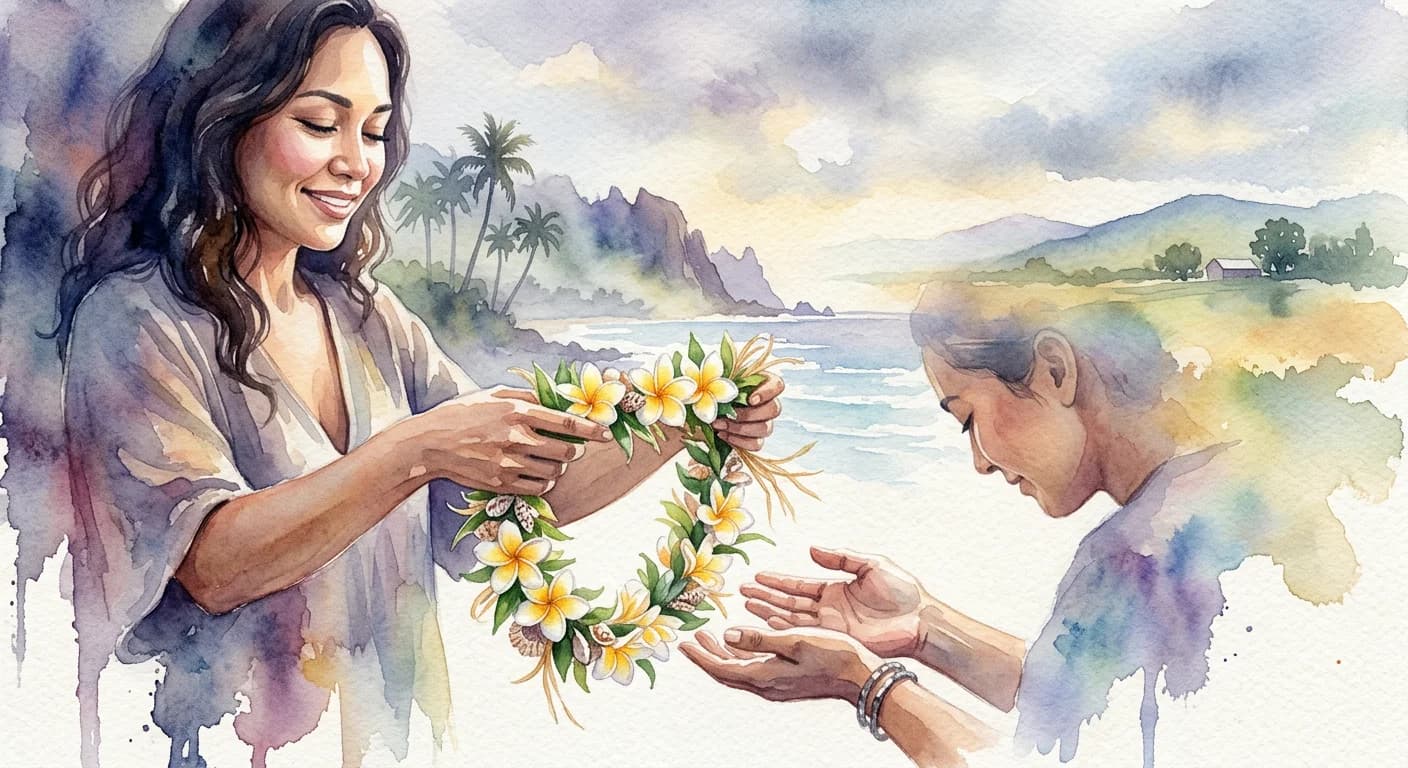
    Artistic representation of Lei
    Hawaiian•
    🇺🇸United States

    Lei

    /LAY/

    Meaning

    In Hawaiian culture, a 'lei' is a profoundly meaningful adornment, transcending a mere garland. It is a vibrant, living symbol of aloha – love, respect, affection, and welcome – meticulously crafted from flowers, shells, or feathers, each element imbued with specific significance. Receiving or giving a lei is a sacred exchange, often sealed with a kiss, forging a deep connection and embodying the shared spirit of warmth and interconnectedness that defines island life. This tangible expression of heartfelt emotion transforms simple adornment into a powerful cultural statement.

    Literal Translation

    garland

    The Story Behind the Word

    The concept of 'lei' is woven into the very fabric of Hawaiian society, reflecting a worldview deeply rooted in connection and reverence for nature. Historically, leis were worn by ali'i (royalty) to signify status and divinity, and by warriors for protection, but their universal embrace stems from the spirit of aloha. This practice predates Western contact, evolving from ancient traditions of offering natural beauty as a gesture of honor, peace, and celebration. The act of giving a lei embodies the Hawaiian value of 'ho'okipa' (hospitality) and 'mālama' (to care for), revealing a culture that prioritizes relationships, respect for others, and a harmonious connection to the land and sea from which the materials are gathered. It's a non-verbal language of belonging and appreciation.

    Experience It

    Welcome Home Lei

    A young woman steps off the plane, weary from her journey, but her mother is waiting with a fragrant plumeria lei. As it's gently placed around her neck, a kiss on the cheek accompanies the embrace, instantly washing away the fatigue with a wave of unconditional love and the comforting scent of home.

    Graduation Honor

    At his high school graduation, the proud student is adorned with multiple leis, each representing a different loved one or achievement. The weight of the flowers signifies not burden, but the collective pride and support of his 'ohana, celebrating his milestone and wishing him well on his future path.

    The Deeper Meaning

    The lei encapsulates the Hawaiian philosophy of 'aloha' and 'lokahi' – unity and harmony. It serves as a physical manifestation of the invisible bonds between people, between people and nature, and between the present and the ancestors. The transient beauty of the flowers reminds one of the preciousness of every moment and the importance of expressing love and appreciation now, fostering a deep sense of community and shared humanity.

    Did You Know?

    The 'lei' is so integral to Hawaiian identity that there's even a 'Lei Day' celebrated annually on May 1st, encouraging everyone to wear, make, and give leis.

    How It's Used

    A lei is typically given as a gift to honor someone, to welcome guests, to celebrate special occasions like graduations or birthdays, or as a symbol of love and friendship. It is often presented upon arrival or departure, and can be worn during ceremonies or simply as a gesture of affection.

    Emotions
    belonging,gratitude,love,warmth
    Contexts
    celebration,family,farewell,greeting
    🇺🇸United States

    by Annelise Dubois·Written Mar 10, 2026·Updated Apr 3, 2026

    Related Words

    Explore more
    GezelligDutch

    Gezellig encapsulates a profound sense of warmth, belonging, and convivial comfort, extending beyond mere coziness to embrace the social and emotional atmosphere. It's the feeling of being truly at ease, surrounded by good company, laughter, and a shared sense of contentment. This untranslatable term describes not just a physical space, but a holistic experience where time seems to slow down, fostering genuine connection and a deep sense of well-being.

    SobremesaSpanish

    Sobremesa is the cherished, often extended period immediately following a meal, particularly lunch or dinner, where diners remain seated at the table to enjoy conversation, coffee, and digest not just the food, but the company itself. It’s a dedicated time for unhurried social bonding, storytelling, and shared laughter, transforming a simple meal into a profound communal experience. Far from just clearing the dishes, sobremesa is an integral part of Spanish social life, often lasting for hours.

    Pura vidaSpanish

    More than just 'pure life,' "Pura vida" encapsulates a profound philosophy of embracing the present moment with unwavering optimism and gratitude. It's a daily commitment to finding joy in simple pleasures, accepting life's challenges with a positive spirit, and prioritizing well-being over material possessions. This ubiquitous phrase reflects a national identity built on resilience, community, and an deep appreciation for nature's bounty.

    MamihlapinatapaiYaghan

    Mamihlapinatapai encapsulates that profound, unspoken moment when two individuals lock eyes, each silently acknowledging a mutual desire or intention, yet both hesitate to be the first to act upon it. It's a delicate dance of anticipation, a shared gaze brimming with common understanding and a quiet longing for the other to break the ice. This intricate look carries the weight of a shared, uninitiated potential, a silent conversation where both parties are perfectly aware of what could happen, but neither makes the first move.