U.
HomeRegionsLanguagesEmotionsCollections
Find Your Word

“The limits of my language mean the limits of my world.”

— Ludwig Wittgenstein, Philosopher

Untranslatable

A curated collection of the world's most beautiful expressions—words that remind us language is humanity's greatest invention.

  • Home
  • Collections
  • Regions
  • Countries
  • Emotions
  • Tags
  • Contexts
  • Finder
  • Europe
  • Asia
  • Americas
  • Africa
  • Middle East
  • About
  • Contact
  • Privacy Policy
  • Terms of Service

2026 © Untranslatable. All rights reserved.

    /
    /
    1. Home
    2. /
    3. Americas
    4. /
    5. Tinku
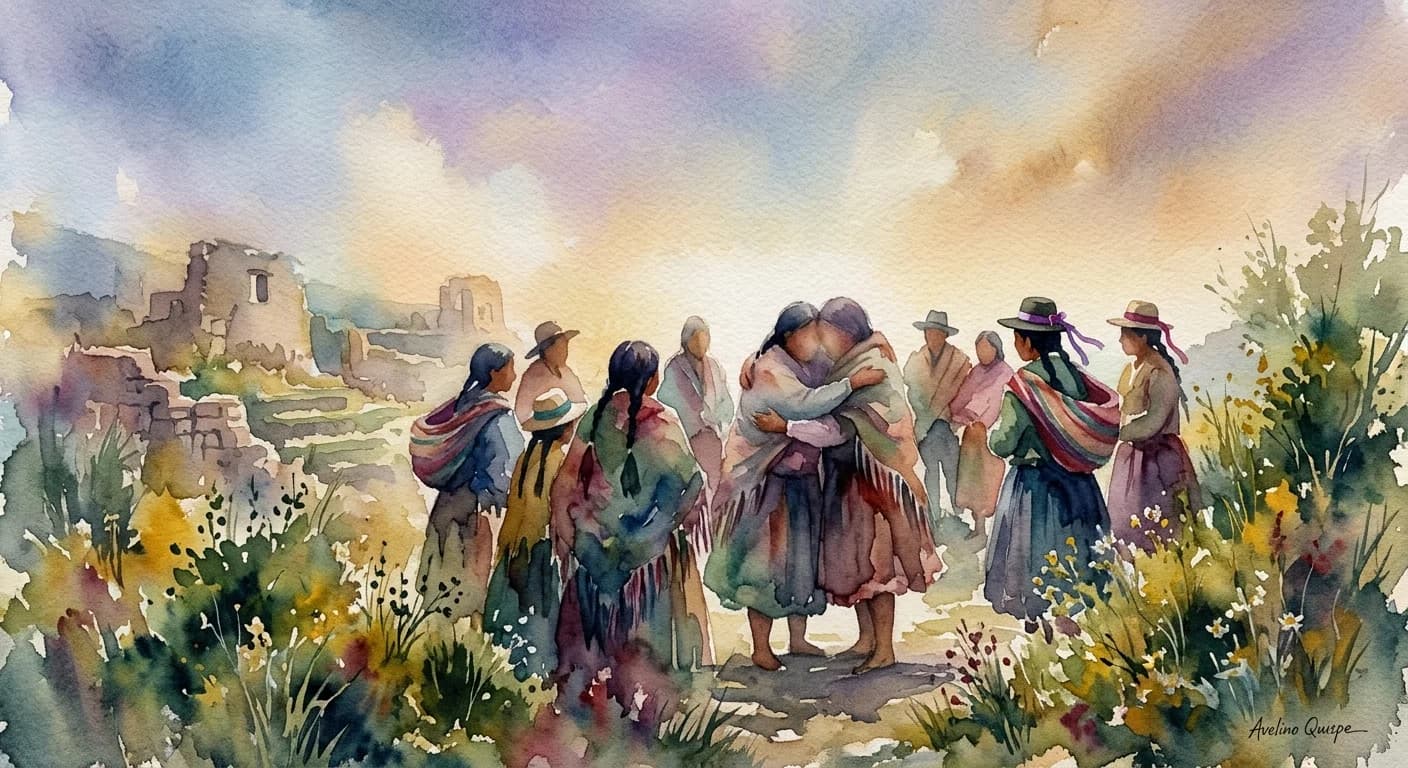
    Artistic representation of Tinku
    Quechua•
    🇧🇴Bolivia🇵🇪Peru

    Tinku

    /TEEN-koo/

    Meaning

    Tinku transcends a mere fight, embodying a sacred ritual combat deeply rooted in Andean cosmology, primarily observed during festivals in Bolivia and Peru. Participants, often from rival communities, engage in ritualized wrestling or fistfights, believed to be a vital offering of blood and energy to Pachamama (Mother Earth). This intense, cathartic exchange is understood to ensure agricultural fertility, good harvests, and communal well-being, simultaneously channeling collective energy and resolving underlying social tensions through a controlled, yet often visceral, encounter.

    Literal Translation

    Meeting or encounter

    The Story Behind the Word

    Tinku's existence is deeply intertwined with the Andean worldview, where reciprocity (Ayni) with nature and the divine is paramount. The ritual's origins are ancient, predating the Inca Empire, and reflect a cyclical understanding of life, death, and renewal. By offering blood and exerting physical energy, participants believe they are literally 'feeding' Pachamama, revitalizing her so she can in turn nourish humanity. It's a profound expression of communal identity and solidarity, where even conflict serves a greater purpose: to re-establish balance and reinforce the social fabric. The controlled violence isn't about destruction, but about a necessary expenditure of energy to guarantee prosperity and harmony with the cosmos.

    Experience It

    Festival Tinku Preparation

    In Macha, the men from different ayllus gather, their faces painted, bodies adorned with traditional clothing. They drink chicha, sharing stories and preparing themselves mentally and spiritually for the Tinku, knowing their collective effort will honor Pachamama and secure their community's future harvests.

    A Sacred Encounter

    Amidst the pulsating rhythm of drums and flutes, two men from opposing villages step into the designated circle. Their fists fly, a blur of controlled aggression, as the crowd chants. It's not personal animosity, but a symbolic clash for the land's fertility, watched over by elders and spirits alike.

    The Deeper Meaning

    Tinku reveals an Andean philosophy where conflict is not inherently negative but can be a necessary, even sacred, force for renewal and balance. It underscores a holistic worldview where human actions, even ritualized violence, directly impact the well-being of the natural world, emphasizing profound interconnectedness and reciprocity between humanity and Pachamama.

    Did You Know?

    Despite its intense nature, Tinku is often followed by communal feasting and dancing, symbolizing reconciliation and the renewed bond between participants and communities, reinforcing its role as a ritual of unity.

    How It's Used

    Tinku is used to describe the ritual combat and the festivals where it takes place, often accompanied by music, dance, and feasting.

    Emotions
    belonging,gratitude,joy
    Contexts
    celebration,community,seasons
    🇧🇴Bolivia🇵🇪Peru

    by Annelise Dubois·Written Mar 10, 2026·Updated Apr 3, 2026

    Related Words

    Explore more
    SobremesaSpanish

    Sobremesa is the cherished, often extended period immediately following a meal, particularly lunch or dinner, where diners remain seated at the table to enjoy conversation, coffee, and digest not just the food, but the company itself. It’s a dedicated time for unhurried social bonding, storytelling, and shared laughter, transforming a simple meal into a profound communal experience. Far from just clearing the dishes, sobremesa is an integral part of Spanish social life, often lasting for hours.

    Pura vidaSpanish

    More than just 'pure life,' "Pura vida" encapsulates a profound philosophy of embracing the present moment with unwavering optimism and gratitude. It's a daily commitment to finding joy in simple pleasures, accepting life's challenges with a positive spirit, and prioritizing well-being over material possessions. This ubiquitous phrase reflects a national identity built on resilience, community, and an deep appreciation for nature's bounty.

    JayusIndonesian

    Jayus describes that peculiar moment when a joke is so utterly devoid of humor, so poorly delivered, or so nonsensical that its very ineptitude triggers an involuntary, almost sympathetic burst of laughter. It's not laughter at the joke itself, but rather a reaction to the sheer awkwardness and the unexpected, delightful absurdity of someone failing so spectacularly to be funny. The humor stems from the meta-experience of witnessing a comedic train wreck, transforming discomfort into a shared moment of mirth.

    MamihlapinatapaiYaghan

    Mamihlapinatapai encapsulates that profound, unspoken moment when two individuals lock eyes, each silently acknowledging a mutual desire or intention, yet both hesitate to be the first to act upon it. It's a delicate dance of anticipation, a shared gaze brimming with common understanding and a quiet longing for the other to break the ice. This intricate look carries the weight of a shared, uninitiated potential, a silent conversation where both parties are perfectly aware of what could happen, but neither makes the first move.