Cancha
/KAHN-chah/
Meaning
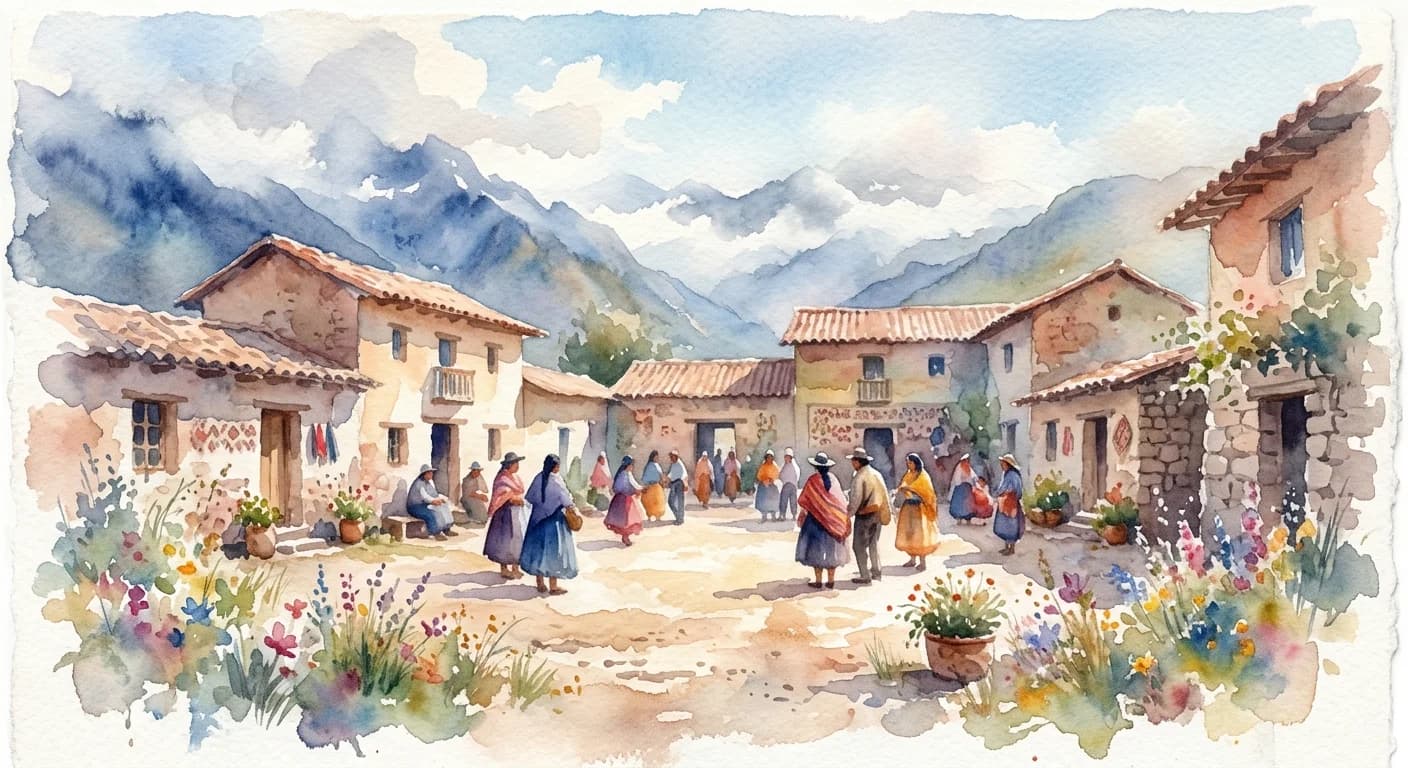
Cancha refers to a vibrant communal space in Andean communities, serving as a courtyard, a playing field, or a central gathering area. More than just a physical location, it embodies the very spirit of collective life, a dynamic stage where daily interactions, local festivities, and spontaneous games unfold. It's a place where generations converge, traditions are actively lived, and the strong bonds of community are continuously woven, truly representing the pulsating heart of a village or neighborhood.
Literal Translation
Field, courtyard, ground (Quechua)
The Story Behind the Word
The concept of 'cancha' is deeply rooted in the Andean worldview, where community (ayllu) and reciprocity (ayni) are foundational principles. Historically, these spaces were vital for agricultural coordination, spiritual ceremonies, and social cohesion, reflecting the Inca and pre-Inca emphasis on collective well-being. The cancha isn't just an empty lot; it's a living canvas for shared experiences, a physical manifestation of the Andean philosophy that individual identity is inextricably linked to the community. It represents a place of belonging, where history is remembered through shared stories and futures are collectively imagined.
Experience It
Fiesta in the Cancha
The entire village gathered in the central cancha, vibrant with music and the aroma of pachamanca. Children chased each other while elders shared chicha, all eyes on the dance troupe performing traditional marinera, their colorful skirts swirling under the crisp Andean sky.
Afternoon Football
After school, the dusty cancha transformed into a lively football field. Boys and girls, some barefoot, dribbled a worn-out ball, their laughter echoing against the mountains. It was a daily ritual, a spontaneous game fostering camaraderie and friendly rivalries.
What Gets Lost in Translation
English speakers might simply translate 'cancha' as 'field' or 'court,' missing its profound social and cultural resonance. It's not just a generic space; it's imbued with a sense of collective memory, ongoing tradition, and a strong communal spirit that a mere physical description fails to capture. The 'cancha' is inherently social, not just recreational.
Across Cultures
Similar concepts exist across cultures. Japanese 'hiroba' (広場) denotes a public square or open space for gathering. In many Mediterranean and Latin American cultures, the 'plaza' or 'piazza' serves a similar central community function, fostering social interaction and civic life. The concept of a 'village green' in English culture also shares this spirit of a communal, open area for various activities.
The Deeper Meaning
The existence and centrality of the 'cancha' reveal a deep-seated Andean philosophy that prioritizes community over individualism. It embodies the belief that life's most meaningful moments, from daily interactions to grand celebrations, are best experienced collectively. It underscores a worldview where shared space fosters shared identity, and the well-being of the individual is inseparable from the health and vibrancy of the collective 'ayllu'.
Did You Know?
The word 'cancha' is also the root for 'canchita,' the popular snack of toasted corn kernels, often served with ceviche. So, the 'field' or 'ground' also gives us a beloved crunchy treat!
How It's Used
Used to denote a courtyard, a public square, a sports field (especially for football/soccer), or any open space where people gather for social or recreational activities.