Caboclo
/kah-BROH-kloh/
Meaning
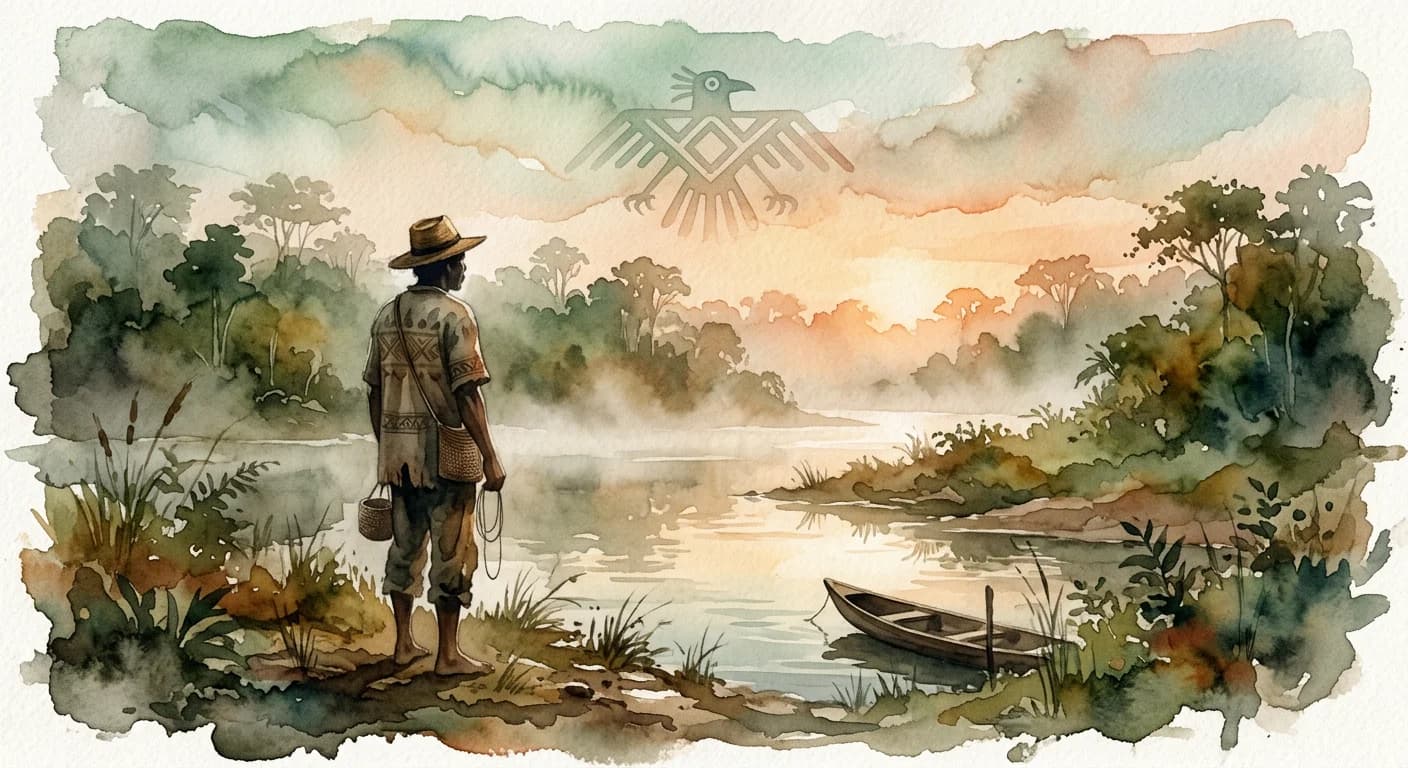
Caboclo refers to a person of mixed Indigenous and European ancestry, deeply rooted in the Brazilian landscape, particularly the Amazon. It encapsulates a profound connection to the land, embodying the resilience, traditional knowledge, and syncretic cultural practices forged through centuries of interaction. More than a mere racial classification, it signifies a distinct cultural identity, a vibrant blend of ancestral heritage that shapes their worldview and way of life, often associated with rural communities and a harmonious relationship with nature.
Literal Translation
Derived from the Tupi word 'ka'a póklo', meaning 'dweller of the forest' or 'son of the forest'.
The Story Behind the Word
The word 'Caboclo' emerged from the crucible of Brazilian colonization, reflecting the profound miscegenation that defined the nation's formation. Originating from the Tupi 'ka'a póklo' (dweller of the forest), it initially described Indigenous people, but evolved to denote individuals of mixed Indigenous and European heritage. This linguistic shift highlights the socio-cultural process of integration and the emergence of a new identity, distinct from both European colonizers and uncontacted Indigenous groups. It speaks to a deep connection to the land, traditional ways of living, and an intimate knowledge of the environment, particularly in the Amazon basin. Historically, 'Caboclos' were often marginalized, yet their cultural practices – from agroforestry to folk medicine and spiritual beliefs – represent a vital, resilient thread in the tapestry of Brazilian identity, showcasing a unique synthesis of cultures and an enduring spirit of survival and adaptation.
Experience It
Amazon River Journey
Zé, a caboclo of the Amazon, expertly navigated his small boat through the winding tributaries. His knowledge of the river, its currents, and the best fishing spots was inherited from generations, a testament to his deep connection to the forest and its rhythms.
Rural Community Gathering
At the community festa, Dona Maria, a respected cabocla, shared stories of her ancestors and their traditional remedies. Her wisdom, passed down through oral traditions, was a living bridge between the ancient ways and the present, enriching the collective identity of her people.
The Deeper Meaning
The concept of 'Caboclo' encapsulates a philosophy of adaptation and resilience, demonstrating how new identities can emerge from conflict and cultural blending. It highlights the profound connection between people and their environment, suggesting a worldview where human existence is intricately woven into the fabric of nature, emphasizing sustainability and traditional knowledge as vital for survival and cultural continuity.
Did You Know?
The 'Caboclo' is also a prominent figure in Brazilian folklore and spiritual traditions, particularly Umbanda and Candomblé, representing a powerful, wise ancestor spirit connected to nature.
How It's Used
Used in Brazil to describe individuals of mixed Indigenous and European heritage, often associated with rural or forested areas.