U.
HomeRegionsLanguagesEmotionsCollections
Find Your Word

“The limits of my language mean the limits of my world.”

— Ludwig Wittgenstein, Philosopher

Untranslatable

A curated collection of the world's most beautiful expressions—words that remind us language is humanity's greatest invention.

  • Home
  • Collections
  • Regions
  • Countries
  • Emotions
  • Tags
  • Contexts
  • Finder
  • Europe
  • Asia
  • Americas
  • Africa
  • Middle East
  • About
  • Contact
  • Privacy Policy
  • Terms of Service

2026 © Untranslatable. All rights reserved.

    /
    /
    1. Home
    2. /
    3. Americas
    4. /
    5. Candombe
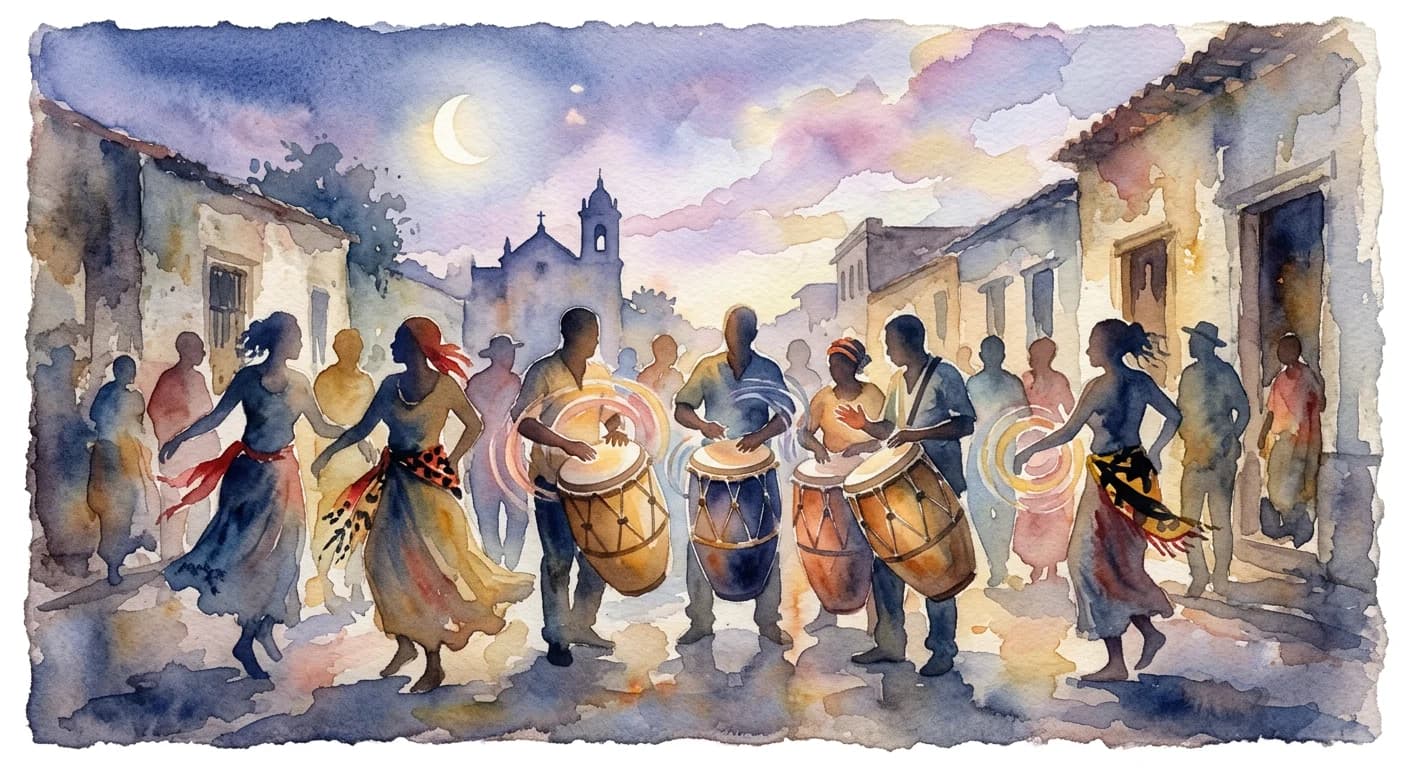
    Artistic representation of Candombe
    Spanish•
    🇦🇷Argentina🇺🇾Uruguay

    Candombe

    /kahn-DOM-bay/

    Meaning

    Candombe is the pulsating heart of Afro-Uruguayan identity, an ancestral rhythm born from the resilience of enslaved Africans. It's a profound spiritual and communal expression, where the deep thrum of the drums, the call-and-response singing, and the vibrant, improvisational dance unite participants in a powerful celebration of heritage. More than music, it embodies collective memory, spiritual connection, and an enduring testament to cultural survival.

    Literal Translation

    The etymology is debated, but it likely originates from African Bantu languages, possibly Kongo, referring to a place of worship or a gathering.

    The Story Behind the Word

    Candombe exists as a living testament to the enduring spirit of African descendants in Uruguay, a culture forged in the crucible of slavery and resistance. It emerged from clandestine gatherings where enslaved people sought solace, connection, and spiritual renewal through music and dance, preserving fragments of their diverse African traditions. The word, likely rooted in Bantu languages, speaks to a 'gathering' or 'place of worship,' underscoring its original function as a spiritual and social anchor. Its survival and eventual embrace as a national symbol reveal a profound societal shift, from suppression to recognition, reflecting Uruguay's complex journey toward acknowledging its Afro-descendant roots. Candombe embodies a philosophy of communal resilience, memory, and the power of artistic expression to transcend oppression and forge identity.

    Experience It

    Carnival Street Procession

    The barrio comes alive as the comparsa begins its march. The overwhelming roar of the drums – chico, repique, and piano – vibrates through the cobblestones, drawing people from their homes to dance spontaneously in the street, swept up in the intoxicating Candombe rhythm.

    Weekly Barrio Gathering

    Every Sunday evening, the smell of woodsmoke mingles with the percussive pulse of Candombe. Neighbors gather, not just to listen, but to participate, some dancing, others joining the chorus, feeling the ancestral connection woven into each beat.

    The Deeper Meaning

    Candombe reveals a worldview where memory and resistance are intrinsically linked to cultural expression. It speaks to the enduring power of community, rhythm, and shared heritage to transcend historical trauma and forge a vibrant, distinctive identity. It champions resilience, demonstrating that even in the face of profound adversity, cultural spirit can not only survive but thrive and enrich a nation's soul.

    Did You Know?

    Candombe was declared an Intangible Cultural Heritage of Humanity by UNESCO in 2009, recognizing its profound significance and the need to preserve this vibrant Afro-Uruguayan tradition.

    How It's Used

    Candombe is primarily used to refer to the musical genre, the dance style, and the social gatherings where these elements are performed, especially during Carnival celebrations and in specific neighborhoods known for their Candombe traditions.

    Emotions
    belonging,gratitude,joy
    Contexts
    celebration,community,music,performance
    🇦🇷Argentina🇺🇾Uruguay

    by Sofia Rossi·Written Mar 14, 2026·Updated Apr 3, 2026

    Related Words

    Explore more
    SobremesaSpanish

    Sobremesa is the cherished, often extended period immediately following a meal, particularly lunch or dinner, where diners remain seated at the table to enjoy conversation, coffee, and digest not just the food, but the company itself. It’s a dedicated time for unhurried social bonding, storytelling, and shared laughter, transforming a simple meal into a profound communal experience. Far from just clearing the dishes, sobremesa is an integral part of Spanish social life, often lasting for hours.

    Pura vidaSpanish

    More than just 'pure life,' "Pura vida" encapsulates a profound philosophy of embracing the present moment with unwavering optimism and gratitude. It's a daily commitment to finding joy in simple pleasures, accepting life's challenges with a positive spirit, and prioritizing well-being over material possessions. This ubiquitous phrase reflects a national identity built on resilience, community, and an deep appreciation for nature's bounty.

    JayusIndonesian

    Jayus describes that peculiar moment when a joke is so utterly devoid of humor, so poorly delivered, or so nonsensical that its very ineptitude triggers an involuntary, almost sympathetic burst of laughter. It's not laughter at the joke itself, but rather a reaction to the sheer awkwardness and the unexpected, delightful absurdity of someone failing so spectacularly to be funny. The humor stems from the meta-experience of witnessing a comedic train wreck, transforming discomfort into a shared moment of mirth.

    MamihlapinatapaiYaghan

    Mamihlapinatapai encapsulates that profound, unspoken moment when two individuals lock eyes, each silently acknowledging a mutual desire or intention, yet both hesitate to be the first to act upon it. It's a delicate dance of anticipation, a shared gaze brimming with common understanding and a quiet longing for the other to break the ice. This intricate look carries the weight of a shared, uninitiated potential, a silent conversation where both parties are perfectly aware of what could happen, but neither makes the first move.