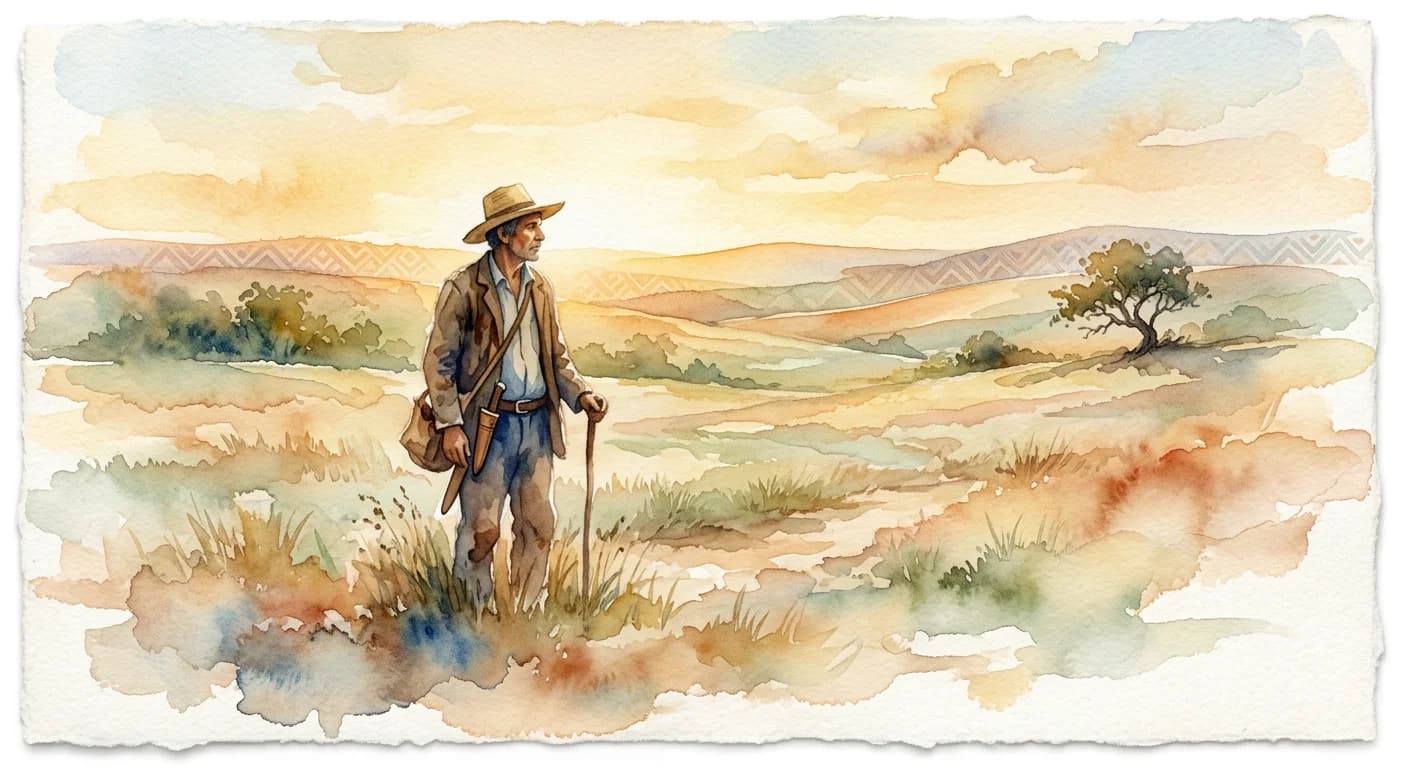
Caipira
/kai-PEE-rah/
Meaning
Caipira refers to a person deeply rooted in the rural interior of Brazil, particularly from states like São Paulo, embodying a connection to the land and a simpler, often traditional way of life. This identity is marked by a distinctive dialect, customs, and values that set them apart from urban populations. While the term can sometimes carry a hint of condescension, it more profoundly signifies authenticity, resilience, and a profound link to Brazil's pioneering past and natural environment. It's a marker of a unique cultural heritage, often celebrated in music, folklore, and cuisine.
Literal Translation
Rural dweller, country person
The Story Behind the Word
The term 'caipira' emerged during Brazil's colonial and imperial periods, as agricultural expansion defined the nation's interior. It initially described the mixed-race descendants of Portuguese settlers and indigenous peoples who settled the land, often far from coastal urban centers. This demographic developed a unique culture, language (the 'dialeto caipira'), and worldview shaped by self-sufficiency, deep respect for nature, and strong community bonds. The 'caipira' narrative is central to Brazilian identity, representing the nation's rural backbone and its historical struggle for development. It highlights the enduring tension and mutual influence between Brazil's modernizing cities and its traditional countryside, embodying a sense of national character that is both humble and fiercely independent. The word exists to categorize and celebrate this distinct cultural group, whose contributions to Brazilian music (música caipira/sertaneja), cuisine, and folklore are immense.
Experience It
Family Gathering in the Countryside
At his grandmother's farm, João, a city dweller, observed his uncle effortlessly mending a fence with tools he’d never seen. João thought, 'Meu tio é um caipira autêntico, com um conhecimento da terra que eu nunca terei.' (My uncle is an authentic caipira, with a knowledge of the land I'll never have.)
Musician's Homage
During a folk music festival, the singer, with his acoustic guitar and simple attire, sang ballads about rural life. The audience murmured in appreciation, 'Ele tem a alma caipira, suas músicas nos levam de volta para casa.' (He has a caipira soul, his songs take us back home.)
The Deeper Meaning
The word 'caipira' encapsulates a philosophy of life rooted in simplicity, self-reliance, and a deep, almost spiritual, connection to the land and its rhythms. It suggests that true wisdom often lies not in formal education or urban sophistication, but in practical knowledge, resilience in the face of nature's challenges, and strong communal ties. It's a quiet testament to the value of living in harmony with one's environment, highlighting a worldview where authenticity and tradition trump modernity.
Did You Know?
The 'caipira' dialect, a distinct rural Portuguese variant, is so unique it has been extensively studied by linguists and is often featured in Brazilian literature and popular culture.
How It's Used
Used to describe people from the rural interior of Brazil, often with connotations of a simple, rustic lifestyle and distinct regional dialect.