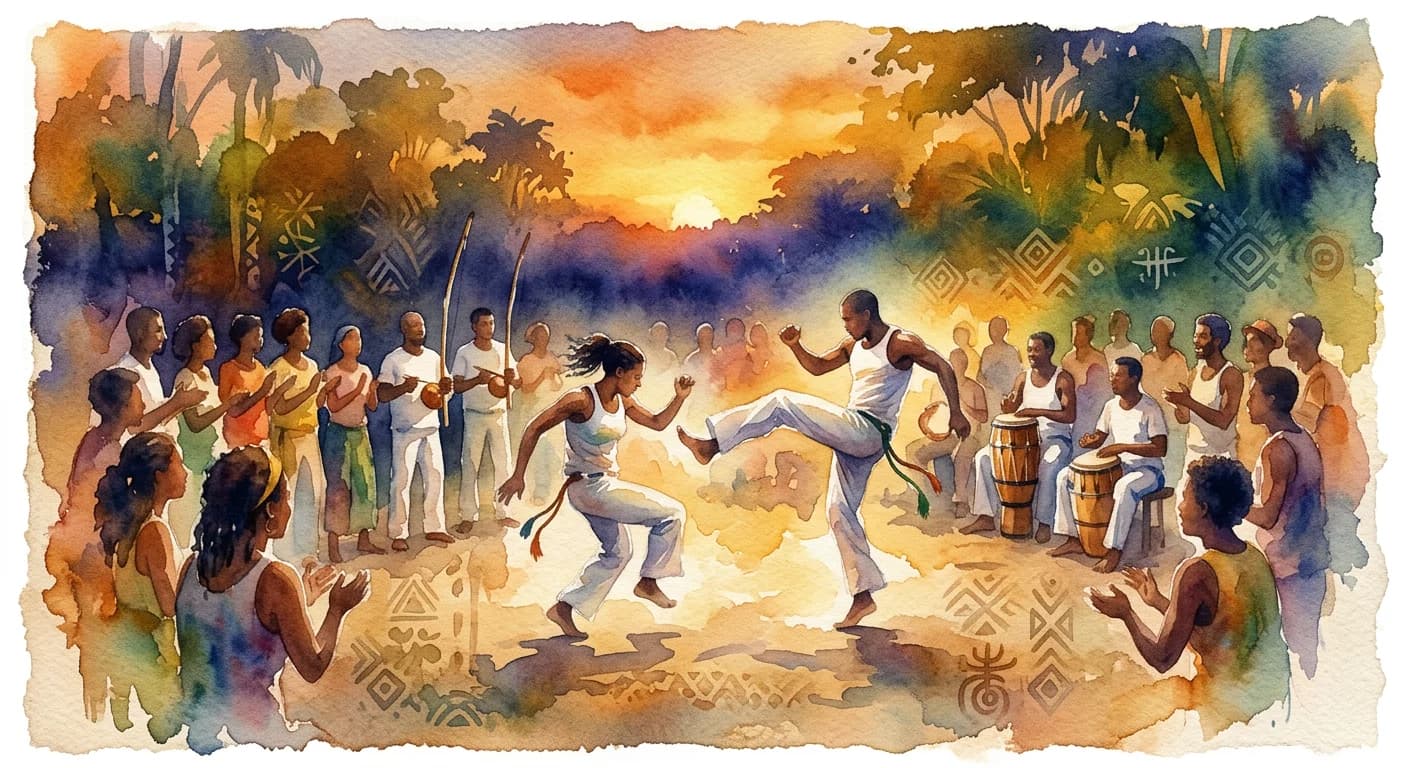
Capoeirista
/kah-poh-yeh-REES-tah/
Meaning
A "capoeirista" is not merely someone who practices Capoeira; they embody a living tradition, a fusion of martial artistry, expressive dance, pulsating music, and acrobatic grace. This term signifies a deep commitment to mastering the physical and spiritual facets of Afro-Brazilian culture, engaging in a fluid dialogue within the roda, and perpetually refining their skill and understanding. It represents an individual who carries the history, resistance, and joy of Capoeira in every movement and sound.
Literal Translation
One who practices Capoeira
The Story Behind the Word
The term 'capoeirista' emerged from the crucible of slavery in Brazil, where enslaved Africans developed Capoeira as a means of self-defense, cultural preservation, and covert rebellion disguised as dance. Its existence reflects a profound resilience and ingenuity in the face of oppression, serving as a vital link to African heritage. For Brazilians, particularly those of African descent, the 'capoeirista' embodies a living history of resistance, community, and the triumph of the human spirit. The word reveals a cultural value placed on adaptability, strategic thinking, and the ability to find freedom and expression even in constrained circumstances, transforming adversity into art.
Experience It
The Master's Guidance
Mestre João watched his students move through the ginga, correcting a posture here, refining a kick there. He wasn't just teaching movements; he was instilling the philosophy, the respect, and the history. "A true capoeirista," he often said, "plays with the body, but thinks with the soul."
Roda's Heartbeat
As the berimbau's rhythm intensified, Maria stepped into the roda, her eyes locking with her opponent's. Every dodge, every sweep, every acrobatic flourish was a conversation, a testament to years of dedication. The energy of the other capoeiristas fueled her, a collective breath guiding her through the game.
The Deeper Meaning
The 'capoeirista' embodies a philosophy of malícia – a nuanced blend of cunning, wit, and strategic intelligence. It's about more than physical prowess; it's the ability to read situations, anticipate, and adapt, often through indirect or deceptive means. This reflects a worldview where direct confrontation isn't always the most effective path, emphasizing fluid thinking and the power of subtle action to overcome obstacles.
Did You Know?
Historically, some capoeiristas were so skilled and feared that they were employed as bodyguards or enforcers by politicians and local bosses in 19th-century Brazil.
How It's Used
Used to refer to anyone who practices or is involved in the art of Capoeira, whether as a student, teacher, musician, or enthusiast.