U.
HomeRegionsLanguagesEmotionsCollections
Find Your Word

“The limits of my language mean the limits of my world.”

— Ludwig Wittgenstein, Philosopher

Untranslatable

A curated collection of the world's most beautiful expressions—words that remind us language is humanity's greatest invention.

  • Home
  • Collections
  • Regions
  • Countries
  • Emotions
  • Tags
  • Contexts
  • Finder
  • Europe
  • Asia
  • Americas
  • Africa
  • Middle East
  • About
  • Contact
  • Privacy Policy
  • Terms of Service

2026 © Untranslatable. All rights reserved.

    /
    /
    1. Home
    2. /
    3. Americas
    4. /
    5. Ciranda
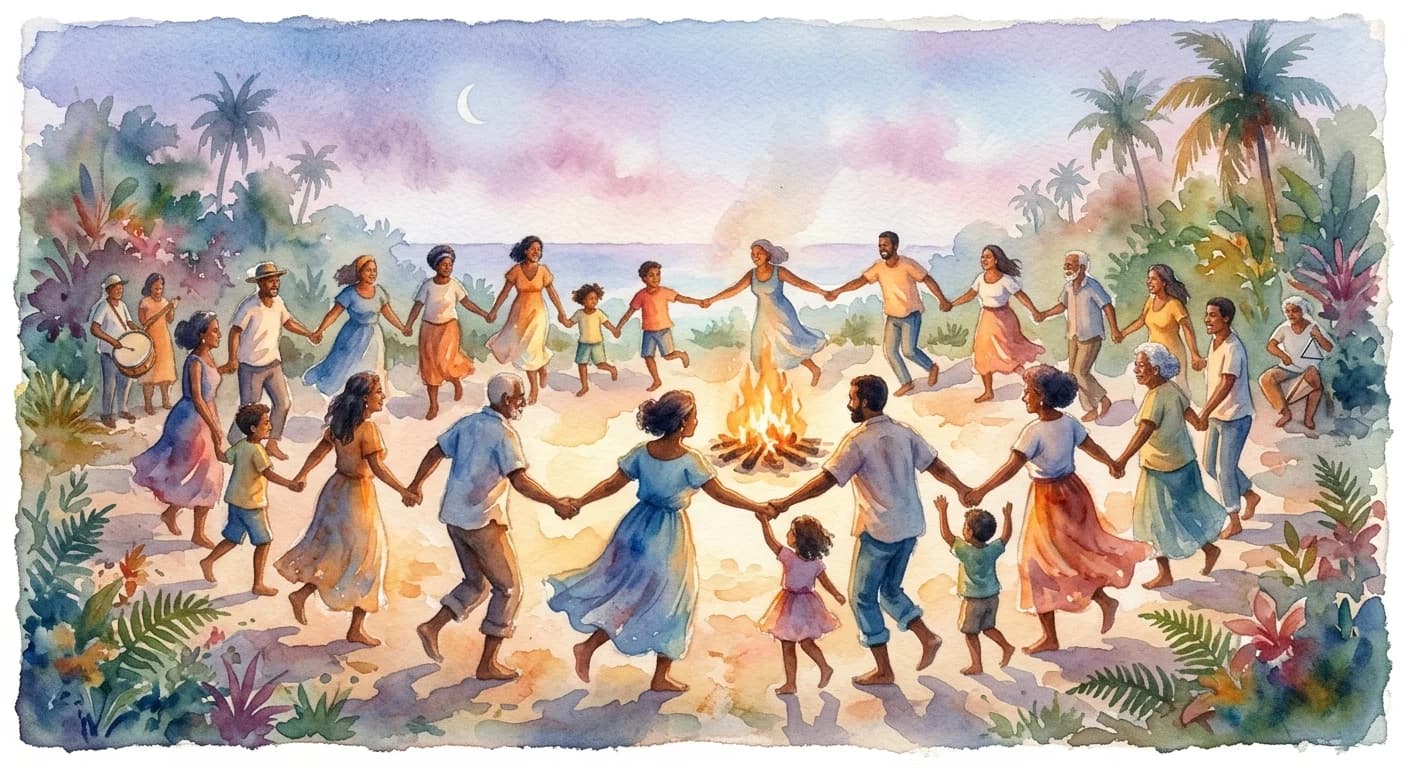
    Artistic representation of Ciranda
    Brazilian Portuguese•
    🇧🇷Brazil

    Ciranda

    /see-RAHN-dah/

    Meaning

    Ciranda is a vibrant Brazilian folk dance and circle game, particularly cherished in the Northeast, where participants of all ages join hands to form an ever-expanding circle. It's a joyful expression of collective identity, marked by rhythmic steps, spontaneous chants, and shared laughter. This communal embrace fosters a profound sense of belonging and celebrates the simple yet powerful act of coming together in harmonious movement and song, echoing the pulse of Brazilian cultural heritage.

    Literal Translation

    The word 'ciranda' itself does not have a direct literal translation that captures its full essence, but it is related to the Portuguese verb 'girar' (to spin or turn), referencing the circular movement of the dance.

    The Story Behind the Word

    Ciranda's roots are deeply entwined with the history of sugar cane plantations in Pernambuco, Brazil, where enslaved Africans and Indigenous peoples created these communal dances as a form of resistance, solace, and celebration after arduous days. It embodies a philosophy of egalitarianism and inclusion; anyone, regardless of age, social status, or skill, can join the circle. This practice reveals a core Brazilian value: the importance of community (comunidade) and the belief that shared joy and collective participation are essential for well-being. It's a living tradition that connects generations, preserving memory and reinforcing social bonds through embodied culture, reflecting a society that often prioritizes human connection and shared experience over individualistic pursuits.

    Experience It

    Beachside Festival Ciranda

    Under the warm evening sky, the sound of percussion and singing drew a crowd on the beach. Soon, dozens of strangers and friends had joined hands, forming a vast ciranda, their bare feet rhythmically shuffling in the sand as the circle pulsed with shared energy and spontaneous calls.

    Children's Playtime Ciranda

    During a school break, a group of children started singing a familiar tune, naturally forming a small ciranda in the playground. Their giggles filled the air as they spun and swayed, inviting more classmates to link arms, embodying the simple, infectious joy of collective play.

    The Deeper Meaning

    Ciranda encapsulates a philosophy of interconnectedness and present-moment joy. It highlights that true fulfillment often lies not in individual achievement but in shared experience and collective rhythm. The expanding circle symbolizes life's continuous flow and the welcoming nature of community, where everyone has a place and contributes to the collective harmony.

    Did You Know?

    The largest ciranda ever recorded reportedly took place in Olinda, Pernambuco, involving thousands of people dancing in a single, massive circle, showcasing the incredible unifying power of this tradition.

    How It's Used

    It is used to describe the folk dance, the circle game, and the social gathering associated with it. It's often performed during festivals, parties, and community events.

    Emotions
    belonging,joy,warmth
    Contexts
    celebration,community,friendship,social interaction
    🇧🇷Brazil

    by Annelise Dubois·Written Mar 14, 2026·Updated Apr 3, 2026

    Related Words

    Explore more
    GezelligDutch

    Gezellig encapsulates a profound sense of warmth, belonging, and convivial comfort, extending beyond mere coziness to embrace the social and emotional atmosphere. It's the feeling of being truly at ease, surrounded by good company, laughter, and a shared sense of contentment. This untranslatable term describes not just a physical space, but a holistic experience where time seems to slow down, fostering genuine connection and a deep sense of well-being.

    SobremesaSpanish

    Sobremesa is the cherished, often extended period immediately following a meal, particularly lunch or dinner, where diners remain seated at the table to enjoy conversation, coffee, and digest not just the food, but the company itself. It’s a dedicated time for unhurried social bonding, storytelling, and shared laughter, transforming a simple meal into a profound communal experience. Far from just clearing the dishes, sobremesa is an integral part of Spanish social life, often lasting for hours.

    Pura vidaSpanish

    More than just 'pure life,' "Pura vida" encapsulates a profound philosophy of embracing the present moment with unwavering optimism and gratitude. It's a daily commitment to finding joy in simple pleasures, accepting life's challenges with a positive spirit, and prioritizing well-being over material possessions. This ubiquitous phrase reflects a national identity built on resilience, community, and an deep appreciation for nature's bounty.

    JayusIndonesian

    Jayus describes that peculiar moment when a joke is so utterly devoid of humor, so poorly delivered, or so nonsensical that its very ineptitude triggers an involuntary, almost sympathetic burst of laughter. It's not laughter at the joke itself, but rather a reaction to the sheer awkwardness and the unexpected, delightful absurdity of someone failing so spectacularly to be funny. The humor stems from the meta-experience of witnessing a comedic train wreck, transforming discomfort into a shared moment of mirth.