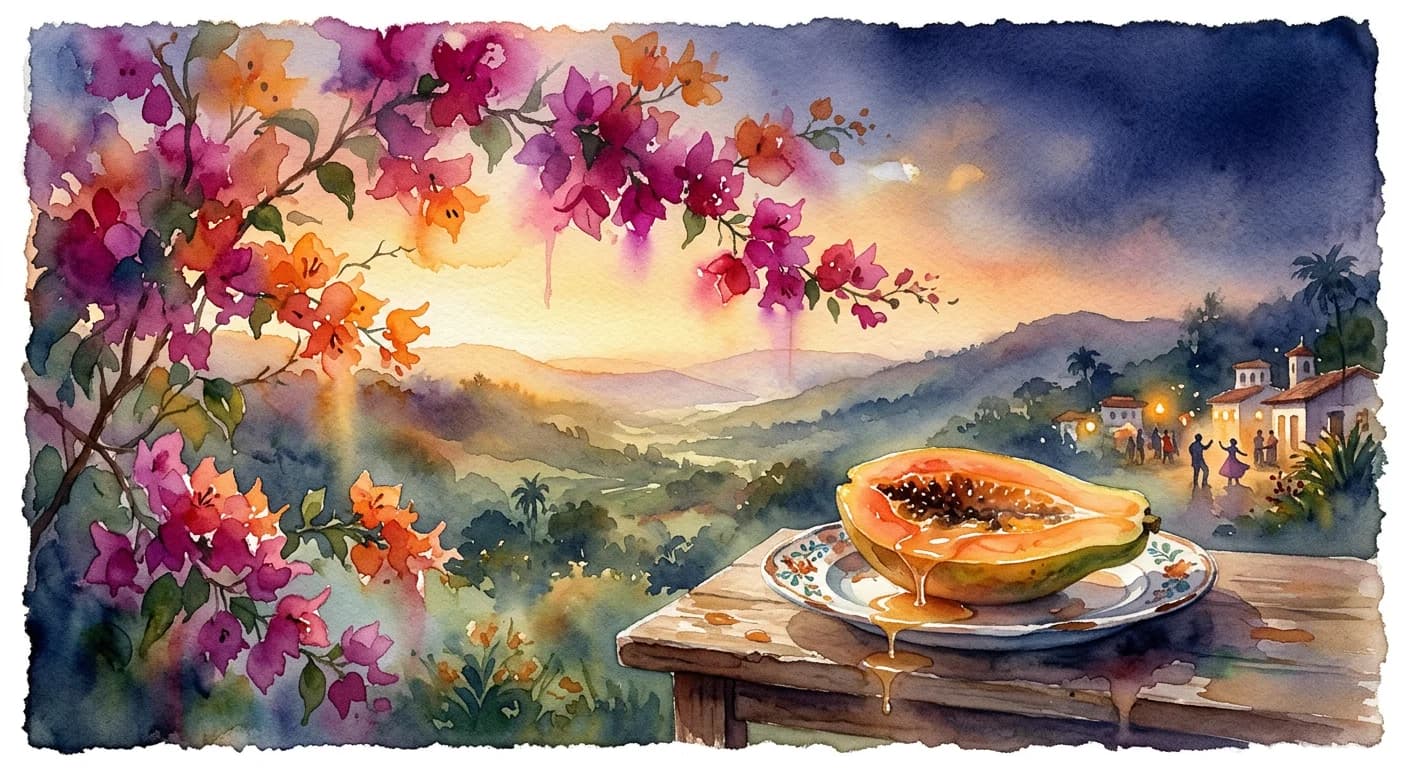
Mamão com açúcar
/mah-mah-OW com ah-SOO-car/
Meaning
This Brazilian Portuguese idiom, literally 'papaya with sugar,' describes something cloyingly sweet, excessively sentimental, or nauseatingly romantic, often to the point of being grotesque. It pinpoints a saccharine excess that feels manufactured and lacking genuine depth, evoking a sense of mild disgust or ironic amusement rather than sincere appreciation. It's used to critique a superficial sweetness that overwhelms, much like an overly sugared fruit, leaving an unpleasant aftertaste.
Literal Translation
papaya with sugar
The Story Behind the Word
The existence of 'mamão com açúcar' speaks volumes about Brazilian cultural sensibilities, particularly a nuanced appreciation for authenticity and a healthy skepticism towards overt, unearned sentimentality. Brazilians, known for their warmth and passion, also possess a sharp wit and a low tolerance for artifice. The phrase reflects a cultural preference for genuine emotion, even if raw or complex, over manufactured sweetness designed to elicit an easy, uncritical response. It’s a linguistic tool to call out superficiality in art, relationships, or even food, revealing a desire for substance beneath the surface.
Experience It
Overly Romantic Movie
After watching a new romantic comedy, Ana rolled her eyes. 'That movie was total mamão com açúcar,' she declared. 'Every scene was a grand gesture, but it all felt so fake and forced, not a single genuine moment.'
Saccharine Song
During a radio show, the DJ introduced a new pop song. 'Ugh, this is pure mamão com açúcar,' complained João, quickly changing the station. 'The lyrics are so unbelievably sweet and repetitive, it makes my teeth hurt.'
The Deeper Meaning
The phrase subtly critiques a cultural tendency towards performative emotion or superficial pleasantries. It champions a philosophy that values authenticity and depth over saccharine facades, suggesting that true beauty or emotional resonance lies in complexity and sincerity, not in an uncomplicated, manufactured sweetness. It's a call for 'less sugar, more real fruit,' in both a literal and metaphorical sense.
Did You Know?
Papaya itself is naturally sweet; adding sugar to it is often considered redundant or even detrimental to its flavor, reinforcing the idea of unnecessary, excessive sweetness.
How It's Used
This phrase is used to describe movies, songs, romantic gestures, or even overly sweet food that is perceived as being too much, often with a tone of mild disgust or ironic amusement.