U.
HomeRegionsLanguagesEmotionsCollections
Find Your Word

“The limits of my language mean the limits of my world.”

— Ludwig Wittgenstein, Philosopher

Untranslatable

A curated collection of the world's most beautiful expressions—words that remind us language is humanity's greatest invention.

  • Home
  • Collections
  • Regions
  • Countries
  • Emotions
  • Tags
  • Contexts
  • Finder
  • Europe
  • Asia
  • Americas
  • Africa
  • Middle East
  • About
  • Contact
  • Privacy Policy
  • Terms of Service

2026 © Untranslatable. All rights reserved.

    /
    /
    1. Home
    2. /
    3. Americas
    4. /
    5. Cumbia
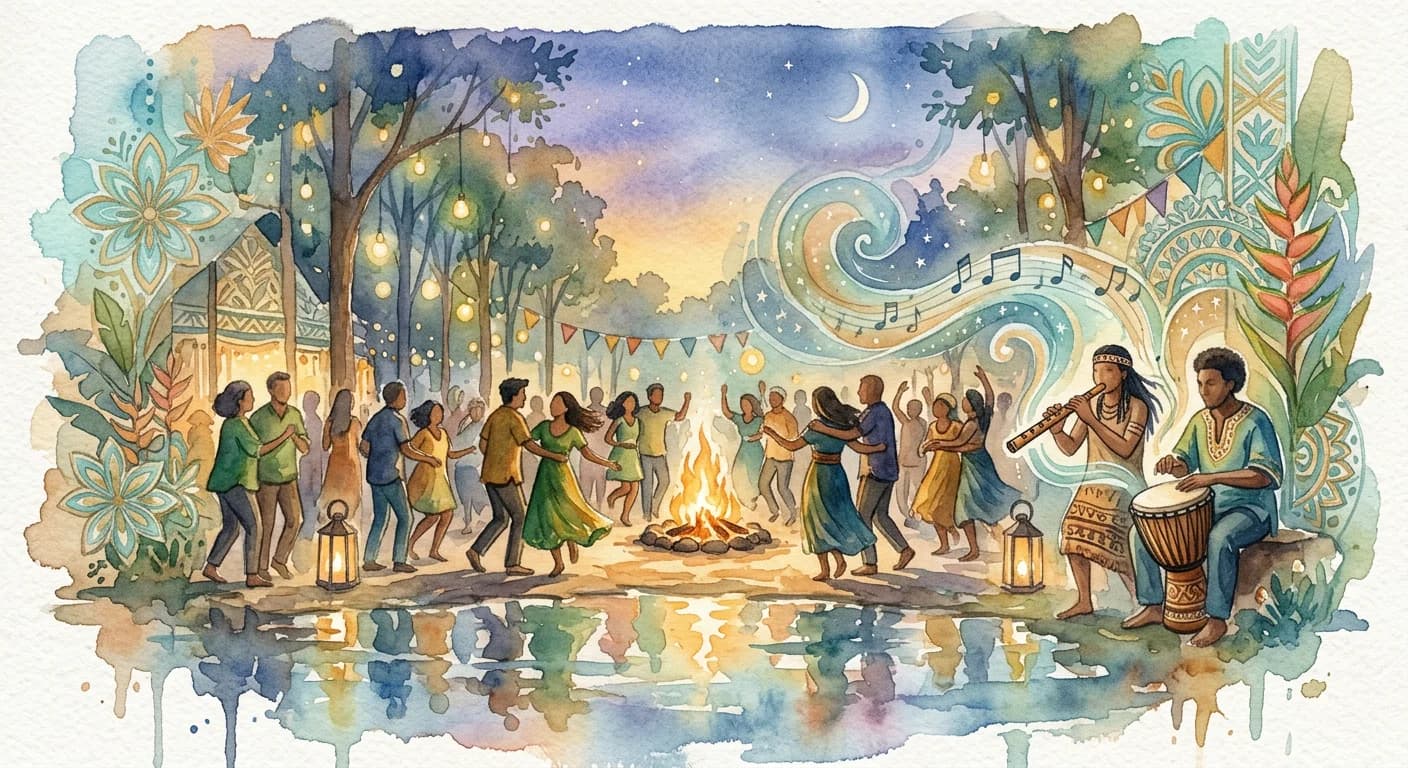
    Artistic representation of Cumbia
    Spanish•
    🇦🇷Argentina🇨🇱Chile🇨🇴Colombia🇨🇷Costa Rica🇪🇨Ecuador🇸🇻El Salvador🇬🇹Guatemala🇭🇳Honduras🇲🇽Mexico🇳🇮Nicaragua🇵🇦Panama🇵🇪Peru🇺🇸United States🇺🇾Uruguay🇻🇪Venezuela

    Cumbia

    /KOOM-bee-ah/

    Meaning

    Cumbia is the pulsating heartbeat of Colombia's Caribbean coast, an intoxicating musical genre and dance that masterfully weaves together Indigenous flutes, African drums, and European melodic structures. It's an expression of profound cultural syncretism, a joyful, often sensual, communal celebration that invites all to partake in its rhythmic embrace. More than just sound and movement, Cumbia embodies the enduring spirit of resilience, unity, and festive exuberance, echoing the diverse heritage of its people.

    Literal Translation

    The origin of the word 'cumbia' is debated, but it is widely believed to derive from the African word 'cumbé', meaning 'party' or 'celebration'.

    The Story Behind the Word

    Cumbia's origins are deeply rooted in the colonial history of Colombia, emerging from the vibrant interactions between enslaved Africans, Indigenous communities, and Spanish colonizers. It began as a courtship ritual among African slaves, evolving to incorporate Indigenous instruments like the gaita and European elements such as harmonic structures and instrumentation over time. This fusion is not merely musical; it's a living testament to the survival and synthesis of distinct cultures under oppressive conditions, transforming hardship into joyous expression. Cumbia reveals a worldview where communal gathering, embodied history, and the celebration of life's simple pleasures are paramount, serving as a powerful symbol of national identity and cultural pride, representing a shared heritage forged through centuries of intermingling.

    Experience It

    A Coastal Fiesta

    The air thrummed with excitement as the live band struck up a classic cumbia. Couples, young and old, spilled onto the dance floor, hips swaying in unison, their faces alight with unadulterated joy. It was more than just dancing; it was a collective memory being re-enacted, a shared cultural pulse.

    Family Celebration

    At Abuela's birthday, after the cake, someone put on 'La Pollera Colorá'. Instantly, the living room transformed into a dance hall. Even the shyest cousins were pulled into the circle, laughing and attempting the distinctive Cumbia steps, connecting generations through rhythm.

    The Deeper Meaning

    Cumbia embodies a philosophy of harmonious cultural integration and resilience. It demonstrates that beauty and joy can emerge from complex histories of encounter, conflict, and adaptation. The dance, with its circular movements and communal participation, reflects a worldview where individual expression is intertwined with collective identity, and where history is not just remembered but actively relived and celebrated through art and movement.

    Did You Know?

    Did you know that traditional Cumbia dancers often hold a lit candle in one hand during the dance? This element is believed to originate from African courtship rituals, adding a mesmerizing visual to the rhythmic movement.

    How It's Used

    Cumbia is used to refer to the specific genre of music and the accompanying dance style. It is played at parties, festivals, social gatherings, and is a prominent feature in Latin American popular culture.

    Emotions
    belonging,joy,warmth
    Contexts
    celebration,dining,social interaction
    🇦🇷Argentina🇨🇱Chile🇨🇴Colombia🇨🇷Costa Rica🇪🇨Ecuador🇸🇻El Salvador🇬🇹Guatemala🇭🇳Honduras🇲🇽Mexico🇳🇮Nicaragua🇵🇦Panama🇵🇪Peru🇺🇸United States🇺🇾Uruguay🇻🇪Venezuela

    by Sofia Rossi·Written Mar 14, 2026·Updated Apr 3, 2026

    Related Words

    Explore more
    GezelligDutch

    Gezellig encapsulates a profound sense of warmth, belonging, and convivial comfort, extending beyond mere coziness to embrace the social and emotional atmosphere. It's the feeling of being truly at ease, surrounded by good company, laughter, and a shared sense of contentment. This untranslatable term describes not just a physical space, but a holistic experience where time seems to slow down, fostering genuine connection and a deep sense of well-being.

    SobremesaSpanish

    Sobremesa is the cherished, often extended period immediately following a meal, particularly lunch or dinner, where diners remain seated at the table to enjoy conversation, coffee, and digest not just the food, but the company itself. It’s a dedicated time for unhurried social bonding, storytelling, and shared laughter, transforming a simple meal into a profound communal experience. Far from just clearing the dishes, sobremesa is an integral part of Spanish social life, often lasting for hours.

    Pura vidaSpanish

    More than just 'pure life,' "Pura vida" encapsulates a profound philosophy of embracing the present moment with unwavering optimism and gratitude. It's a daily commitment to finding joy in simple pleasures, accepting life's challenges with a positive spirit, and prioritizing well-being over material possessions. This ubiquitous phrase reflects a national identity built on resilience, community, and an deep appreciation for nature's bounty.

    JayusIndonesian

    Jayus describes that peculiar moment when a joke is so utterly devoid of humor, so poorly delivered, or so nonsensical that its very ineptitude triggers an involuntary, almost sympathetic burst of laughter. It's not laughter at the joke itself, but rather a reaction to the sheer awkwardness and the unexpected, delightful absurdity of someone failing so spectacularly to be funny. The humor stems from the meta-experience of witnessing a comedic train wreck, transforming discomfort into a shared moment of mirth.