Favela
/fah-VEL-ah/
Meaning
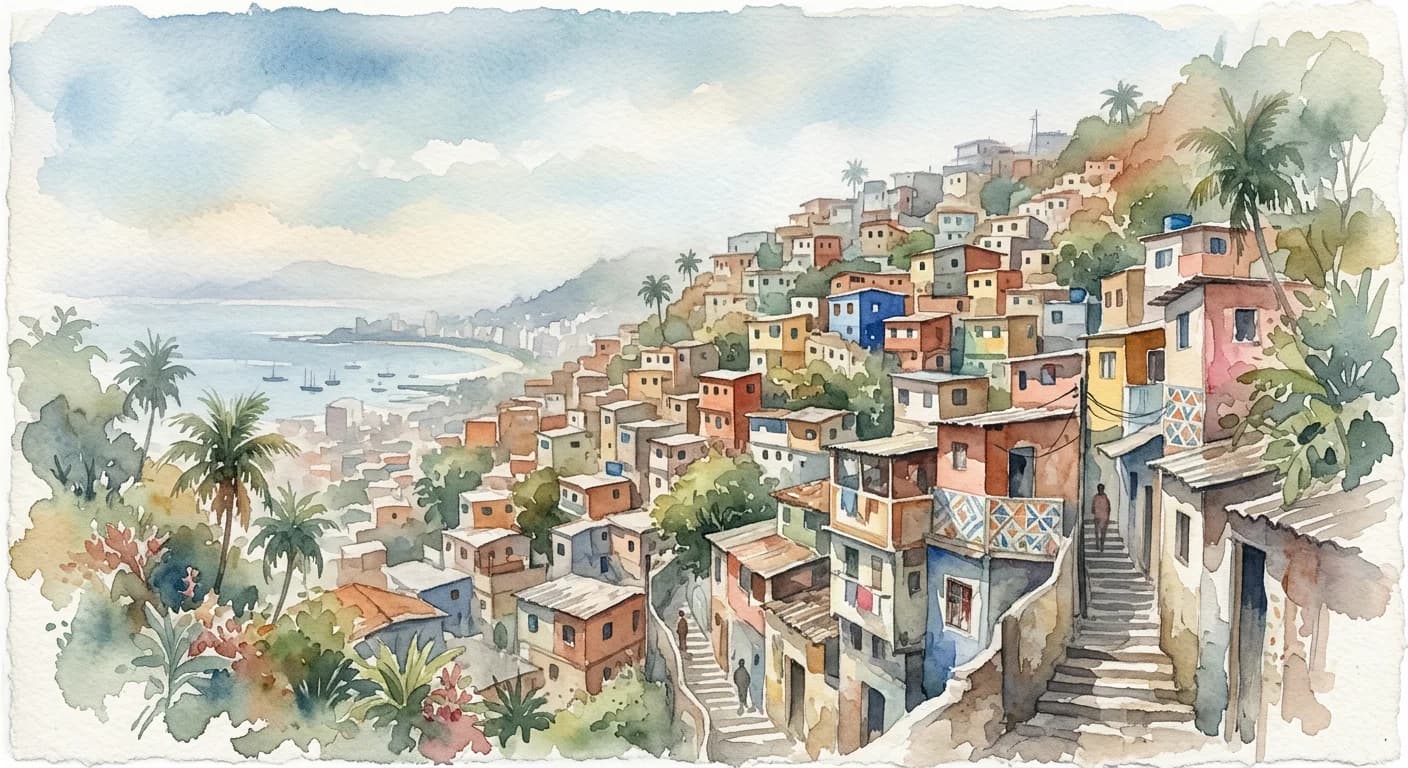
A 'favela' is much more than an informal settlement; it's a vibrant, self-organized urban ecosystem born from necessity, where communities forge resilient lives amidst challenging conditions. These densely packed areas, often clinging to hillsides in Brazilian cities, hum with a unique cultural energy, marked by strong social bonds, innovative self-sufficiency, and a rich tapestry of music, art, and entrepreneurship. It embodies a complex blend of struggle and ingenious adaptation, reflecting a significant, often overlooked, facet of Brazilian identity.
Literal Translation
Farmstead or small farm (historical context)
The Story Behind the Word
The word 'favela' itself carries a fascinating historical weight, deriving from a thorny plant (Cnidoscolus quercifolius) that grew on the Morro da Providência in Rio de Janeiro, where demobilized soldiers settled after the Canudos War in the late 19th century, lacking housing promised by the government. This origin story encapsulates the favela's essence: a place born out of neglect and the need for survival, yet fertile ground for growth and resilience. Its existence reveals a profound dichotomy in Brazilian society – the stark contrast between formal urban planning and the organic, often marginalized, development driven by popular need. Favelas are not merely slums, but rather dynamic centers of Afro-Brazilian culture, samba, funk, and unique social structures, challenging the notion that poverty equates to a lack of culture or community. They are a testament to the ingenuity and enduring spirit of a people often left to fend for themselves.
Experience It
Community Samba School
Amidst the narrow, winding alleys of Rocinha, the pulsating rhythm of drums echoes. Children, teenagers, and elders gather in a makeshift hall, rehearsing for Carnival. This samba school, born within the favela, is a vital cultural hub, preserving traditions and offering a sense of belonging and pride to its residents.
Entrepreneurial Spirit
Maria runs a small 'boteco' (bar) from her home in Complexo do Alemão, serving homemade feijoada and cold beers. Her tiny business, like countless others in the favela, is the lifeblood of her family and a social cornerstone for her neighbors, illustrating the self-sustaining economy that thrives within these communities.
The Deeper Meaning
The favela, as a concept, challenges conventional notions of urbanism and development, revealing that community and cultural richness can flourish even in the absence of formal infrastructure or governmental support. It underscores a philosophy of collective resilience and self-reliance, where human connection and ingenuity become the primary architects of social order and belonging, often in defiance of systemic marginalization.
Did You Know?
The first recorded favela, Morro da Providência in Rio de Janeiro, was settled by soldiers returning from the Canudos War in 1897, who were promised land but received none.
How It's Used
Used to refer to informal settlements, typically in Brazil, characterized by densely populated housing and often lacking formal infrastructure.