Jarabe
/hah-RAH-beh/
Meaning
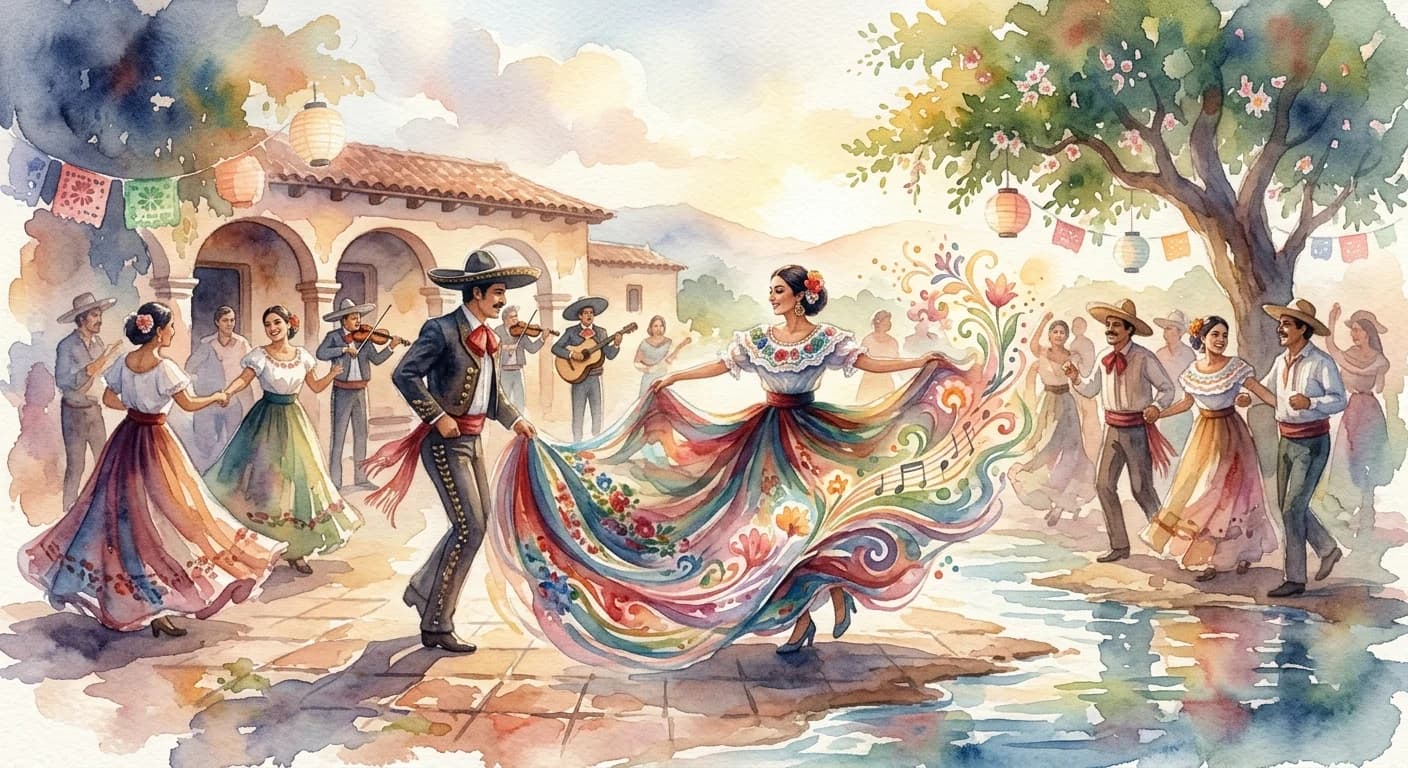
In Spanish, 'jarabe' literally translates to 'syrup,' conjuring images of sweet, often medicinal, concoctions. However, in Mexico, its cultural resonance expands dramatically to embrace a vibrant genre of folk music and dance. This 'jarabe' embodies the soul of Mexican festivity, a dynamic fusion of indigenous rhythms and European melodies, culminating in iconic performances like the 'Jarabe Tapatío' or Mexican Hat Dance, a powerful symbol of national identity and joyous celebration.
Literal Translation
Syrup
The Story Behind the Word
The word 'jarabe' in Mexico unveils a profound connection between the sweetness of life and its rhythmic expression. Historically, these dances emerged from a blend of colonial European contradanzas and indigenous ceremonial movements, often performed during religious festivals and social gatherings. The 'jarabe' became a clandestine symbol of national identity during colonial times, evolving into a celebrated form that expressed Mexican mestizaje – the blend of European and indigenous heritage. It reflects a worldview where joy, community, and historical resilience are inextricably linked, demonstrating how art and tradition can transform a simple concept into a powerful emblem of collective spirit and cultural pride. It's a testament to a culture that finds profound meaning and expression in shared celebration and movement.
Experience It
A Taste of Childhood
Little Sofia has a cough, and her abuela gently spoons a thick, sweet 'jarabe' into her mouth. The herbal remedy, passed down through generations, promises comfort and healing, a familiar taste of home and care.
Fiesta in the Plaza
The town plaza erupts in cheers as dancers in colorful attire begin the 'Jarabe Tapatío.' The lively music fills the air, and the swirling skirts and stomping boots tell a story of courtship and national pride, drawing everyone into the festive spirit.
The Deeper Meaning
The dual meaning of 'jarabe' encapsulates a key aspect of Mexican culture: the ability to find and create joy, sweetness, and communal expression even from simple or everyday elements. It reflects a philosophy where life's remedies and celebrations are often intertwined, suggesting that cultural identity and resilience can be found in both comforting traditions and vibrant, shared performances.
Did You Know?
The 'Jarabe Tapatío' was once considered scandalous and even banned in Mexico in the 19th century due to its flirtatious movements, only to later become the country's official national dance!
How It's Used
Used to refer to a sweet syrup, especially one used in drinks or as a cough remedy. In Mexico, it also specifically refers to a genre of folk music and dance.