Jibaro
/hee-BAH-roh/
Meaning
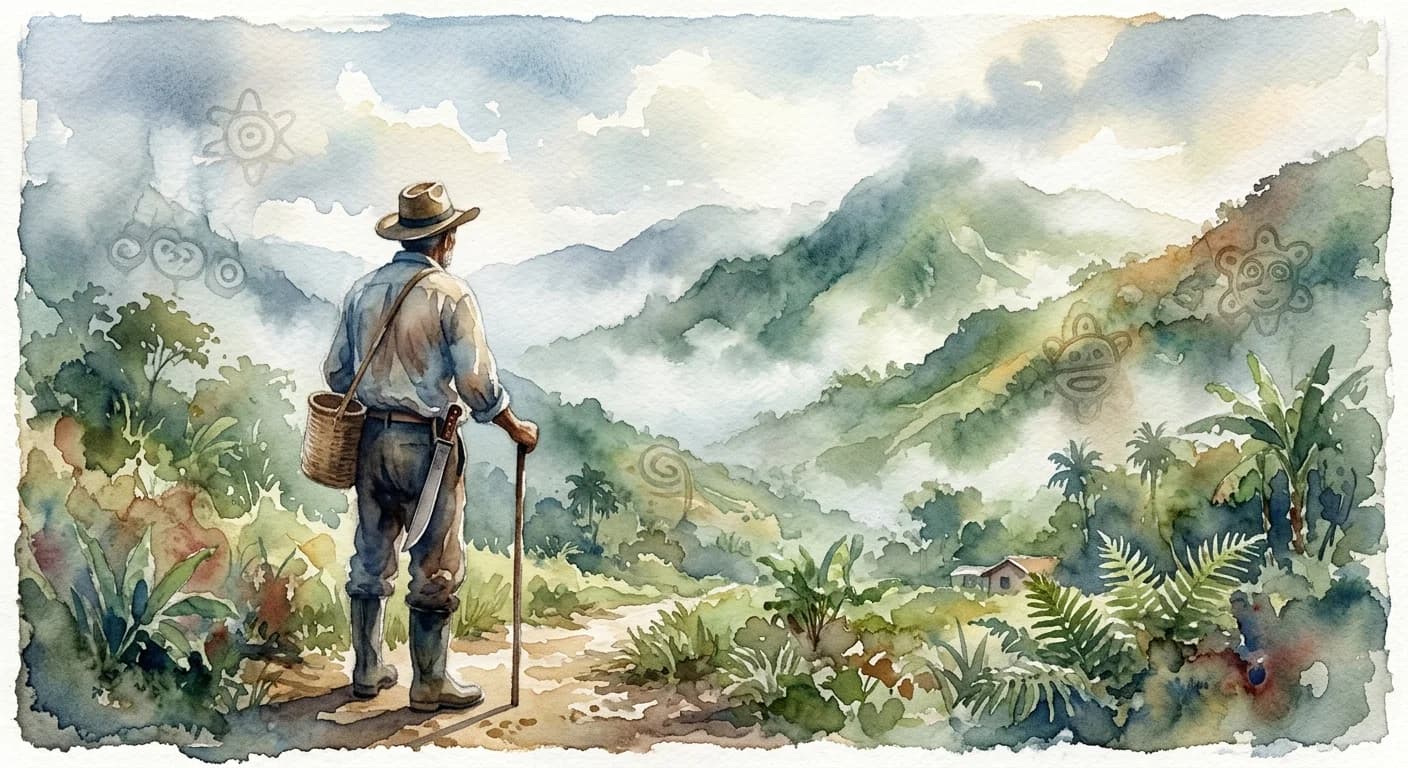
The 'Jíbaro' of Puerto Rico embodies a multifaceted identity, originally rooted in the island's indigenous past and evolving to represent the resilient, often humble, country dweller. This figure, typically a farmer from the mountainous interior, is deeply connected to the land, possessing an innate resourcefulness and a strong sense of self-sufficiency. While sometimes used to denote a lack of sophistication, 'Jíbaro' is more profoundly a symbol of patriotic pride, representing the authentic spirit and enduring cultural heritage of the Puerto Rican people, often in defiance of external influences.
Literal Translation
The exact etymology is debated, but it derives from the Taíno word 'xíbaro' which referred to indigenous people, and was later adopted by Spanish settlers.
The Story Behind the Word
The word 'Jíbaro' is inextricably linked to Puerto Rico's colonial history and its struggle for identity. Emerging from the Taíno 'xíbaro' (forest people), it was adopted by Spanish settlers to describe the mixed-race peasants who retreated into the interior mountains, forming a distinct culture. These 'Jíbaros' became the backbone of the island's agricultural economy, particularly coffee and tobacco, developing a unique folk culture, music (like the 'seis' and 'aguinaldo'), and oral traditions. The term reflects a historical tension between urban, 'civilized' influences and the rustic, self-reliant life of the countryside. It embodies a philosophy of resilience, an intimate connection to nature, and a quiet pride in one's roots, serving as a powerful symbol of Puerto Rican authenticity and resistance against assimilation.
Experience It
Mountain Farmer's Wisdom
Don Rafael, a seasoned farmer with calloused hands, surveyed his small coffee plantation nestled in the Cordillera Central. When his city-dwelling nephew suggested modern farming techniques, Don Rafael just smiled, 'We Jíbaros know the rhythm of this land; it tells us what it needs.' His wisdom, passed down through generations, was a testament to his Jíbaro spirit.
Festive Country Gathering
During Christmas, the community gathered for a 'parranda.' Ramón, playing his 'cuatro' with joyful abandon, led the singing of traditional 'aguinaldos.' His wife, Elena, prepared 'pasteles' from scratch. This vibrant celebration, full of music, food, and camaraderie, was a pure expression of their Jíbaro heritage, connecting them deeply to their roots.
The Deeper Meaning
The 'Jíbaro' embodies a philosophy of deep ecological connection and self-sufficiency, highlighting a worldview where human life is intertwined with the natural environment. It champions resilience and ingenuity in the face of hardship, suggesting that true wealth lies not in material possessions but in one's roots, community, and the ability to thrive independently from external systems. This reveals a profound respect for ancestral ways and a quiet, dignified pride in one's heritage.
Did You Know?
The 'Jíbaro' is so central to Puerto Rican identity that the traditional 'Jíbaro' costume, featuring a straw hat and 'pava,' is often worn during cultural festivals and celebrated as a national symbol.
How It's Used
Used to describe a person from a rural, often mountainous or forested area, particularly in Puerto Rico. Can refer to a farmer, a country dweller, or someone perceived as unsophisticated but possessing a strong connection to nature and traditional values.