Rebozo
/reh-BOH-soh/
Meaning
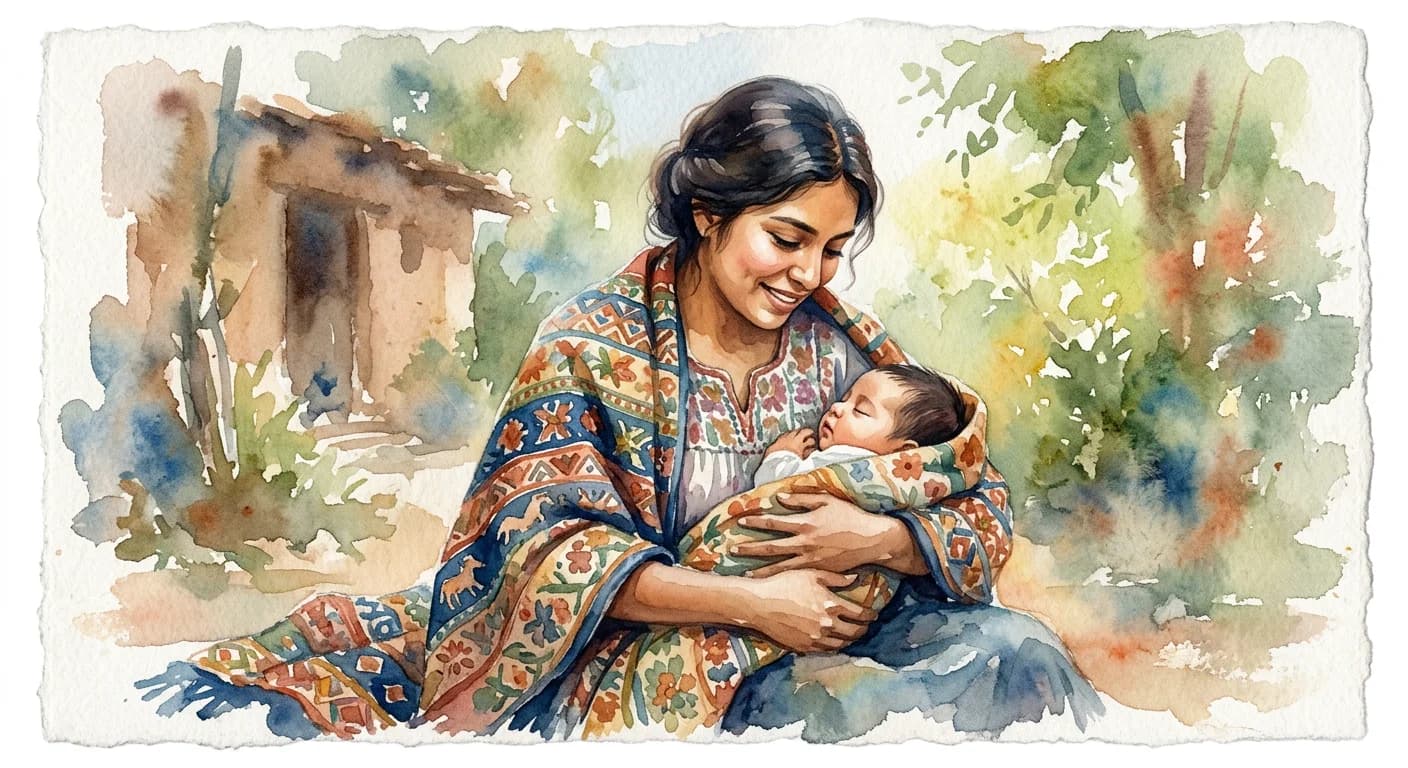
A rebozo is far more than a simple shawl; it is a quintessential Mexican textile, hand-woven and deeply imbued with cultural significance. This versatile garment serves as a cradle for infants, a stylish accessory, a practical carrying aid for goods, and a symbol of identity and tradition for Mexican women. Its intricate patterns and vibrant colors tell stories of regional heritage and artisanal skill, embodying comfort, maternal care, and feminine strength across generations.
Literal Translation
Shawl or wrap
The Story Behind the Word
The rebozo's roots stretch back to pre-Hispanic times, evolving from indigenous carrying cloths and blending with Spanish weaving techniques and materials like silk. It became a symbol of mestizaje, reflecting the fusion of cultures. Historically, the rebozo indicated a woman's social status, region of origin, and even marital status through its colors and weaving patterns. Beyond its practical uses, it holds profound emotional weight, often passed down from mother to daughter, representing a tangible link to ancestry and a woman's journey through life. It's not just an item of clothing, but a silent companion, witness to daily life, celebrations, and sorrows, embodying the resilience and artistry of Mexican women.
Experience It
Market Day Comfort
Elena expertly adjusted her rebozo, securing her sleeping infant comfortably against her back as she navigated the bustling market. The vibrant threads of the rebozo blended with the colorful stalls, a testament to its practical beauty and seamless integration into her daily life, allowing her hands free to select fresh produce.
Heirloom's Embrace
On her wedding day, Maria's grandmother draped a delicate, antique rebozo over her shoulders, its silk threads softened by decades of use. It was the same rebozo her mother and grandmother had worn, a silent blessing and a tangible connection to the lineage of strong women who came before her, wrapping her in their love and heritage.
What Gets Lost in Translation
English speakers often perceive a rebozo merely as a 'shawl' or 'scarf,' missing its profound functional and symbolic depth. It's not just an accessory; it's a tool, a cultural identifier, and an heirloom. The term 'rebozo' itself implies a specific weaving tradition, material quality, and cultural context that 'shawl' fails to convey, losing the essence of its Mexican identity.
Across Cultures
While not identical, similar versatile carrying cloths exist in many cultures. African 'kangas' or 'kitenges' serve as wraps and baby carriers, often with printed proverbs. The 'sarong' in Southeast Asia and 'sari' in South Asia also function as multi-purpose garments for modesty, warmth, and carrying, reflecting a shared human need for adaptable textiles.
The Deeper Meaning
The rebozo encapsulates a worldview where utility and beauty are inseparable, and tradition is a living, breathing force. It reveals a culture that values craftsmanship, intergenerational connection, and the quiet strength of women who seamlessly weave their roles as caregivers, workers, and keepers of heritage. It's a testament to ingenuity and the profound stories held within everyday objects.
Did You Know?
Frida Kahlo famously incorporated rebozos into her iconic self-portraits, not just as a fashion statement, but as a deliberate embrace of her Mexican identity and indigenous roots, turning the functional garment into a powerful artistic and political symbol.
How It's Used
Used to refer to the traditional Mexican shawl, worn by women for warmth, modesty, carrying children or goods, or as a fashion accessory.