U.
HomeRegionsLanguagesEmotionsCollections
Find Your Word

“The limits of my language mean the limits of my world.”

— Ludwig Wittgenstein, Philosopher

Untranslatable

A curated collection of the world's most beautiful expressions—words that remind us language is humanity's greatest invention.

  • Home
  • Collections
  • Regions
  • Countries
  • Emotions
  • Tags
  • Contexts
  • Finder
  • Europe
  • Asia
  • Americas
  • Africa
  • Middle East
  • About
  • Contact
  • Privacy Policy
  • Terms of Service

2026 © Untranslatable. All rights reserved.

    /
    /
    1. Home
    2. /
    3. Americas
    4. /
    5. Bohío
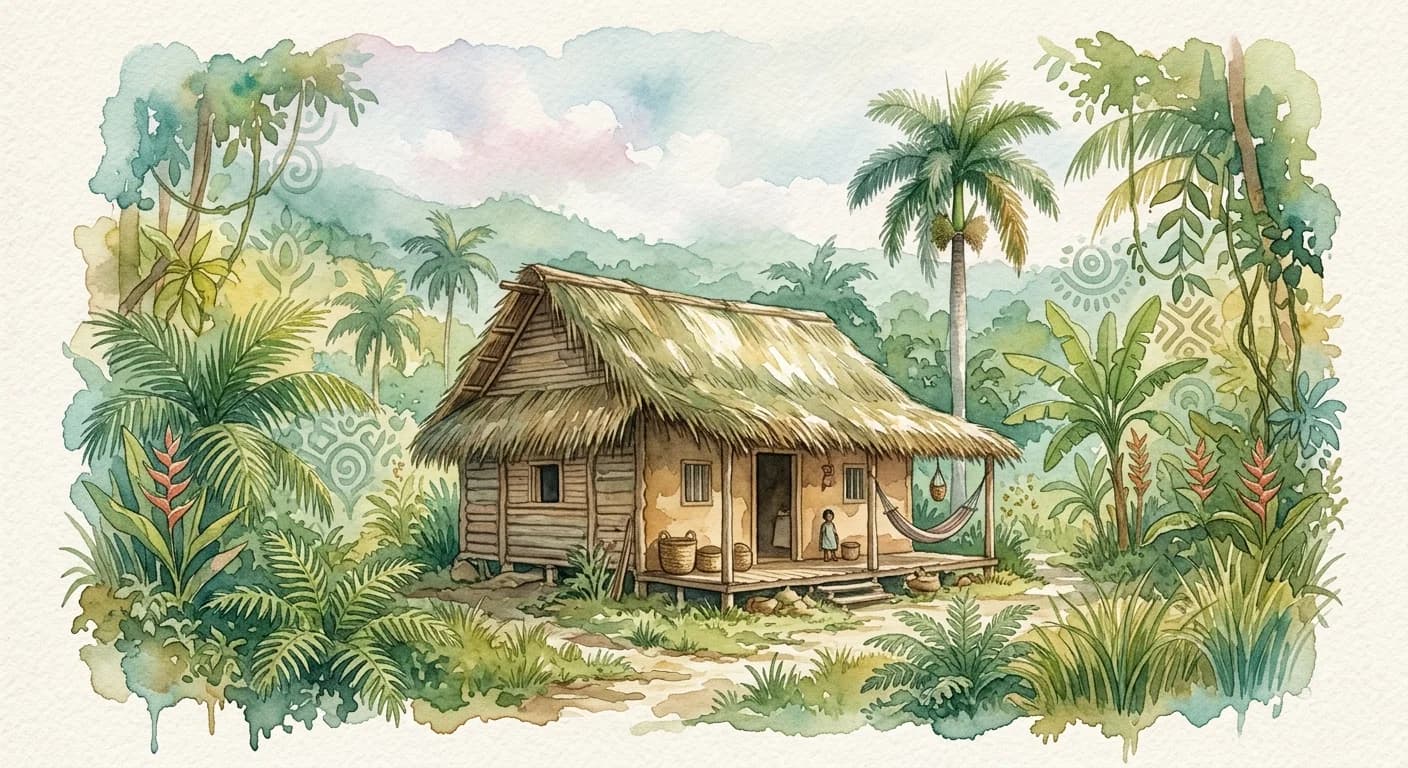
    Artistic representation of Bohío
    Spanish•
    🇨🇺Cuba🇩🇴Dominican Republic🇵🇷Puerto Rico

    Bohío

    /boh-EE-oh/

    Meaning

    A "bohío" transcends the simple definition of a hut; it embodies a traditional dwelling, often circular or rectangular, meticulously crafted from the very essence of the Caribbean landscape – palm fronds, local timber, and thatch. It evokes a profound sense of humble, rustic living, deeply interwoven with the land and its rhythms. These structures symbolize a harmonious, simpler existence, connecting inhabitants to their indigenous heritage and demonstrating remarkable resilience in the face of encroaching modernity.

    Literal Translation

    hut, cabin

    The Story Behind the Word

    The word "bohío" is deeply rooted in the pre-Columbian history of the Greater Antilles, particularly among the Taíno people, who were the primary inhabitants of Cuba before European arrival. It signifies not just a building, but a way of life that prioritized sustainability, community, and an intimate connection with nature. The construction techniques, passed down through generations, reflect an ingenious adaptation to the tropical climate, offering natural ventilation and protection from the elements. For Cubans, the bohío represents an enduring symbol of indigenous heritage and a nostalgic link to a simpler, more self-sufficient past, often romanticized as a period of genuine freedom and authentic living, distinct from colonial influences. It reveals a cultural value placed on resourcefulness and a deep respect for natural materials.

    Experience It

    Grandfather's Rustic Retreat

    Deep in the Cuban countryside, an old farmer still lives in his ancestral bohío. Its palm-thatched roof has sheltered generations, and the cool, earthy interior offers a respite from the midday sun, a testament to enduring tradition.

    Artist's Coastal Studio

    A young artist, inspired by indigenous forms, built a modern bohío on the coast. It's not just a studio; it's a statement, blending contemporary art with the rustic charm and natural materials of a traditional Cuban dwelling, connecting past and present.

    The Deeper Meaning

    The "bohío" embodies a philosophy of living in harmony with nature, emphasizing sustainability, resourcefulness, and community over material accumulation. It suggests a worldview where shelter is not just protection, but an organic extension of the environment, fostering a deep respect for the land and ancestral knowledge. It reflects a prioritizing of experiential wealth over material possessions.

    Did You Know?

    The design of the bohío, with its elevated floor and conical roof, was ingeniously adapted by the Taíno to withstand hurricanes, a testament to ancient Caribbean engineering.

    How It's Used

    Used to refer to a traditional indigenous dwelling, particularly in the Caribbean and parts of Latin America. It can also be used more generally to describe a rustic cabin or shack.

    Emotions
    belonging,comfort,warmth
    Contexts
    daily life,family,nature
    🇨🇺Cuba🇩🇴Dominican Republic🇵🇷Puerto Rico

    by Annelise Dubois·Written Mar 14, 2026·Updated Apr 3, 2026

    Related Words

    Explore more
    GezelligDutch

    Gezellig encapsulates a profound sense of warmth, belonging, and convivial comfort, extending beyond mere coziness to embrace the social and emotional atmosphere. It's the feeling of being truly at ease, surrounded by good company, laughter, and a shared sense of contentment. This untranslatable term describes not just a physical space, but a holistic experience where time seems to slow down, fostering genuine connection and a deep sense of well-being.

    SobremesaSpanish

    Sobremesa is the cherished, often extended period immediately following a meal, particularly lunch or dinner, where diners remain seated at the table to enjoy conversation, coffee, and digest not just the food, but the company itself. It’s a dedicated time for unhurried social bonding, storytelling, and shared laughter, transforming a simple meal into a profound communal experience. Far from just clearing the dishes, sobremesa is an integral part of Spanish social life, often lasting for hours.

    Pura vidaSpanish

    More than just 'pure life,' "Pura vida" encapsulates a profound philosophy of embracing the present moment with unwavering optimism and gratitude. It's a daily commitment to finding joy in simple pleasures, accepting life's challenges with a positive spirit, and prioritizing well-being over material possessions. This ubiquitous phrase reflects a national identity built on resilience, community, and an deep appreciation for nature's bounty.

    MamihlapinatapaiYaghan

    Mamihlapinatapai encapsulates that profound, unspoken moment when two individuals lock eyes, each silently acknowledging a mutual desire or intention, yet both hesitate to be the first to act upon it. It's a delicate dance of anticipation, a shared gaze brimming with common understanding and a quiet longing for the other to break the ice. This intricate look carries the weight of a shared, uninitiated potential, a silent conversation where both parties are perfectly aware of what could happen, but neither makes the first move.