U.
HomeRegionsLanguagesEmotionsCollections
Find Your Word

“The limits of my language mean the limits of my world.”

— Ludwig Wittgenstein, Philosopher

Untranslatable

A curated collection of the world's most beautiful expressions—words that remind us language is humanity's greatest invention.

  • Home
  • Collections
  • Regions
  • Countries
  • Emotions
  • Tags
  • Contexts
  • Finder
  • Europe
  • Asia
  • Americas
  • Africa
  • Middle East
  • About
  • Contact
  • Privacy Policy
  • Terms of Service

2026 © Untranslatable. All rights reserved.

    /
    /
    1. Home
    2. /
    3. Americas
    4. /
    5. Cabocla
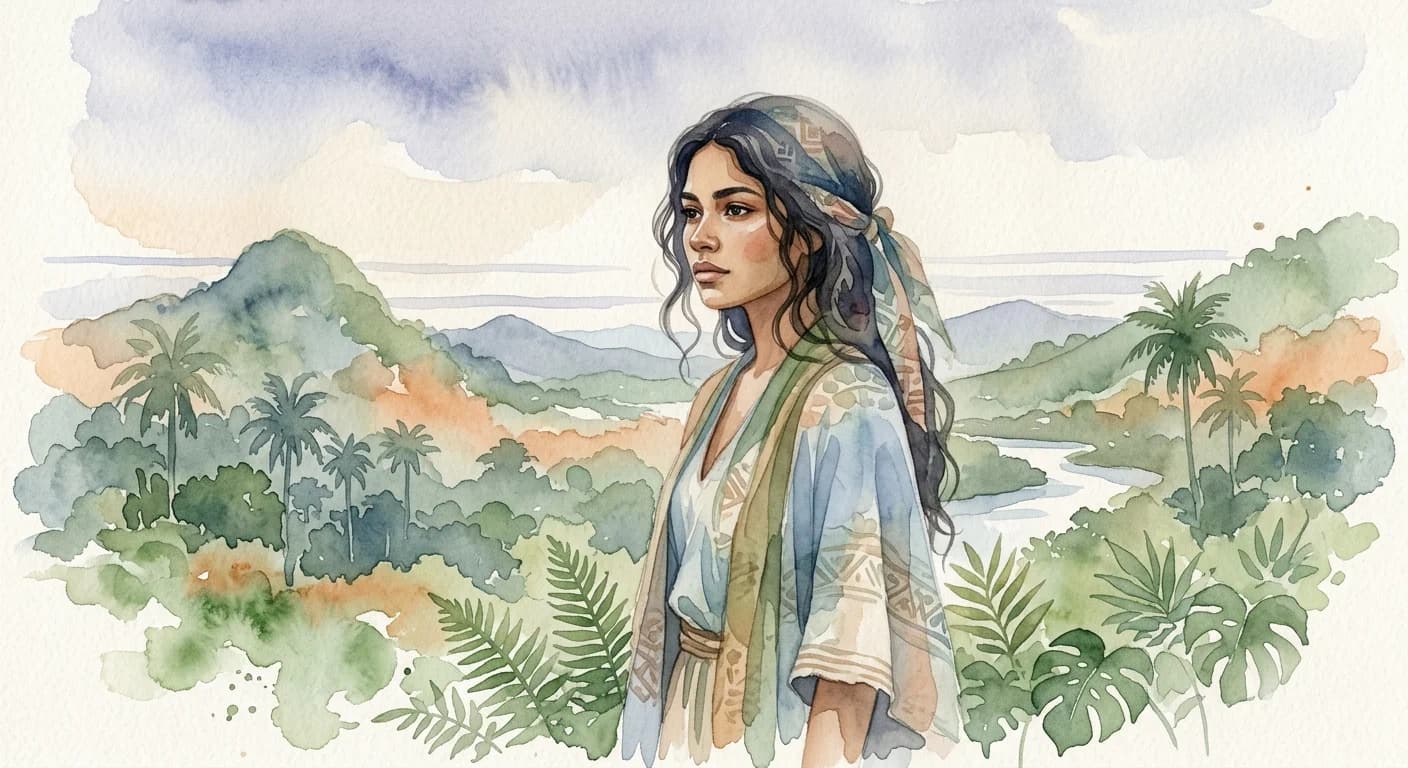
    Artistic representation of Cabocla
    Portuguese•
    🇧🇷Brazil

    Cabocla

    /kah-BOH-klah/

    Meaning

    Cabocla describes a woman of mixed Indigenous and European (typically Portuguese) ancestry in Brazil, embodying a profound connection to the land and a unique blend of cultural traditions. She often represents resilience, resourcefulness, and a deep understanding of natural rhythms, living in harmony with the environment. More than a racial classification, 'cabocla' evokes an image of earthy strength, quiet wisdom, and a spirit deeply rooted in the Brazilian interior, distinct from purely urban or singular ancestral identities.

    Literal Translation

    Derived from 'cabo' (cape/headland, referring to indigenous peoples of coastal regions) and possibly a diminutive suffix, or from Tupi words related to 'mixed'.

    The Story Behind the Word

    The term 'cabocla' is deeply embedded in Brazil's colonial history and its complex racial formation. It emerged from the widespread miscegenation between European colonizers and Indigenous peoples, particularly in the interior regions where these interactions were most intense. The word reflects a historical attempt to categorize and understand a new, hybrid identity that didn't fit neatly into European constructs. Culturally, the cabocla became a symbol of Brazilian identity itself – a fusion of origins, often associated with the rural heartland, folk traditions, and a pragmatic, resilient spirit. It reveals a society that, while historically stratified, also recognizes and, at times, romanticizes the synthesis of its foundational ethnic groups, particularly in narratives of national character and popular culture.

    Experience It

    The Healer's Wisdom

    Dona Maria, a cabocla from the Amazonian riverside, knew every herb and root in the forest. Generations of knowledge flowed through her, allowing her to cure ailments with ancient remedies, her hands calloused from gardening and her eyes sharp from observing nature.

    Spirit of the Festival

    During the June festivities, the young cabocla, Ana, danced with an effortless grace, her movements echoing both European folk dances and the subtle, grounded rhythms of her Indigenous ancestors. Her vibrant dress and natural charm captivated everyone, embodying the festive spirit of the interior.

    The Deeper Meaning

    The concept of 'cabocla' challenges rigid racial classifications, positing identity not as a singular origin but as a dynamic, interwoven tapestry. It speaks to a worldview that values ancestral blending and deep ecological connection as sources of strength and wisdom, suggesting that true belonging can arise from the synthesis of diverse heritages, rooted in a specific place.

    Did You Know?

    In Brazilian folklore, there's a mythical entity called Cabocla Jurema, a powerful spiritual guide and queen of the forest, revered in Afro-Brazilian religions like Umbanda and Candomblé.

    How It's Used

    Used in Brazil to describe a woman of mixed Indigenous and European descent, often emphasizing her connection to rural life and nature.

    Emotions
    belonging,nostalgia,resilience,warmth
    Contexts
    daily life,family,nature
    🇧🇷Brazil

    by Sofia Rossi·Written Mar 14, 2026·Updated Apr 3, 2026

    Related Words

    Explore more
    GezelligDutch

    Gezellig encapsulates a profound sense of warmth, belonging, and convivial comfort, extending beyond mere coziness to embrace the social and emotional atmosphere. It's the feeling of being truly at ease, surrounded by good company, laughter, and a shared sense of contentment. This untranslatable term describes not just a physical space, but a holistic experience where time seems to slow down, fostering genuine connection and a deep sense of well-being.

    SobremesaSpanish

    Sobremesa is the cherished, often extended period immediately following a meal, particularly lunch or dinner, where diners remain seated at the table to enjoy conversation, coffee, and digest not just the food, but the company itself. It’s a dedicated time for unhurried social bonding, storytelling, and shared laughter, transforming a simple meal into a profound communal experience. Far from just clearing the dishes, sobremesa is an integral part of Spanish social life, often lasting for hours.

    JugaadHindi

    Jugaad is more than just a quick fix; it embodies the spirit of resourceful, ingenious improvisation in the face of scarcity or systemic challenges. It's the art of bending rules, repurposing materials, and thinking outside the box to achieve a desired outcome, often with limited financial or technological resources. This approach celebrates clever workarounds and innovative adaptations, turning constraints into catalysts for creative problem-solving. It's about making do and making something work, brilliantly.

    Pura vidaSpanish

    More than just 'pure life,' "Pura vida" encapsulates a profound philosophy of embracing the present moment with unwavering optimism and gratitude. It's a daily commitment to finding joy in simple pleasures, accepting life's challenges with a positive spirit, and prioritizing well-being over material possessions. This ubiquitous phrase reflects a national identity built on resilience, community, and an deep appreciation for nature's bounty.