Wabi-sabi
/WAH-bee SAH-bee/
Meaning
Wabi-sabi is the profound appreciation for the ephemeral, the imperfect, and the incomplete aspects of existence. It is about discovering beauty in the subtle textures of age, the unique character of flaws, and the gentle decay that marks the passage of time. This philosophy encourages a quiet acceptance of impermanence and a mindful connection to the natural world, finding elegance in simplicity and authenticity.
The Story Behind the Word
Wabi-sabi's roots are deeply intertwined with Zen Buddhism in Japan, particularly the tea ceremony (chanoyu) developed in the 15th and 16th centuries. Zen teachings emphasize mindfulness, meditation, and the transient nature of life, which resonated with the aesthetic. Early tea masters, rejecting the opulent Chinese ceramics favored by the elite, began to prize rustic, often asymmetrical, and locally made pottery. This shift celebrated the humble, the natural, and the unadorned, reflecting a deeper spiritual understanding that true beauty isn't about perfection or grandeur, but about authenticity, the marks of time, and the inherent dignity of the simple. It reveals a Japanese worldview that finds profound meaning in the cycles of nature, the wisdom of age, and the quiet beauty of understated elegance.
Experience It
The Cracked Tea Bowl
During a quiet tea ceremony, Kenji pours matcha into an old ceramic bowl. A delicate crack, mended with gold lacquer (kintsugi), traces a lightning-like path across its surface, telling a story of resilience and repair. He savors the warmth, appreciating not just the tea, but the bowl's unique history and its perfectly imperfect form.
Garden's Autumn Whisper
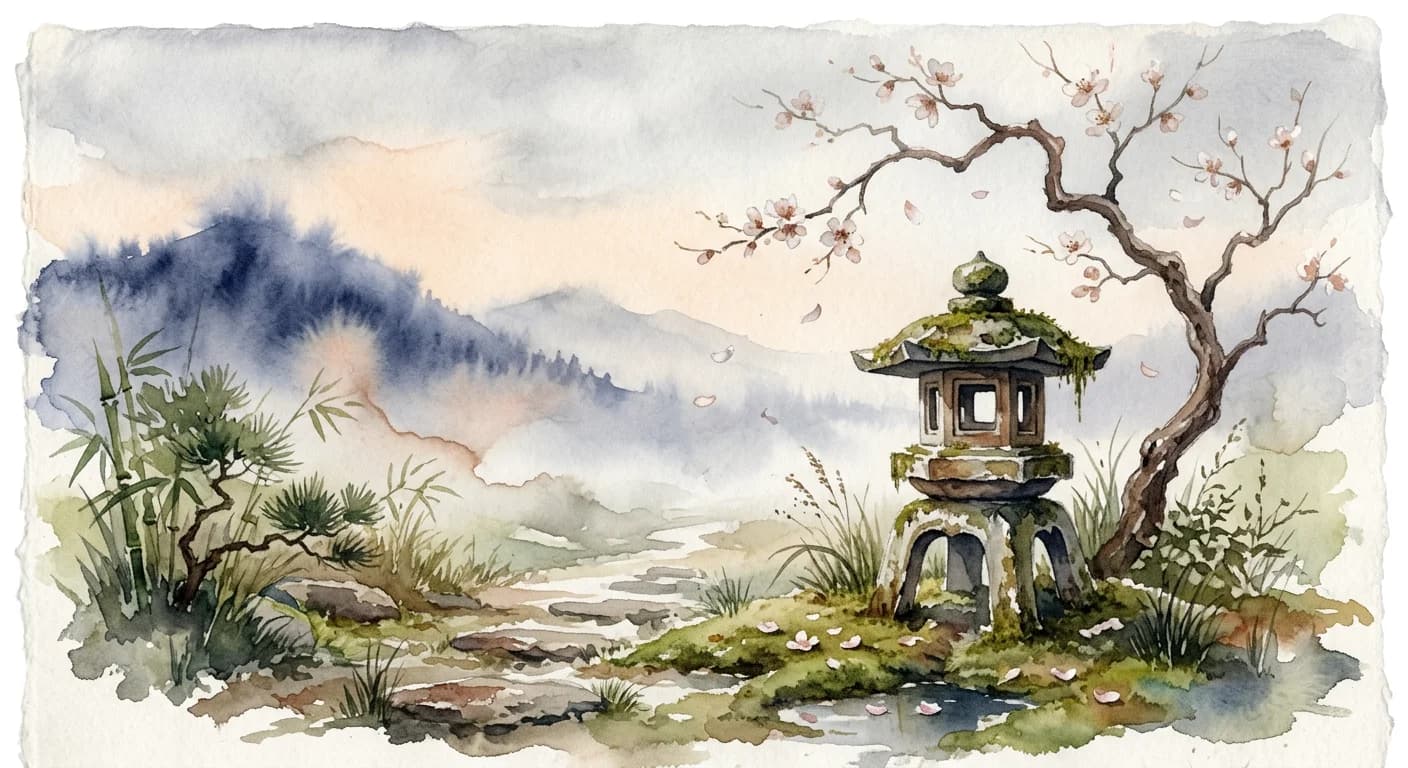
Ayaka sits on her veranda, gazing at her garden in late autumn. The leaves are not vibrant green but faded, some curled at the edges, slowly returning to the earth. A moss-covered stone lantern stands sentinel, its surface textured by decades of rain and sun. She feels a profound sense of peace, recognizing the transient beauty in the garden's gentle decline.
The Deeper Meaning
Wabi-sabi offers a profound counter-narrative to modern society's relentless pursuit of perfection, newness, and material accumulation. It encourages us to slow down, to observe closely, and to find contentment in the present moment, accepting the impermanence of all things. This philosophy cultivates humility, resilience, and a deep, empathetic connection to the natural world and the passage of time.
Did You Know?
The 'wabi' in wabi-sabi originally referred to the loneliness of living in nature, away from society, but evolved to mean rustic simplicity and quiet solitude, while 'sabi' denotes the bloom of time, the patina of age.
How It's Used
Appreciating the beauty of a cracked ceramic bowl or the patina on old wood.