Trülpa
/TROL-pah/
Meaning
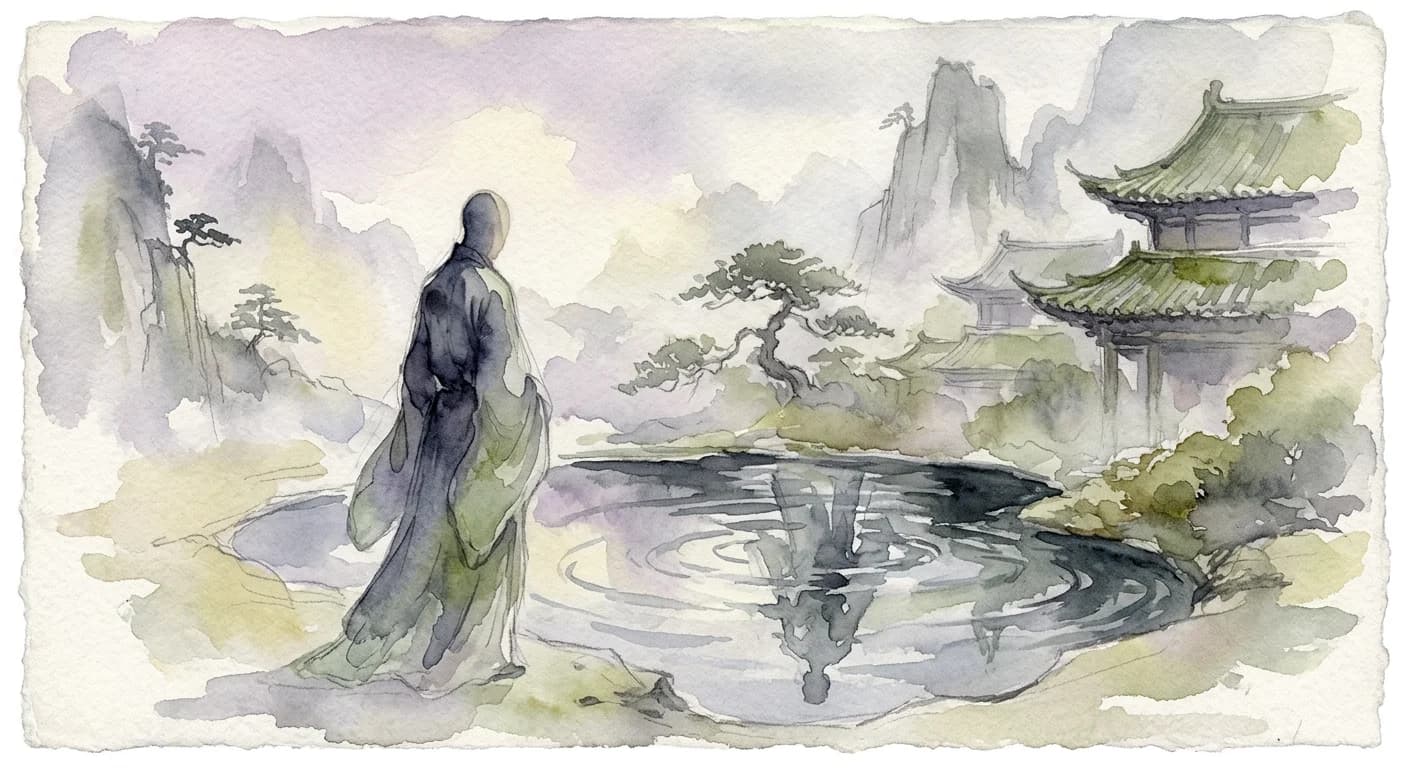
Trülpa describes the profoundly disquieting sensation of encountering one's own reflection, or that of a cherished possession, within a dreamscape, but with an unsettling distortion or uncanny quality. It transcends a mere dream image; it's a deeply visceral experience that suggests a subtle yet significant spiritual or psychological disequilibrium. This dream-reflection feels alien, hinting at the illusory nature of self and the potential for attachment to manifest as unsettling projections even in the subconscious realm, evoking a pervasive sense of unease or foreboding.
Literal Translation
dream reflection / illusory reflection
The Story Behind the Word
The concept of "trülpa" is deeply embedded in Tibetan Buddhist philosophy, which views reality itself as a form of illusion or 'maya.' In this framework, the self, its perceptions, and even its physical manifestations are seen as impermanent and ultimately empty of inherent existence. A trülpa dream, therefore, is not just a random nightmare, but a potent, symbolic message from the subconscious, reflecting a spiritual or psychological disturbance related to attachment, ego, or the mistaken belief in a solid, unchanging self. The unease it generates serves as a reminder of the karmic implications of clinging to illusions, even in the dream state, urging introspection and a re-evaluation of one's relationship with the material and perceived self. It underscores the Tibetan emphasis on self-awareness and the constant striving for liberation from delusion.
Experience It
The Distorted Face
A monk, deeply attached to his reputation, dreams of looking into a still pond. His reflection appears, but his features are subtly twisted, a grimace replacing his usual serene expression. He wakes with a profound sense of trülpa, realizing his attachment is creating an inner distortion.
The Unfamiliar Relic
A merchant, proud of his meticulously collected ancient thangka, dreams he sees it hanging in a dark room. Yet, in the dream, the thangka's colors are muted, its deities subtly menacing, and he feels an intense trülpa, questioning the true nature of his possessions and his attachment to them.
The Deeper Meaning
Trülpa profoundly illustrates the Tibetan Buddhist understanding of 'emptiness' (shunyata) and the illusory nature of self. It suggests that our attachments and delusions, even when subconscious, can manifest as unsettling projections, reminding us that clinging to a fixed self or material possessions can lead to unease and hinder spiritual progress. The dream serves as a potent, internal mirror reflecting our deeper karmic state.
Did You Know?
In Tibetan Buddhism, dreams are often seen as significant, and a trülpa dream can be interpreted as a karmic warning or an opportunity for spiritual insight and self-correction.
How It's Used
This term is used to describe a specific type of unsettling dream experience where one's reflection appears in a dream, often with a disturbing or otherworldly quality.