Barchey
/BAR-chay/
Meaning
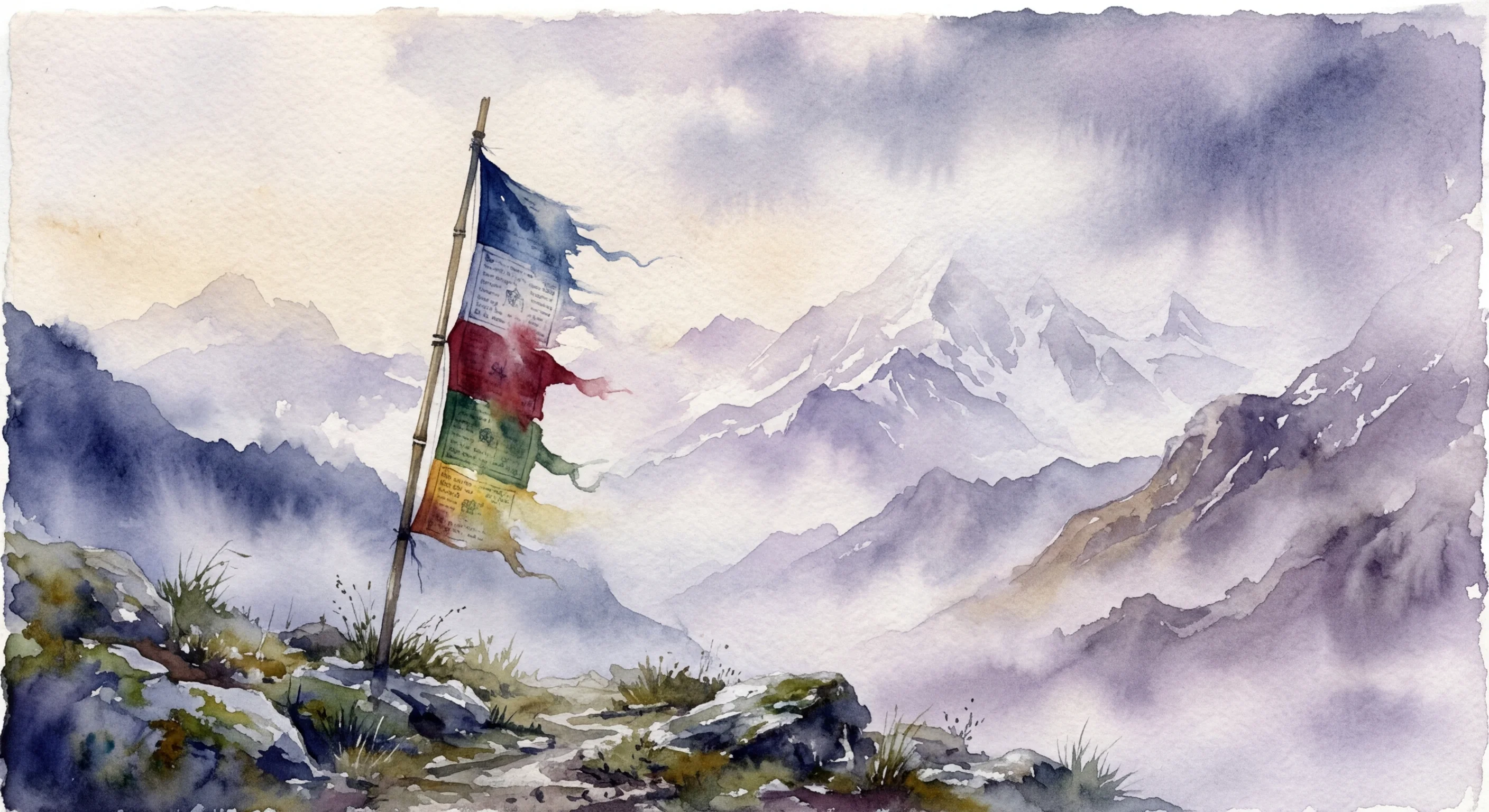
Barchey is a poignant Tibetan term encapsulating a profound and aching longing for one's homeland, particularly for those living in exile. It transcends simple homesickness, embodying a deep melancholy for the familiar landscapes, the sacred sounds of monasteries, the unique scents of the high plateau, and the intricate cultural fabric of Tibet. This yearning is often tinged with a bittersweet awareness of what has been irrevocably lost and may never be fully regained, forming a complex emotional current that runs deep within the Tibetan diaspora's heart.
Literal Translation
The literal translation of 'barchey' is complex and debated, but it broadly conveys a sense of 'longing for what is afar' or 'yearning for the homeland'.
The Story Behind the Word
The profound existence of 'barchey' in the Tibetan lexicon is deeply rooted in the traumatic experience of exile and the systematic cultural suppression faced by Tibetans. For a people whose identity is inextricably linked to their land, their spiritual practices, and a way of life that has endured for centuries, forced displacement creates an existential void. The concept of 'barchey' thus speaks to the resilience of memory and spirit, and the unshakeable connection to a homeland that is not merely a geographical location but the very soul of their being. It reflects a cultural value placed on continuity, tradition, and the sacredness of their ancestral lands, revealing a worldview where identity and place are inseparable, and loss of one profoundly impacts the other. It's a testament to the enduring hope and sorrow that coexist within the Tibetan heart.
Experience It
A Monk's Silent Prayer
An elderly monk in Dharamshala, eyes closed, fingers tracing prayer beads, feels a sudden, overwhelming wave of barchey. He sees the snow-capped peaks of his distant monastery, hears the faint chanting of his brethren, and smells the juniper incense burning in the cold mountain air, a vivid memory that brings tears to his eyes.
Diaspora's Digital Connection
A young Tibetan woman in New York scrolls through photos of Lhasa on her phone, images of the Potala Palace and bustling Barkhor market. A deep barchey washes over her, a longing for a place she has only known through stories and pictures, yet feels an ancestral pull towards, a yearning for roots she has never truly touched.
The Deeper Meaning
Barchey illuminates the Buddhist concept of impermanence and suffering, but also the enduring power of attachment, not just to people, but to place and cultural heritage. It highlights the spiritual dimension of homeland, suggesting that a physical location can be so deeply intertwined with one's spiritual and cultural identity that its absence creates a profound internal landscape of longing and memory. It speaks to the human need for belonging and the deep sorrow when that connection is severed.
Did You Know?
Despite its deep emotional weight, 'barchey' is not a term of despair, but often carries an underlying thread of hope and determination to preserve Tibetan culture and identity, even in exile.
How It's Used
Used to describe the deep emotional state of longing for one's homeland, particularly by Tibetans living in exile.