Mokkai
/MOH-k-kai/
Meaning
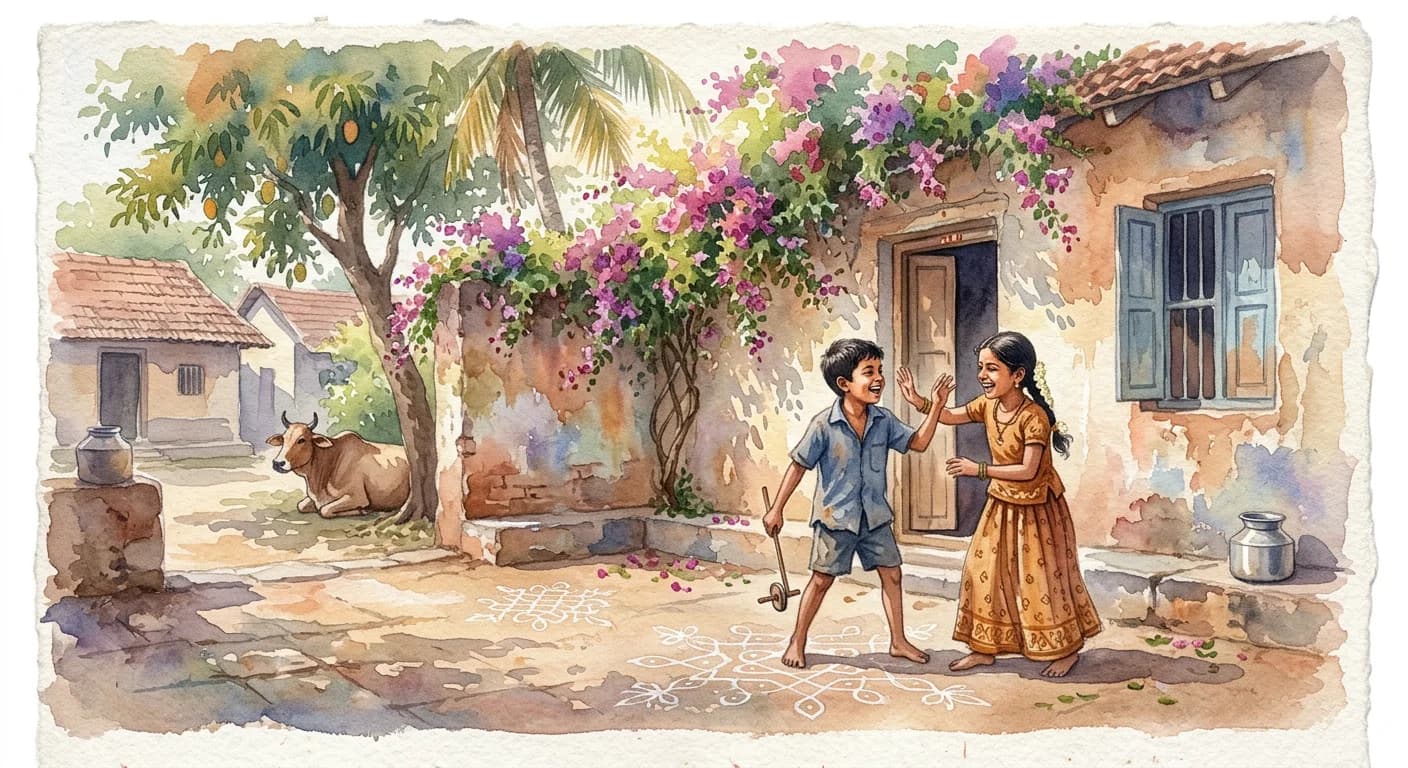
Mokkai describes a distinct form of playful, affectionate teasing, typically exchanged within close-knit relationships like family and trusted friends. It's a lighthearted jab or a gentle mockery, never intended to hurt, but rather to express familiarity, warmth, and a comfortable intimacy. This nuanced interaction often involves humorously pointing out minor flaws, silly actions, or endearing quirks, serving as a social lubricant that reinforces bonds and mutual understanding rather than creating distance.
Literal Translation
The literal meaning is debated, but it can relate to 'foolish' or 'silly' in a lighthearted context.
The Story Behind the Word
The existence of 'Mokkai' in Tamil culture is deeply intertwined with the value placed on strong, intimate community and family ties, where expressions of affection are often indirect and layered with humor. It reflects a cultural understanding that true closeness allows for a certain level of playful irreverence, where ribbing is a sign of acceptance and belonging, rather than disrespect. This tradition of affectionate teasing can be traced back to ancient Tamil literary traditions and folk humor, which often employed satire and playful banter to comment on human nature and social dynamics. It underscores a worldview where humor is a vital tool for navigating relationships, diffusing tension, and celebrating the unique personalities within a group, fostering a sense of shared joy and resilience.
Experience It
Sibling Supper Teasing
During a family dinner, Priya’s brother, Arjun, sees her struggle comically with a particularly stubborn piece of chicken. He leans over with a grin and says, 'Aiyyo, look at you, Miss Elegant! Still can't handle a simple chicken leg? Such mokkai!' Priya playfully shoves him, laughing, knowing his teasing comes from a place of love.
Friend's Fashion Faux Pas
Meena arrives at her friend's house wearing a bright, mismatched outfit she threw on in a hurry. Her friend, Kavya, immediately bursts into laughter, exclaiming, 'Oh, Meena! What is this mokkai outfit? Did you get dressed in the dark?' Meena rolls her eyes but smiles, appreciating Kavya's playful honesty and the comfort of their friendship.
What Gets Lost in Translation
English speakers might misunderstand 'Mokkai' as outright mockery or rudeness, failing to grasp the underlying affection and the established boundaries of the relationship. The nuance of it being a *loving* tease, where the intent is to connect rather than alienate, is often lost, leading to misinterpretations of what is actually a warm, intimate interaction.
Across Cultures
While not a direct translation, concepts akin to 'Mokkai' can be found in other cultures. Japanese 'Amae' (though broader, includes a desire for indulgent dependence) can sometimes manifest as playful teasing. In some Mediterranean and Latin American cultures, 'choteo' or similar forms of banter serve to build rapport and express affection, often with a similar lighthearted, non-malicious intent among close acquaintances.
The Deeper Meaning
'Mokkai' subtly reveals a philosophical understanding of relationships where vulnerability and authenticity are valued. It suggests that true intimacy allows for the playful dismantling of pretenses, fostering a sense of shared humanity and acceptance of imperfections. This word embodies a worldview where humor is not just entertainment but a profound tool for building and sustaining deep, resilient human connections.
Did You Know?
The word 'Mokkai' is also humorously applied in Tamil slang to describe a bad, unfunny joke or a dull situation, implying that it's 'foolish' or 'silly' in a disappointing way.
How It's Used
Used among friends and family to playfully tease or mock someone in a loving way.