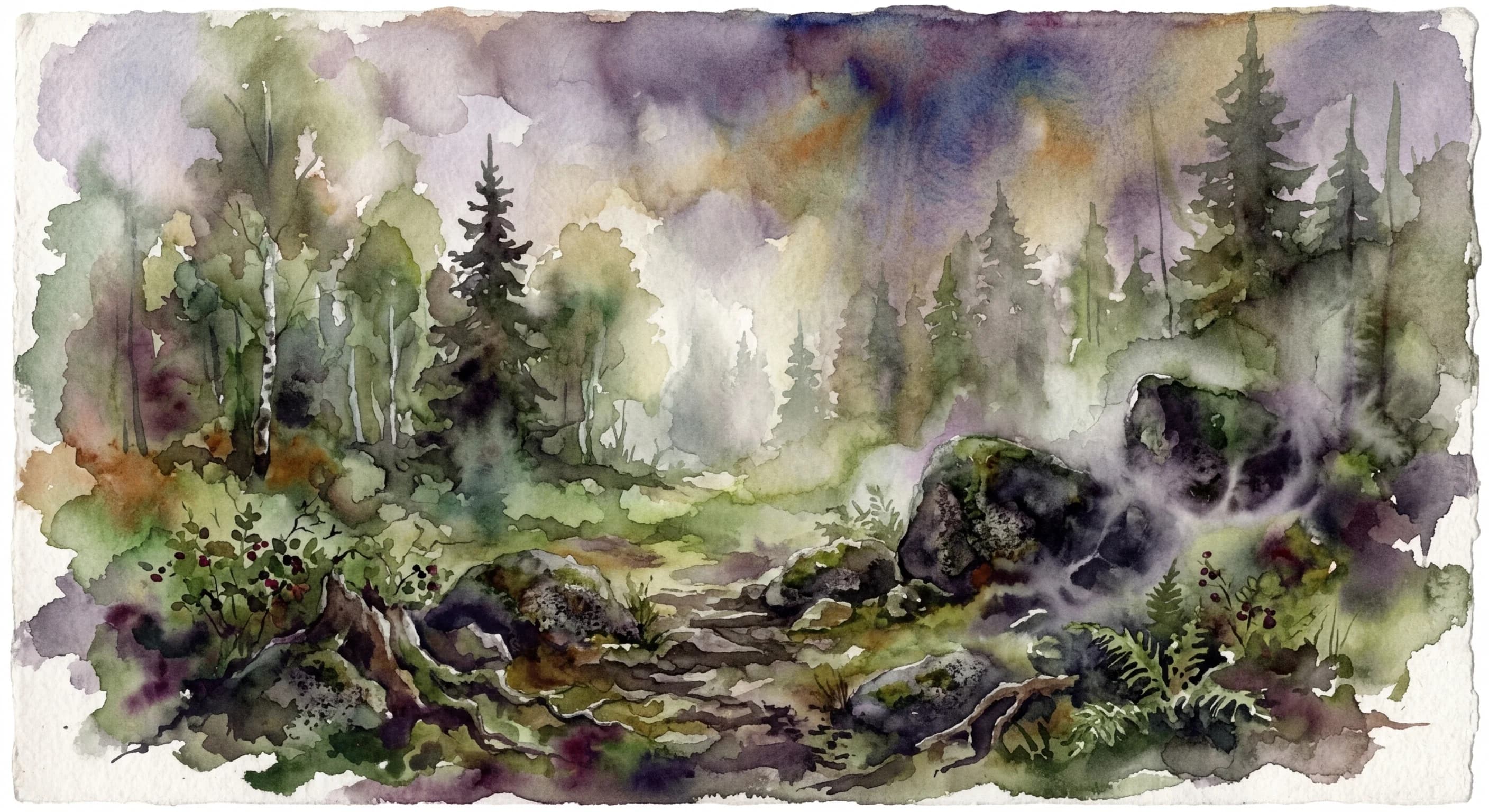
Metsäperkele
/MET-sah-PAIR-keh-leh/
Meaning
This potent Finnish exclamation, "metsäperkele," is a visceral cry born from the deep woods, combining 'metsä' (forest) with 'Perkele,' a primal Finnish thunder god and devil figure. It's an almost instinctual utterance of profound frustration, anger, or sheer surprise, particularly when grappling with the untamed, often overwhelming forces of nature. The word invokes an ancient, chaotic power to acknowledge the sheer difficulty or exasperation of a moment, reflecting a profound connection to and respect for the wild's formidable spirit.
Literal Translation
forest devil/thunder god
The Story Behind the Word
The existence of 'metsäperkele' is deeply rooted in Finland's historical relationship with its vast, often unforgiving forests. For centuries, the forest was both provider and adversary, a source of life and livelihood, but also a place of danger, mystery, and isolation. 'Perkele' itself stems from the Proto-Indo-European *Perkʷunos, a thunder god, later demonized with the advent of Christianity. However, in Finnish consciousness, 'Perkele' retained much of its primal, powerful, and somewhat unpredictable essence, rather than becoming a purely evil figure. The word reveals a Finnish worldview where nature is not merely a backdrop but an active, formidable presence, capable of both benevolence and malevolence. It speaks to a culture that has historically lived in close, often challenging, proximity to the wild, fostering a pragmatic yet deeply emotional response to its power. The utterance is a way to acknowledge the overwhelming force of nature, a primal scream when human will clashes with the forest's indifference.
Experience It
Lost in the Bog
After hours of slogging through a seemingly endless swamp, Marko realizes he's completely lost his bearings, his boots sinking deeper with every step. He throws his hands up in the air, a guttural cry escaping his lips: "Metsäperkele!"
Cabin Catastrophe
Elsa is trying to chop firewood for her remote cabin, but the axe head keeps flying off the handle, narrowly missing her foot each time. With a huff of exasperation and a glare at the stubborn log, she mutters, "Metsäperkele, this wood is impossible!"
The Deeper Meaning
This word encapsulates a profound aspect of the Finnish psyche: a deep-seated respect and slight fear of nature's raw power. It reflects a philosophy where humans are not always masters of their environment, but often subject to its whims. It's an acknowledgment of the sublime, sometimes terrifying, indifference of the natural world and the human experience of frustration when confronted by forces beyond control, particularly within the primeval embrace of the forest.
Did You Know?
While 'Perkele' is often translated as 'devil,' its pre-Christian roots as a thunder god suggest a much more complex, powerful, and less inherently evil figure than the Christian Satan. It's a force of nature itself!
How It's Used
Used as a strong exclamation of frustration, anger, or surprise, especially when facing difficulties in a natural setting or when something goes unexpectedly wrong.