Nyaka
/NYAH-kah/
Meaning
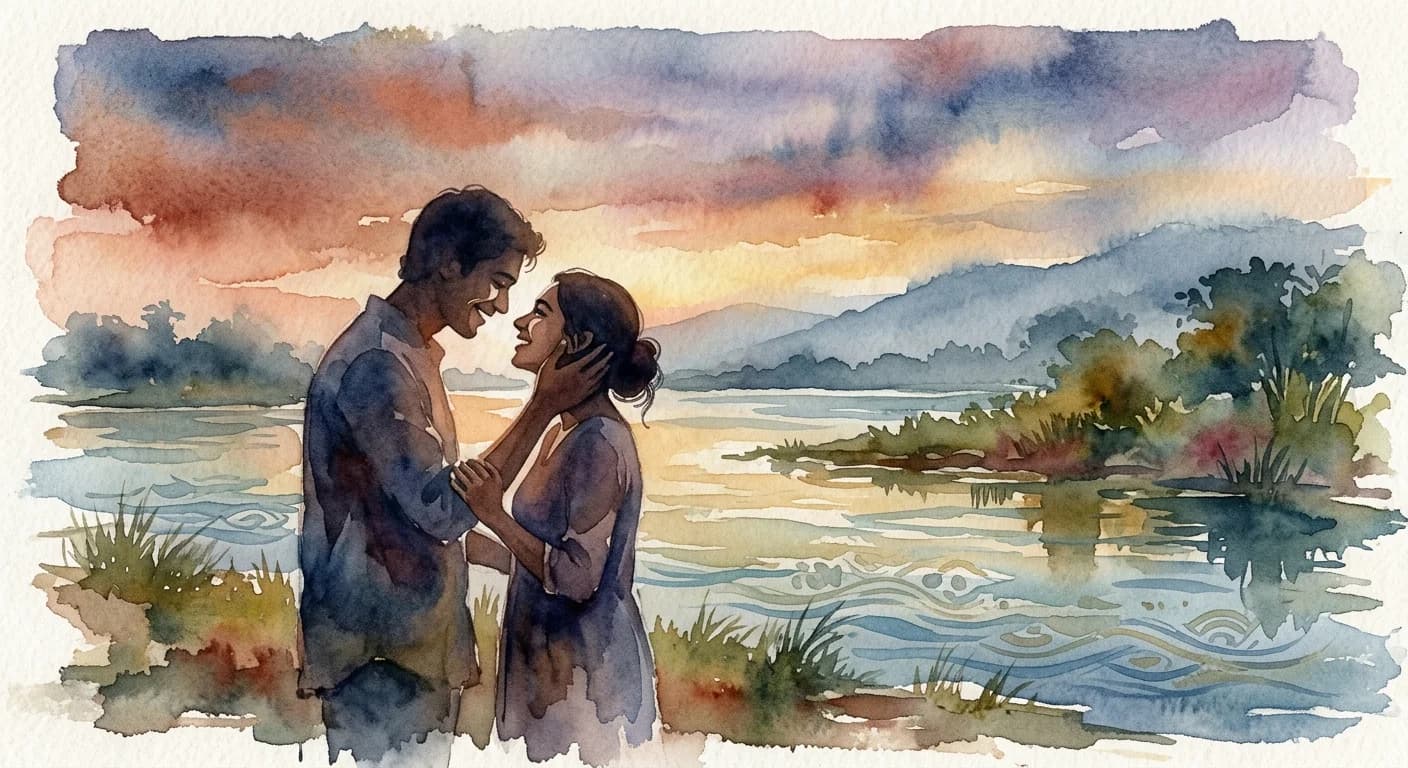
Nyaka encapsulates a delightful, nuanced form of playful interaction, often observed between individuals in comfortable, intimate relationships. It's more than mere teasing; it involves a sophisticated dance of words, expressions, and gestures that subtly challenges, pokes fun, and affirms affection simultaneously. This shared, often mischievous, banter deepens understanding and strengthens emotional bonds, signaling a secure base where vulnerability and lightheartedness can coexist without threat. It's a testament to the relationship's depth, where a playful jab is understood as an embrace.
Literal Translation
The literal meaning is not easily translatable and depends heavily on context, but it generally implies a playful or teasing manner.
The Story Behind the Word
The existence of 'Nyaka' in Bengali culture highlights a deep appreciation for the subtleties of human connection and the importance of playfulness in maintaining strong relationships. In a society that often values indirect communication and social harmony, 'nyaka' provides a culturally sanctioned avenue for expressing affection, even mild critique, without resorting to bluntness. It reflects a worldview where relationships are nurtured through shared humor and a keen understanding of unspoken cues. This word reveals how Bengalis perceive intimacy not just as shared vulnerability, but also as a comfortable space for lighthearted, often mischievous, interaction that reinforces belonging and mutual acceptance. It speaks to a cultural fabric where emotional intelligence and the art of subtle communication are highly prized.
Experience It
Siblings' Dinner Banter
At a family dinner, Rina playfully nudges her brother, Akash, about his new, slightly eccentric haircut. 'Ki re, Akash, cholche ki tor mathar opor? Kichu notun fashion naki?' (Hey Akash, what's going on with your head? Some new fashion, is it?) she asks with a twinkle in her eye, a clear 'nyaka' moment that has everyone laughing, including Akash, who retorts with an equally playful jab.
Couple's Morning Ritual
As Priya prepares breakfast, her husband, Rohan, sneaks up and tickles her, whispering, 'Eto bhalo ranna korcho, kintu nyaka chehara ta jokhon dekhi, pet bhore jay!' (You cook so well, but when I see that 'nyaka' face, my stomach fills up!) Priya swats him playfully, understanding his affectionate teasing, a daily 'nyaka' ritual that reaffirms their bond.
The Deeper Meaning
The concept of 'Nyaka' underscores a philosophical appreciation for the 'grey areas' of human emotion and interaction. It suggests that true intimacy isn't solely built on earnest declarations but also on the comfortable, often ambiguous, space of shared humor and gentle provocation. It reveals a worldview where relationships are dynamic, alive with playful friction, and where the ability to engage in such nuanced banter is a sign of deep trust and mutual understanding, rather than a lack of seriousness.
Did You Know?
Did you know that 'Nyaka' can also subtly imply a feigned innocence or exaggerated shyness, adding another layer of playful deception to its use in intimate interactions?
How It's Used
Used in informal conversations to describe playful teasing or lighthearted banter in a relationship.