U.
HomeRegionsLanguagesEmotionsCollections
Find Your Word

“The limits of my language mean the limits of my world.”

— Ludwig Wittgenstein, Philosopher

Untranslatable

A curated collection of the world's most beautiful expressions—words that remind us language is humanity's greatest invention.

  • Home
  • Collections
  • Regions
  • Countries
  • Emotions
  • Tags
  • Contexts
  • Finder
  • Europe
  • Asia
  • Americas
  • Africa
  • Middle East
  • About
  • Contact
  • Privacy Policy
  • Terms of Service

2026 © Untranslatable. All rights reserved.

    /
    /
    1. Home
    2. /
    3. Asia
    4. /
    5. Merajuk
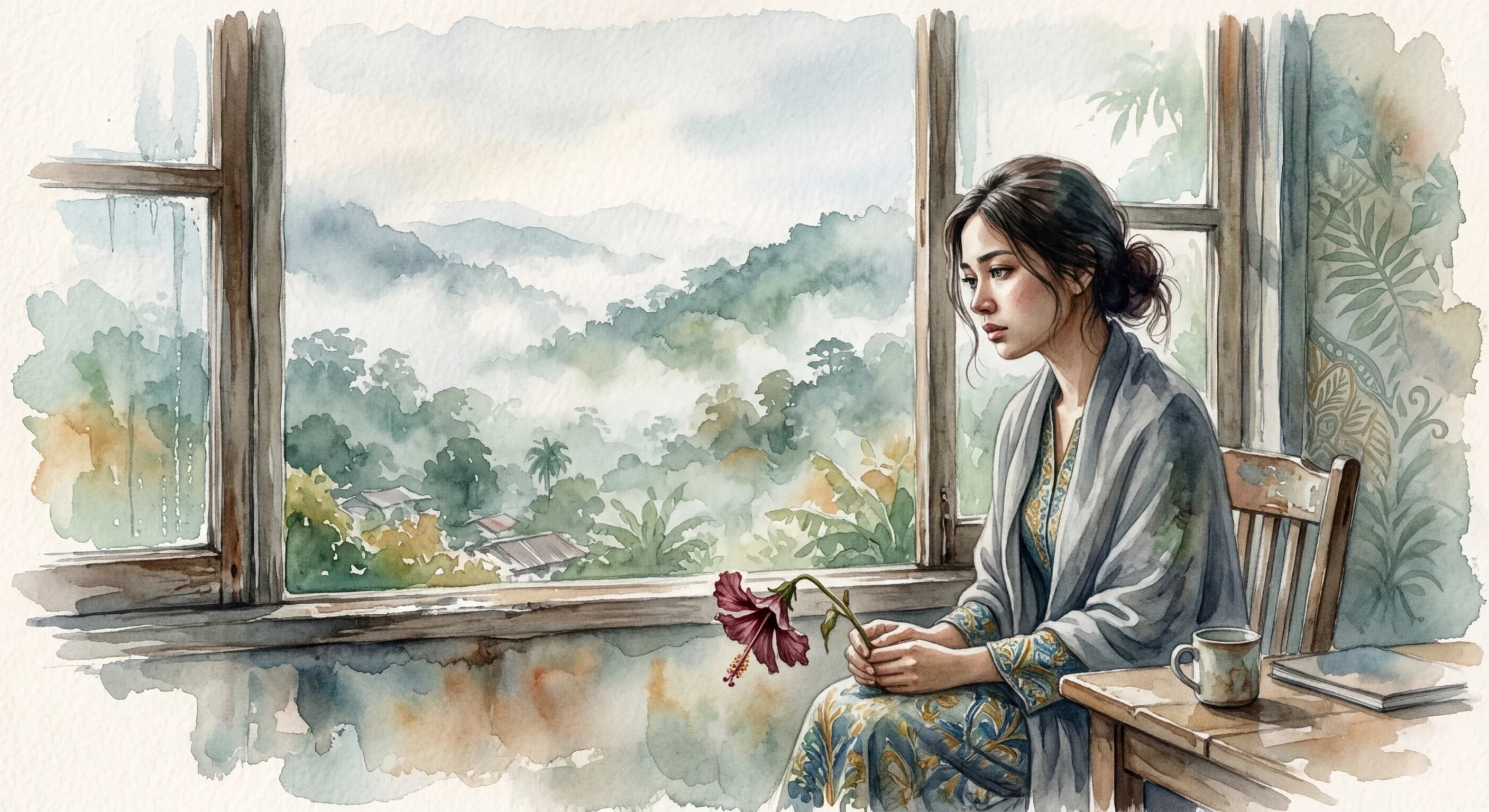
    Artistic representation of Merajuk
    Malay•
    🇮🇩Indonesia🇲🇾Malaysia

    Merajuk

    /meh-RAH-jook/

    Meaning

    Merajuk transcends simple sulking; it is a nuanced, often theatrical, expression of displeasure where an individual intentionally withdraws emotionally and physically to signal hurt or dissatisfaction. This 'performance of moodiness' is usually triggered by a perceived slight, unmet expectation, or feeling overlooked, and implicitly demands attention, apology, or reconciliation from others. It's a non-verbal plea for validation, a strategic silence designed to prompt an inquiry into one's feelings, common in close relationships within Malay and Indonesian cultures.

    Literal Translation

    to sulk, to be in a huff

    The Story Behind the Word

    The existence and prominence of 'merajuk' in Malay and Indonesian cultures speaks volumes about their emphasis on indirect communication, maintaining social harmony (jaga air muka – saving face), and the intricate web of interpersonal obligations. Rather than direct confrontation, which can be seen as aggressive or disruptive to harmony, 'merajuk' offers a culturally sanctioned, albeit passive-aggressive, channel for expressing grievances. It reflects a societal understanding that emotional needs, especially within family and intimate circles, are to be intuitively recognized and addressed, often without explicit verbalization. This behavior is deeply rooted in the collectivist nature of these societies, where individual feelings are often intertwined with group dynamics, and emotional displays are carefully managed to preserve relationships.

    Experience It

    The Unnoticed Gift

    Auntie Leha spent hours cooking a special dish for the family gathering, but her nephew, Amir, only ate a little. She didn't say anything, but she quietly cleared her plate, sat alone on the sofa, and barely spoke for the rest of the evening, hoping someone would ask what was wrong. She was merajuk.

    Forgotten Anniversary

    When Rizal forgot their five-year anniversary, his wife, Siti, didn't yell. Instead, she became unusually quiet, avoided eye contact, and gave short, clipped answers to his questions, making it clear she was upset without directly stating it. She was deep in a state of merajuk until he realized his mistake.

    The Deeper Meaning

    'Merajuk' highlights a cultural preference for indirect communication and emotional intelligence within close relationships. It underscores the belief that true intimacy involves the ability to 'read' unspoken cues and understand underlying emotional states, rather than relying solely on explicit verbalization. This implicitly places a higher value on empathy and intuitive understanding as cornerstones of strong social bonds.

    Did You Know?

    Did you know 'merajuk' is often accompanied by a specific body language? This can include crossed arms, a pouting lip, averted gaze, or a general air of dramatic withdrawal, making the 'performance' even clearer.

    How It's Used

    Used when someone is sulking or acting moody, usually after a disagreement or when feeling ignored or hurt. It can be used playfully or seriously.

    Emotions
    longing,melancholy
    Contexts
    family,friendship,romance
    🇮🇩Indonesia🇲🇾Malaysia

    by Annelise Dubois·Written Mar 10, 2026·Updated Apr 3, 2026

    Related Words

    Explore more
    SaudadePortuguese

    Saudade encapsulates a profound, melancholic longing for something or someone cherished that is absent, often with the bittersweet knowledge that it may never return. It's a deep emotional state tinged with nostalgia, evoking a sense of loss for past experiences, places, or people, yet also holding a tender appreciation for the beauty of what once was. This yearning is not merely sadness, but a complex tapestry of desire, memory, and a poignant acceptance of absence, holding the beloved in a warm, persistent embrace within the heart.

    Wabi-sabiJapanese

    Wabi-sabi is the profound appreciation for the ephemeral, the imperfect, and the incomplete aspects of existence. It is about discovering beauty in the subtle textures of age, the unique character of flaws, and the gentle decay that marks the passage of time. This philosophy encourages a quiet acceptance of impermanence and a mindful connection to the natural world, finding elegance in simplicity and authenticity.

    IkigaiJapanese

    Ikigai is more than just a reason to get out of bed; it's a deeply personal and evolving sense of purpose that brings genuine fulfillment and joy to one's life. It represents the sweet spot where your passions, talents, needs of the world, and what you can be paid for beautifully converge. Discovering your ikigai often leads to a life lived with intentionality, resilience, and a profound connection to one's contributions. It's the intrinsic motivation that fuels a meaningful existence, regardless of external circumstances.

    NunchiKorean

    Nunchi is the sophisticated, almost telepathic, ability to instantly grasp the unspoken dynamics of any social situation, anticipating others' thoughts and feelings, and then responding with impeccable grace and timing. It's an acute form of social intuition, allowing one to navigate complex interpersonal landscapes by reading subtle cues like body language, tone, and context. Possessing good nunchi means effortlessly understanding the underlying emotional currents and adjusting one's behavior to maintain harmony and effectiveness, often without a single word exchanged.