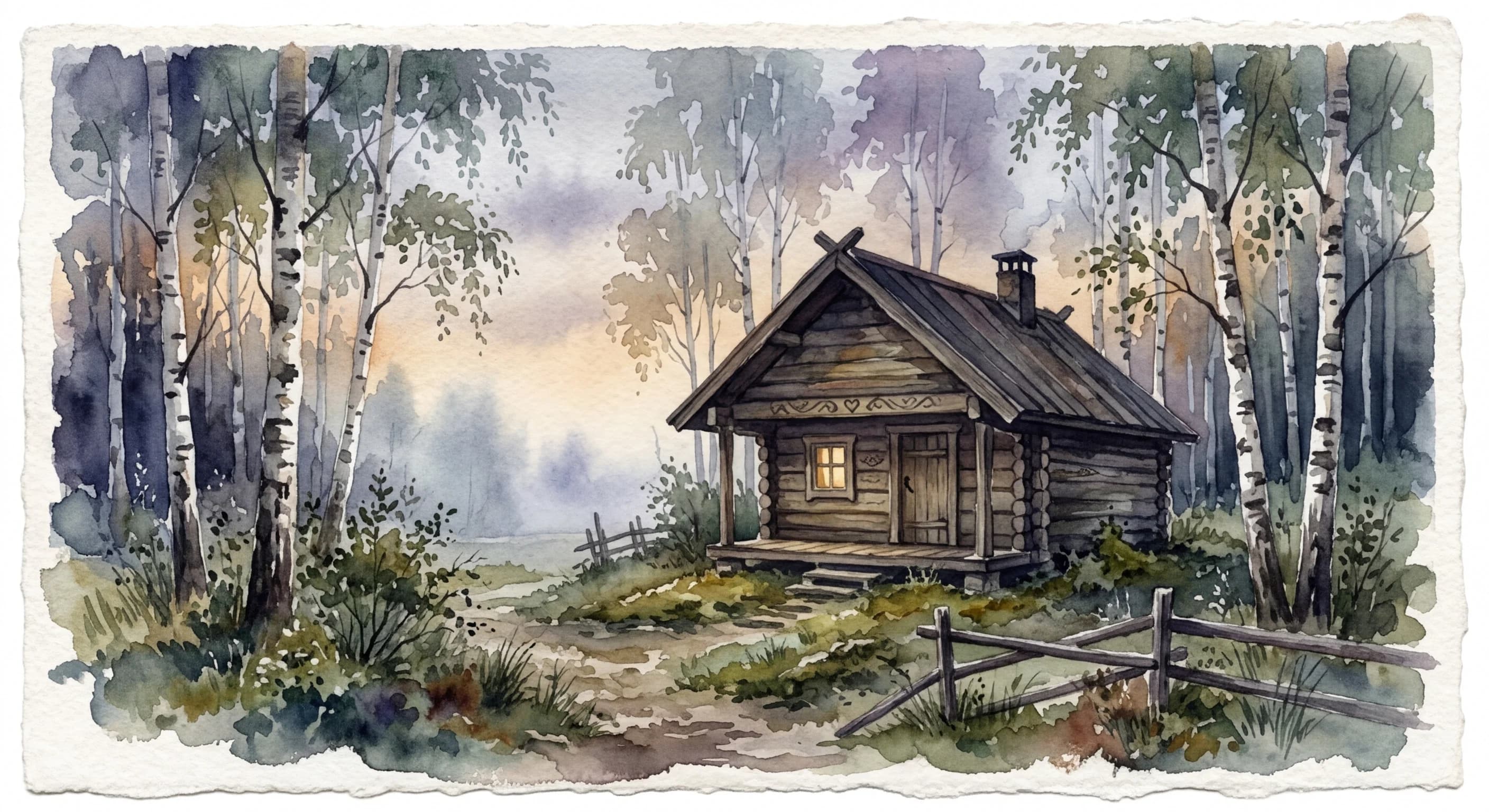
Kökkö
/KUHK-kuh/
Meaning
Kökkö conjures the image of a small, often weather-beaten and delightfully imperfect cabin or outbuilding nestled in the Finnish landscape. It evokes a profound sense of rustic charm and a nostalgic longing for simpler times, serving as a cherished repository of childhood memories or a humble, no-frills sanctuary. Far from suggesting mere neglect, it carries an almost affectionate connotation, representing a beloved space where one can shed the complexities of modern life and discover a unique blend of belonging and profound peace. It is more than just a structure; it's a testament to resilience and a quiet haven for the soul.
Literal Translation
Shack, hovel
The Story Behind the Word
The existence of 'kökkö' in Finnish culture is deeply rooted in the nation's history of self-sufficiency, connection to nature, and a certain stoic pragmatism. Finland's vast forests and numerous lakes made small, functional outbuildings essential for farming, fishing, and forestry for centuries. These structures were built to last, often with minimal resources, reflecting a 'make-do' mentality. The word reveals a cultural appreciation for authenticity, durability, and a rejection of unnecessary ostentation. It also speaks to the Finnish concept of 'sisu' – resilience and perseverance – as these humble structures have often weathered generations, becoming symbols of continuity and a link to ancestral ways of life. 'Kökkö' embodies a cultural philosophy that finds beauty and value in the unpolished, the enduring, and the genuinely useful, rather than the overtly grand or new.
Experience It
Grandfather's Fishing Kökkö
Every summer, my grandfather would retreat to his tiny, moss-covered fishing kökkö by the lake. It was barely more than four walls and a leaky roof, but inside, the scent of woodsmoke and old memories always brought a smile to his face.
Childhood Play Kökkö
The old tool shed in the backyard, a true kökkö, was our secret hideout as children. We'd spend hours there, imagining grand adventures, despite the spiders and the creaky door, finding immense joy in its humble confines.
What Gets Lost in Translation
English speakers might misunderstand 'kökkö' as simply a 'shack' or 'hovel,' missing the crucial layer of affection and nostalgic value. While it describes something small and unkempt, the Finnish usage implies a cherished, perhaps even beloved, structure rather than something purely dilapidated or undesirable. The inherent charm and emotional connection are often lost in a direct translation.
Across Cultures
Similar concepts of humble, cherished retreats exist globally. Japan's 'wabi-sabi' aesthetic celebrates imperfection and transience, resonating with the kökkö's charm. In English, 'rustic cabin' or 'fishing shack' might come close, but lack the specific Finnish emotional depth. Norwegian 'hytte' or Swedish 'stuga' also describe small cabins, but 'kökkö' specifically emphasizes the endearing dilapidation and personal history.
The Deeper Meaning
The word 'kökkö' encapsulates a profound Finnish philosophical outlook that values authenticity, resilience, and a deep connection to nature over material perfection. It suggests that true comfort and belonging can be found not in pristine, modern structures, but in humble, enduring spaces imbued with history and personal meaning. It's a quiet testament to finding beauty in imperfection and sufficiency in simplicity.
Did You Know?
The term 'kökkö' can sometimes be used playfully to describe something a bit clumsy or poorly made, extending its meaning beyond just structures to objects or even situations that have an endearing, rustic imperfection.
How It's Used
Used to describe small, old, and often neglected cabins, sheds, or outbuildings, particularly in rural settings. It can be used affectionately to refer to a basic summer cottage or a storage shed.