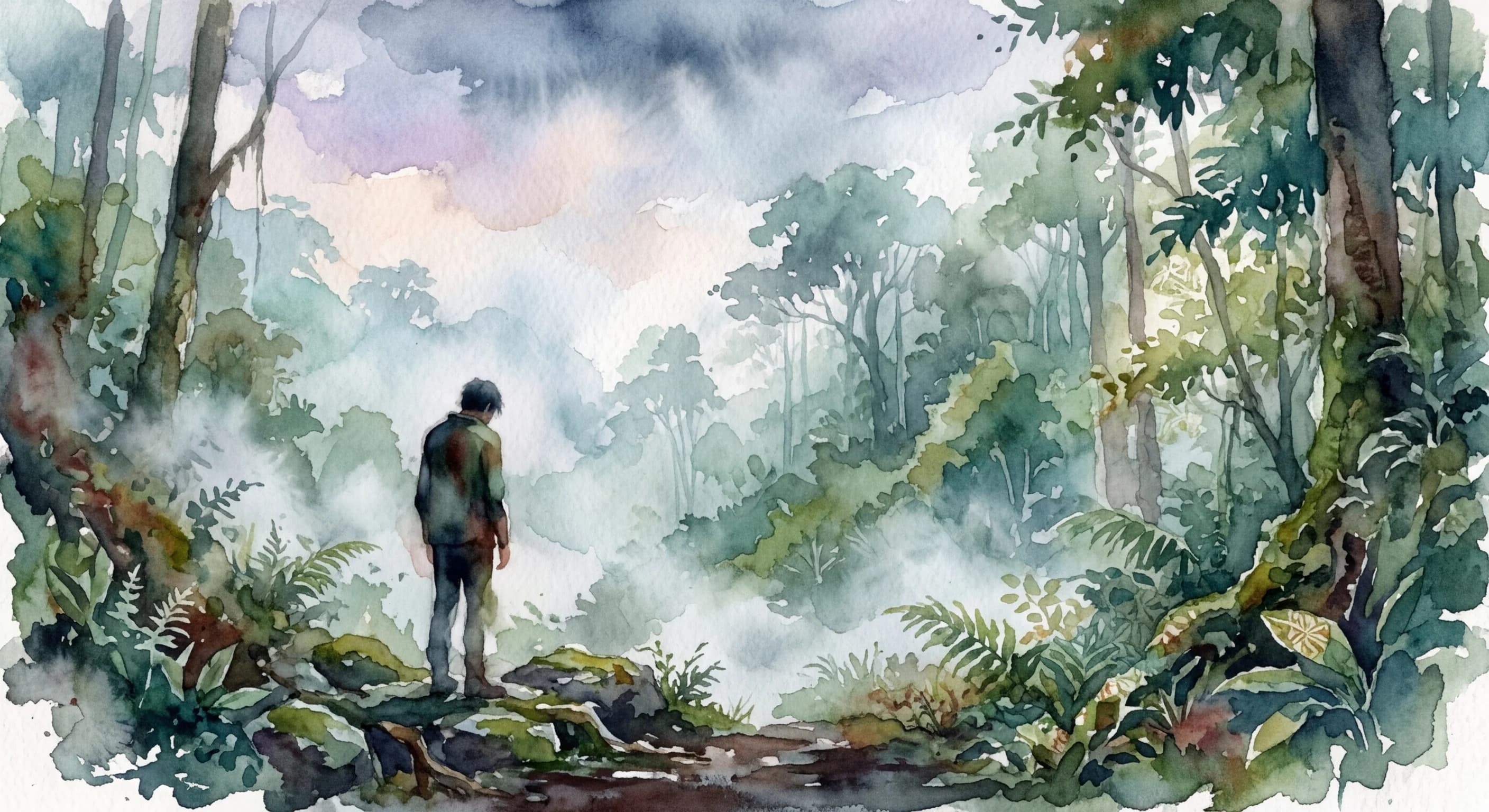
Terkocoh-kocoh
/ter-koh-choh-koh-choh/
Meaning
Terkocoh-kocoh vividly captures the frantic, breathless state of someone gasping for air, often after an intense physical exertion or a sudden, startling shock. It's not merely being out of breath, but rather embodying the desperate, almost panicked struggle to regain composure, with the repetitive 'kocoh-kocoh' mimicking the audible, rapid inhalations and exhalations. This word paints a visceral picture of physical vulnerability, where the body's demand for oxygen overrides all else, creating a moment of raw, ungraceful struggle.
Literal Translation
Repeatedly panting/gasping
The Story Behind the Word
The existence of 'terkocoh-kocoh' in Malay reflects a culture that pays close attention to the nuances of physical and emotional states, often expressed through reduplication for emphasis. In a society where physical labor was historically commonplace and sudden encounters with nature (or even social situations) could be startling, a precise word for this specific state of breathless panic was essential. It highlights an appreciation for the body's limits and the often undignified, yet universally understood, experience of losing control of one's breath. The word also subtly touches upon the Malay emphasis on 'budi bahasa' (good manners); to be 'terkocoh-kocoh' in public might imply a temporary loss of composure, an unplanned and somewhat vulnerable state that is keenly observed.
Experience It
Chasing the Bus
Ahmad saw his bus pulling away and sprinted with all his might, just barely catching it. As he slumped into a seat, he was terkocoh-kocoh, chest heaving, trying to calm his racing heart.
Sudden Fright
Walking alone at night, a sudden rustle in the bushes made Lina jump. Her heart pounded, and she found herself terkocoh-kocoh, her breathing shallow and ragged from the fright.
The Deeper Meaning
This word reveals a cultural understanding of human fragility and the body's primal responses. It acknowledges moments when our physical being takes over, stripping away pretense and exposing a fundamental need for survival – the simple act of breathing. It subtly suggests that even in a culture valuing composure, there are universal, uncontrollable physical reactions that connect us all.
Did You Know?
The reduplication 'kocoh-kocoh' isn't just for emphasis; it directly imitates the sound of rapid, desperate gasping, making the word itself an onomatopoeia of breathlessness.
How It's Used
Used to describe someone who is panting heavily, often after running, climbing, or experiencing a fright. It can also be used metaphorically for someone struggling to keep up with a fast-paced situation.