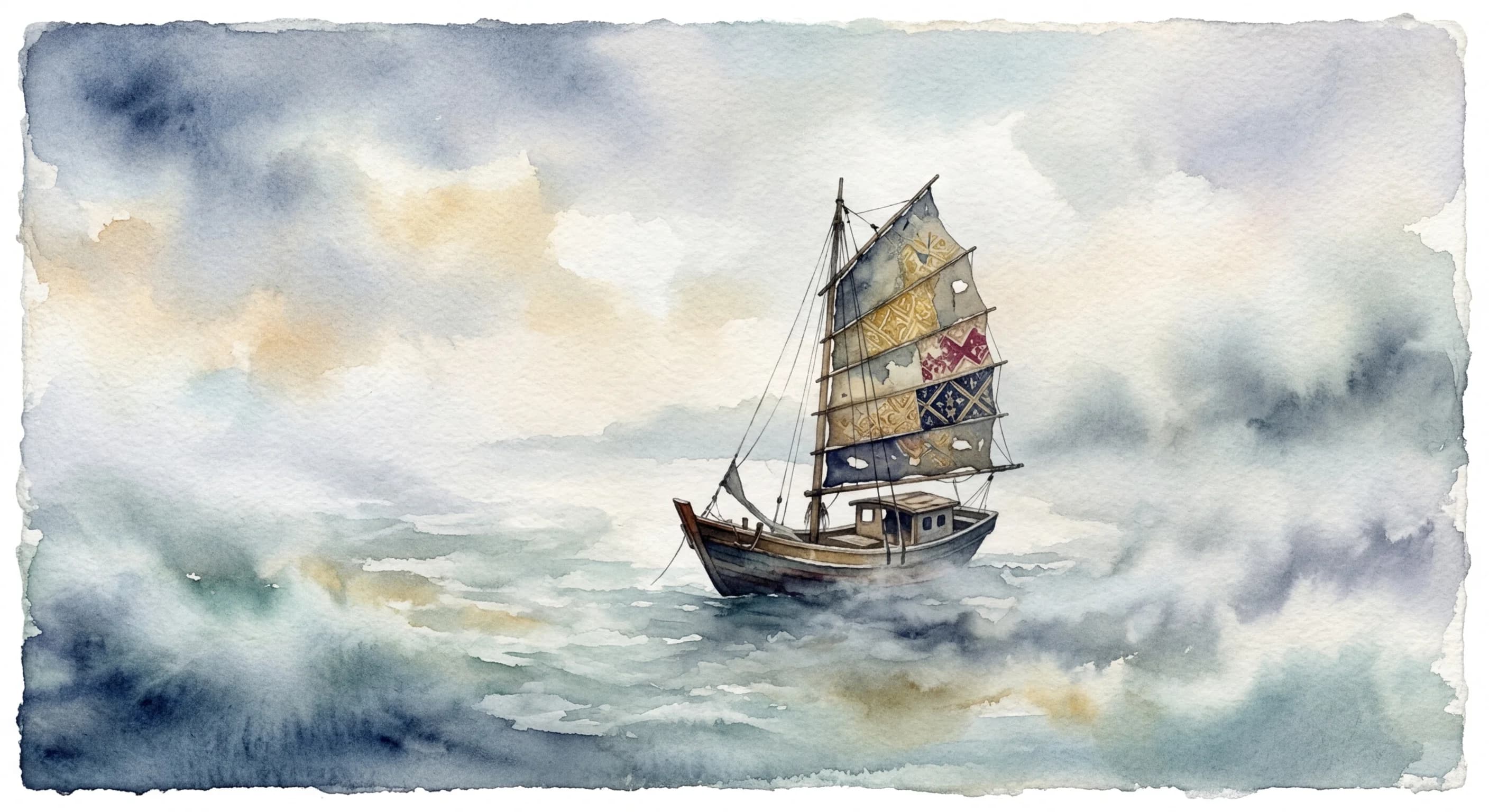
Terkontang-kanting
/TER-kon-tang-KAN-ting/
Meaning
Terkontang-kantiing vividly portrays a state of profound disarray, like a rudderless boat tossed relentlessly by turbulent waves, or scattered debris caught in a whirlwind. It encapsulates not just physical displacement but a deep-seated mental or emotional confusion, a complete loss of bearing where one feels utterly helpless and without direction. The reduplication emphasizes the persistent, almost cyclical nature of this chaos, suggesting a prolonged struggle against forces beyond one's control.
Literal Translation
Adrift and scattered/confused
The Story Behind the Word
This word reflects the Malay worldview, deeply influenced by a history of seafaring and a close relationship with nature. The imagery of being 'adrift' resonates strongly in a culture where navigating waters was essential for survival and trade. It speaks to a collective understanding of vulnerability to larger forces, be they natural elements or societal upheavals. The emphasis on disarray and loss of stability highlights a cultural value placed on order, harmony, and clear direction, both individually and communally. To be 'terkontang-kanting' is to be in a state contrary to the desired equilibrium, underscoring the importance of guidance, community, and a sense of belonging in Malay society. It’s a powerful descriptor for times of uncertainty, be it personal turmoil or national crisis, signifying a period where things are not as they should be, and a return to stability is yearned for.
Experience It
Post-Storm Village
After the unexpected monsoon, the small fishing village was left terkontang-kanting. Homes were damaged, boats were scattered, and the community, usually so organized, was in utter disarray, struggling to find a way forward amidst the wreckage.
Lost in Life's Crossroads
After losing his job and going through a difficult breakup, Amir felt completely terkontang-kanting. He had no idea what his next step should be, his future seemed uncertain, and he drifted aimlessly through his days, unable to find an anchor.
The Deeper Meaning
The word reveals a deep-seated cultural awareness of human fragility and the often-overwhelming power of external forces. It underscores a philosophy that values stability, clarity, and communal support, as being terkontang-kanting represents a profound disruption to these ideals. It implicitly suggests that true well-being is found in having direction, purpose, and a solid foundation, whether personal or societal.
Did You Know?
The 'kontang-kanting' part of the word is an onomatopoeic reduplication, mimicking the sound or sensation of something being tossed back and forth uncontrollably, adding to its vivid imagery.
How It's Used
Used to describe a person who is lost, confused, or in a state of disarray, or a situation that is chaotic and unstable.