U.
HomeRegionsLanguagesEmotionsCollections
Find Your Word

“The limits of my language mean the limits of my world.”

— Ludwig Wittgenstein, Philosopher

Untranslatable

A curated collection of the world's most beautiful expressions—words that remind us language is humanity's greatest invention.

  • Home
  • Collections
  • Regions
  • Countries
  • Emotions
  • Tags
  • Contexts
  • Finder
  • Europe
  • Asia
  • Americas
  • Africa
  • Middle East
  • About
  • Contact
  • Privacy Policy
  • Terms of Service

2026 © Untranslatable. All rights reserved.

    /
    /
    1. Home
    2. /
    3. Asia
    4. /
    5. A-na-de
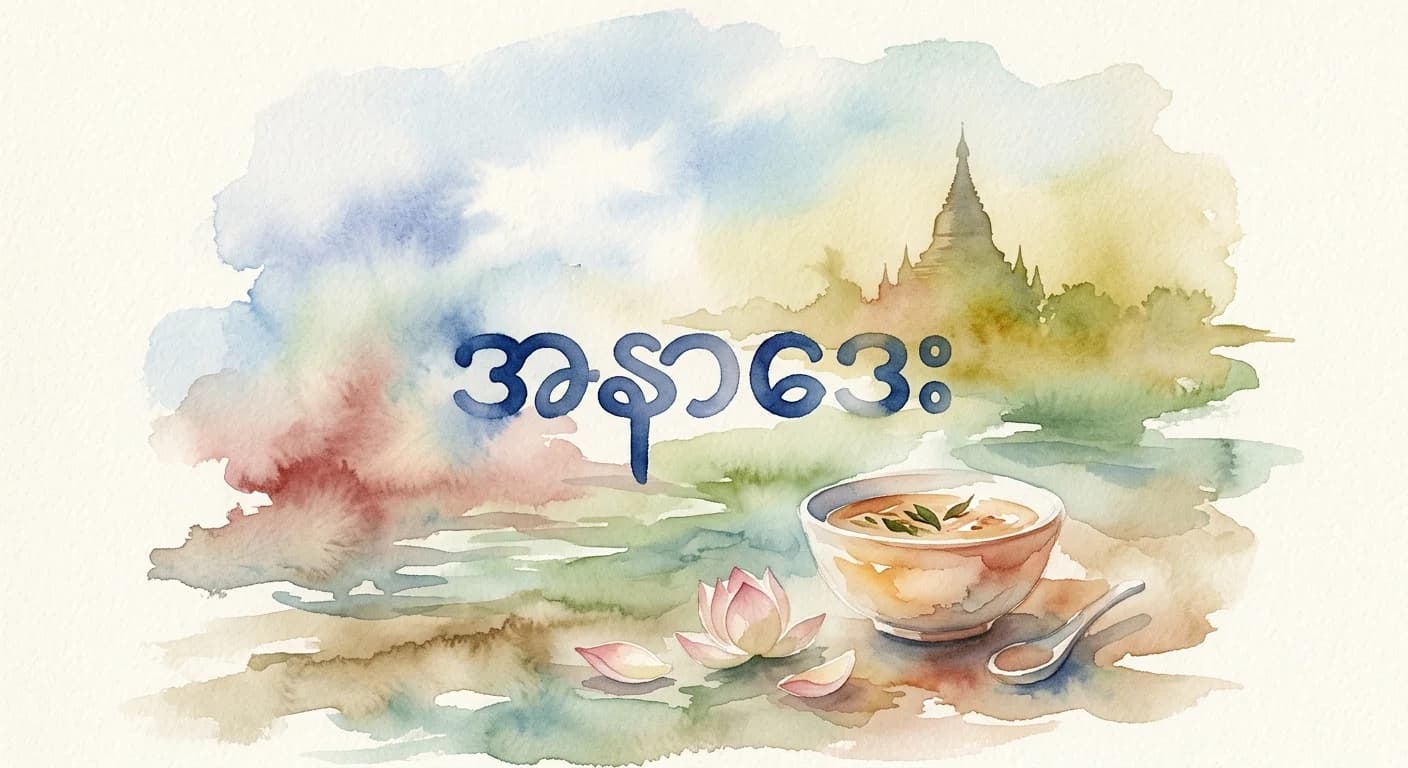
    Artistic representation of A-na-de
    Burmese•
    🇲🇲Myanmar

    A-na-de

    /AH-nah-deh/

    Meaning

    A-na-de encapsulates a profound, almost spiritual contentment that arises from the simple act of eating a truly delicious meal, especially one prepared with heartfelt care or evoking cherished memories. It transcends mere physical satisfaction, becoming a holistic experience of peace and well-being that permeates one's entire being with each savory bite. This feeling highlights food not just as sustenance, but as a deep source of comfort, connection, and a moment of pure, unadulterated sensory pleasure and emotional fulfillment.

    Literal Translation

    Not directly translatable; implies deep satisfaction from eating.

    The Story Behind the Word

    In Myanmar, food is more than just nourishment; it's a cornerstone of family, community, and hospitality. The concept of 'A-na-de' is deeply rooted in a culture where sharing meals is a primary expression of love and respect, and where the preparation of food is often a meticulous, time-honored art. This word reflects a societal value placed on mindful consumption and an appreciation for the labor and intention behind a meal. It reveals a worldview where happiness is often found in simple, shared pleasures, and where the act of eating is interwoven with social bonds and spiritual peace. The slow pace of life in many parts of Myanmar allows for such moments of deep savoring, contrasting with the often hurried eating habits of Western cultures. It speaks to a cultural emphasis on inner contentment over external achievements.

    Experience It

    Grandma's Comforting Curry

    After a long journey, Tun sat down to his grandmother's mohinga. With each spoonful of the rich, aromatic fish noodle soup, a wave of warmth spread through him, erasing all weariness. He closed his eyes, feeling a profound 'A-na-de' that only her cooking could bring.

    First Harvest Feast

    The villagers gathered after a successful rice harvest, sharing a communal meal of freshly cooked dishes. As the sun set, Aye bit into a sweet sticky rice cake, feeling not just hunger satisfied, but a deep 'A-na-de' – a sense of peace and gratitude for the bounty and togetherness.

    The Deeper Meaning

    This word reveals a philosophy that elevates the act of eating from a biological necessity to a profound sensory and emotional experience, integral to well-being. It underscores the belief that true happiness can be found in simple, present moments, emphasizing gratitude, mindfulness, and the deep connection between food, memory, and human relationships. It's a testament to finding spiritual solace in the mundane.

    Did You Know?

    The feeling of 'A-na-de' is often magnified when the food is prepared by a loved one, suggesting that the emotional connection infused into the cooking process is as vital as the ingredients themselves.

    How It's Used

    Used to express deep satisfaction and contentment after eating a particularly delicious or comforting meal, often shared with loved ones or prepared with nostalgic ingredients.

    Emotions
    comfort,contentment,gratitude,joy
    Contexts
    celebration,dining,family
    🇲🇲Myanmar

    by Anya Petrova·Written Mar 10, 2026·Updated Apr 3, 2026

    Related Words

    Explore more
    HyggeDanish

    Hygge is more than mere coziness; it's a holistic embrace of comfort, warmth, and belonging that nourishes the soul. It describes the intentional creation of an intimate atmosphere where simple pleasures, genuine connection, and mindful presence converge, fostering a profound sense of contentment and well-being. It's about finding joy and peace in the small, everyday moments, often shared with loved ones.

    Wabi-sabiJapanese

    Wabi-sabi is the profound appreciation for the ephemeral, the imperfect, and the incomplete aspects of existence. It is about discovering beauty in the subtle textures of age, the unique character of flaws, and the gentle decay that marks the passage of time. This philosophy encourages a quiet acceptance of impermanence and a mindful connection to the natural world, finding elegance in simplicity and authenticity.

    IkigaiJapanese

    Ikigai is more than just a reason to get out of bed; it's a deeply personal and evolving sense of purpose that brings genuine fulfillment and joy to one's life. It represents the sweet spot where your passions, talents, needs of the world, and what you can be paid for beautifully converge. Discovering your ikigai often leads to a life lived with intentionality, resilience, and a profound connection to one's contributions. It's the intrinsic motivation that fuels a meaningful existence, regardless of external circumstances.

    NunchiKorean

    Nunchi is the sophisticated, almost telepathic, ability to instantly grasp the unspoken dynamics of any social situation, anticipating others' thoughts and feelings, and then responding with impeccable grace and timing. It's an acute form of social intuition, allowing one to navigate complex interpersonal landscapes by reading subtle cues like body language, tone, and context. Possessing good nunchi means effortlessly understanding the underlying emotional currents and adjusting one's behavior to maintain harmony and effectiveness, often without a single word exchanged.