U.
HomeRegionsLanguagesEmotionsCollections
Find Your Word

“The limits of my language mean the limits of my world.”

— Ludwig Wittgenstein, Philosopher

Untranslatable

A curated collection of the world's most beautiful expressions—words that remind us language is humanity's greatest invention.

  • Home
  • Collections
  • Regions
  • Countries
  • Emotions
  • Tags
  • Contexts
  • Finder
  • Europe
  • Asia
  • Americas
  • Africa
  • Middle East
  • About
  • Contact
  • Privacy Policy
  • Terms of Service

2026 © Untranslatable. All rights reserved.

    /
    /
    1. Home
    2. /
    3. Asia
    4. /
    5. Sa-ya-ma
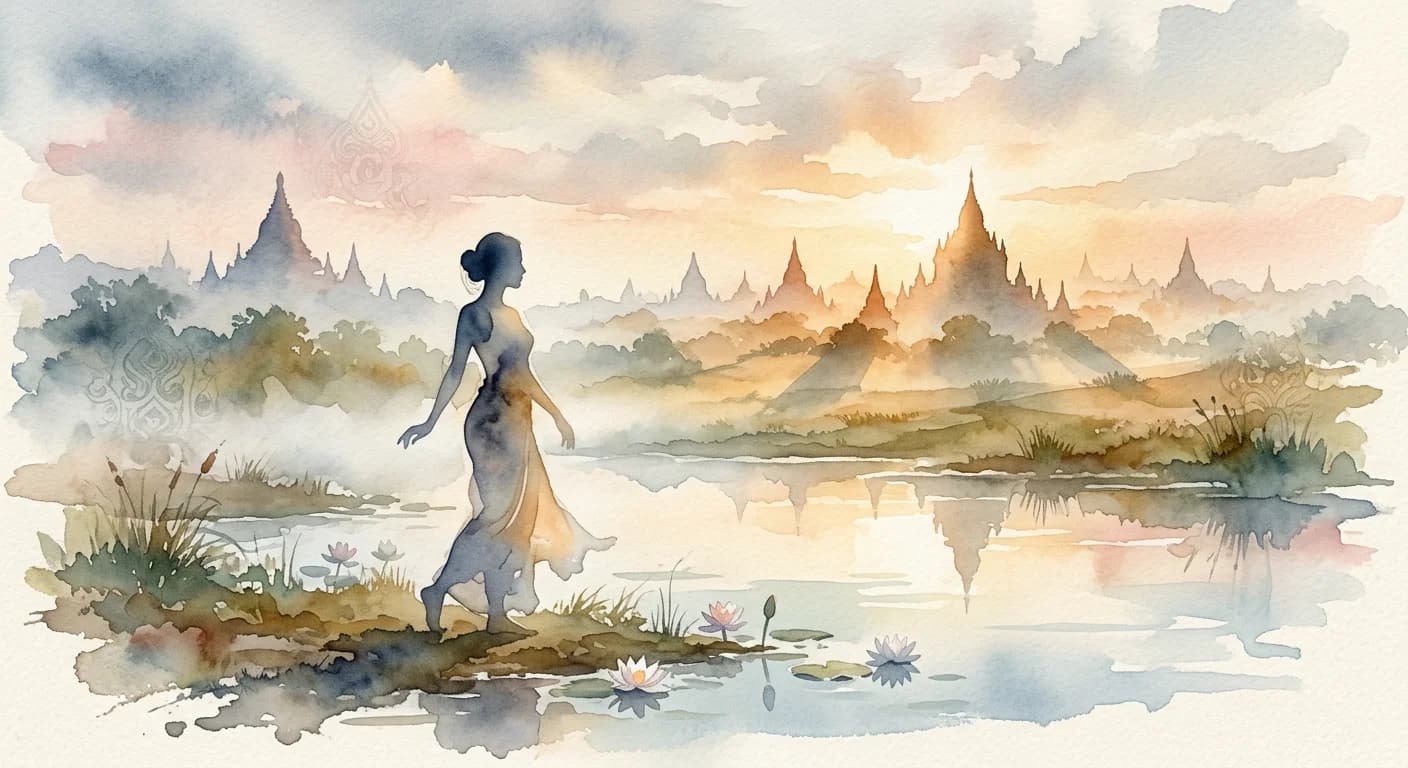
    Artistic representation of Sa-ya-ma
    Burmese•
    🇲🇲Myanmar

    Sa-ya-ma

    /SAH-yah-mah/

    Meaning

    Sa-ya-ma is a poignant emotional landscape, encompassing a profound longing for a cherished past, a beloved place, or a person now beyond reach. It transcends mere nostalgia, carrying a gentle sadness interwoven with the enduring warmth of precious memories. This feeling surfaces during quiet reflection on happy times or dear ones now distant, evoking a unique ache that acknowledges life's impermanence and the passage of time, yet finds deep solace in the beauty of what once was.

    Literal Translation

    N/A (This is a transliterated concept, not a direct word-for-word translation)

    The Story Behind the Word

    The concept of Sa-ya-ma is deeply rooted in Myanmar's Buddhist philosophical underpinnings, particularly the understanding of impermanence (anicca) and suffering (dukkha). In a culture that places significant value on community, family, and tradition, the inevitable loss or change associated with these pillars can evoke a powerful sense of longing. Sa-ya-ma acknowledges this transient nature of existence without succumbing to despair; instead, it encourages a bittersweet appreciation for the beauty of what was, fostering a contemplative rather than purely melancholic outlook. It reflects a cultural resilience that finds solace and meaning even in absence, recognizing that cherished experiences, though past, continue to shape one's present identity and emotional landscape. It's a testament to the Burmese way of processing loss and cherishing memory.

    Experience It

    Childhood Home's Echo

    A man stood before the empty lot where his childhood home once stood, now replaced by a modern building. A wave of Sa-ya-ma washed over him as he pictured his mother calling him for dinner, the scent of her cooking, and the laughter echoing through those old rooms.

    Friend's Distant Smile

    Browsing old photo albums, a woman paused at a picture of her best friend from university, now living on another continent. A gentle Sa-ya-ma settled in her heart, remembering their late-night talks and shared dreams, a warmth mingled with the ache of their separation.

    The Deeper Meaning

    Sa-ya-ma reveals a worldview that embraces the cyclical nature of existence and the inevitability of change. It is not about clinging to the past, but rather about acknowledging its profound impact and finding beauty in its memory, even as one moves forward. It embodies a nuanced understanding of happiness and sorrow as intertwined threads in the tapestry of life, promoting a reflective and accepting approach to personal history and emotional experience.

    Did You Know?

    While 'Sa-ya-ma' is often associated with loss or absence, it can also describe the longing for a past version of oneself, a 'you' that has grown and changed over time.

    How It's Used

    Typically used when reminiscing about past experiences, lost loved ones, or places that hold deep personal significance but are no longer part of one's present reality. It's often expressed in quiet moments of reflection or shared conversations about bygone days.

    Emotions
    bittersweet,longing,melancholy,nostalgia
    Contexts
    family,farewell,seasons
    🇲🇲Myanmar

    by Anya Petrova·Written Mar 10, 2026·Updated Apr 3, 2026

    Related Words

    Explore more
    SaudadePortuguese

    Saudade encapsulates a profound, melancholic longing for something or someone cherished that is absent, often with the bittersweet knowledge that it may never return. It's a deep emotional state tinged with nostalgia, evoking a sense of loss for past experiences, places, or people, yet also holding a tender appreciation for the beauty of what once was. This yearning is not merely sadness, but a complex tapestry of desire, memory, and a poignant acceptance of absence, holding the beloved in a warm, persistent embrace within the heart.

    Wabi-sabiJapanese

    Wabi-sabi is the profound appreciation for the ephemeral, the imperfect, and the incomplete aspects of existence. It is about discovering beauty in the subtle textures of age, the unique character of flaws, and the gentle decay that marks the passage of time. This philosophy encourages a quiet acceptance of impermanence and a mindful connection to the natural world, finding elegance in simplicity and authenticity.

    IkigaiJapanese

    Ikigai is more than just a reason to get out of bed; it's a deeply personal and evolving sense of purpose that brings genuine fulfillment and joy to one's life. It represents the sweet spot where your passions, talents, needs of the world, and what you can be paid for beautifully converge. Discovering your ikigai often leads to a life lived with intentionality, resilience, and a profound connection to one's contributions. It's the intrinsic motivation that fuels a meaningful existence, regardless of external circumstances.

    NunchiKorean

    Nunchi is the sophisticated, almost telepathic, ability to instantly grasp the unspoken dynamics of any social situation, anticipating others' thoughts and feelings, and then responding with impeccable grace and timing. It's an acute form of social intuition, allowing one to navigate complex interpersonal landscapes by reading subtle cues like body language, tone, and context. Possessing good nunchi means effortlessly understanding the underlying emotional currents and adjusting one's behavior to maintain harmony and effectiveness, often without a single word exchanged.