Lahure
/LAH-hoo-ray/
Meaning
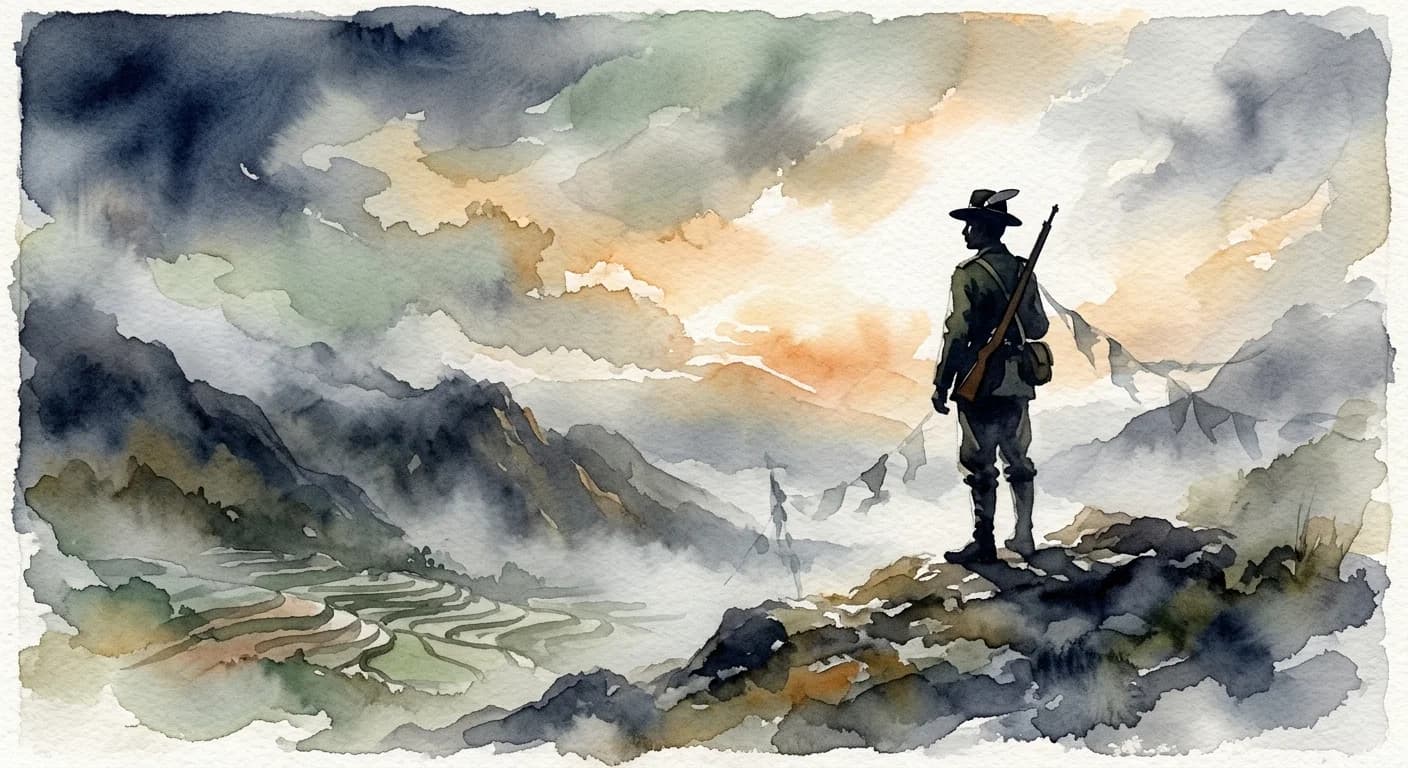
Lahure describes a Nepali individual who embarks on a journey to serve in a foreign army, most notably the British or Indian Gurkha regiments. It's a term steeped in a complex emotional tapestry, weaving together profound national pride for their bravery and sacrifice with a deep-seated melancholy for their absence and the hardships endured by the families left behind. This word powerfully embodies a core aspect of Nepali national identity, inextricably linked to military service and a widespread diaspora, acknowledging the bittersweet reality of those who leave their homeland to seek opportunity and support their loved ones through challenging, often perilous, work.
Literal Translation
The word's etymology is debated, but it is often linked to the idea of 'going far away' or 'living abroad'.
The Story Behind the Word
The term 'Lahure' is deeply embedded in Nepal's socio-economic fabric, reflecting centuries of a country often marked by limited internal opportunities. The tradition of Nepalis, particularly from specific ethnic groups like the Gurungs and Magars, joining foreign armies dates back to the Anglo-Nepalese War of 1814-1816, when the British were so impressed by Gurkha valor that they began recruiting them. This practice evolved into a significant economic lifeline for many families, with remittances from Lahures forming a crucial part of the national economy. The word reveals a worldview where sacrifice for family and country, often through military service, is not just an option but a revered path. It speaks to resilience, adaptability, and an enduring connection to home, even when physically far away. Lahure culture is rich with stories, songs, and traditions that celebrate their courage while lamenting their separation, shaping a unique blend of heroism and longing.
Experience It
Farewell to the Lahure
At the village bus stop, a young man in new clothes embraces his tearful mother. "Be strong, Amma," he whispers, his voice thick with emotion. "I will return a Lahure, and our days of struggle will be over." The entire community watches, a mixture of pride and sorrow etched on their faces as he boards the bus, off to join a foreign regiment.
The Old Lahure's Tale
Grandfather, a decorated veteran, sits by the fire, his eyes distant as he recounts battles fought in far-off lands. His grandchildren listen intently, captivated by tales of bravery and camaraderie. "Being a Lahure taught me discipline and the value of every rupee earned," he tells them, a faint smile playing on his lips, though a shadow of past sacrifices lingers in his gaze.
The Deeper Meaning
The concept of 'Lahure' encapsulates a profound philosophy of duty and sacrifice. It highlights the belief that personal hardship and geographical separation are acceptable, even noble, when undertaken for the welfare of one's family and community. It speaks to a deep sense of responsibility, where individual aspirations are often interwoven with collective survival and prosperity, reflecting a worldview that values resilience, selflessness, and an enduring connection to one's roots despite physical distance.
Did You Know?
Many Nepali folk songs, known as 'Lahure geet', specifically tell the stories of Lahures, expressing their longing for home, the hardships of military life, and the pride of their service.
How It's Used
Used to refer to Nepalis serving abroad, particularly in foreign military regiments like the Gurkhas. It can be used in everyday conversation, in songs, and in literature to describe this specific group of people.