Bhaido
/BAI-doh/
Meaning
Bhaido encapsulates the profound, almost sacred, bond between a brother and sister in Nepali culture, viewed predominantly through the sister's devoted eyes. It signifies her unwavering affection, protective instincts, and heartfelt prayers for her brother's longevity, prosperity, and overall well-being. More than just familial love, it represents a deep emotional covenant, a lifelong promise of support and care that defines a significant aspect of sibling relationships within the community, especially highlighted during auspicious festivals.
Literal Translation
Brother
The Story Behind the Word
The concept of 'Bhaido' is deeply woven into the fabric of Nepali Hindu society, stemming from ancient traditions and religious texts that emphasize the sanctity of familial ties. Its prominence is most visible during the Tihar festival, specifically on Bhai Tika, where sisters perform elaborate rituals to ward off evil and bless their brothers. This practice reinforces societal values of mutual responsibility and care within the family unit. The word's existence underscores a worldview where family, particularly the sibling dynamic, is a cornerstone of individual identity and social harmony, reflecting a culture that cherishes enduring personal connections over individualistic pursuits. It reveals a societal structure where the sister's role in her brother's life is not merely emotional but also ritually significant, ensuring his protection and success.
Experience It
Bhai Tika Blessings
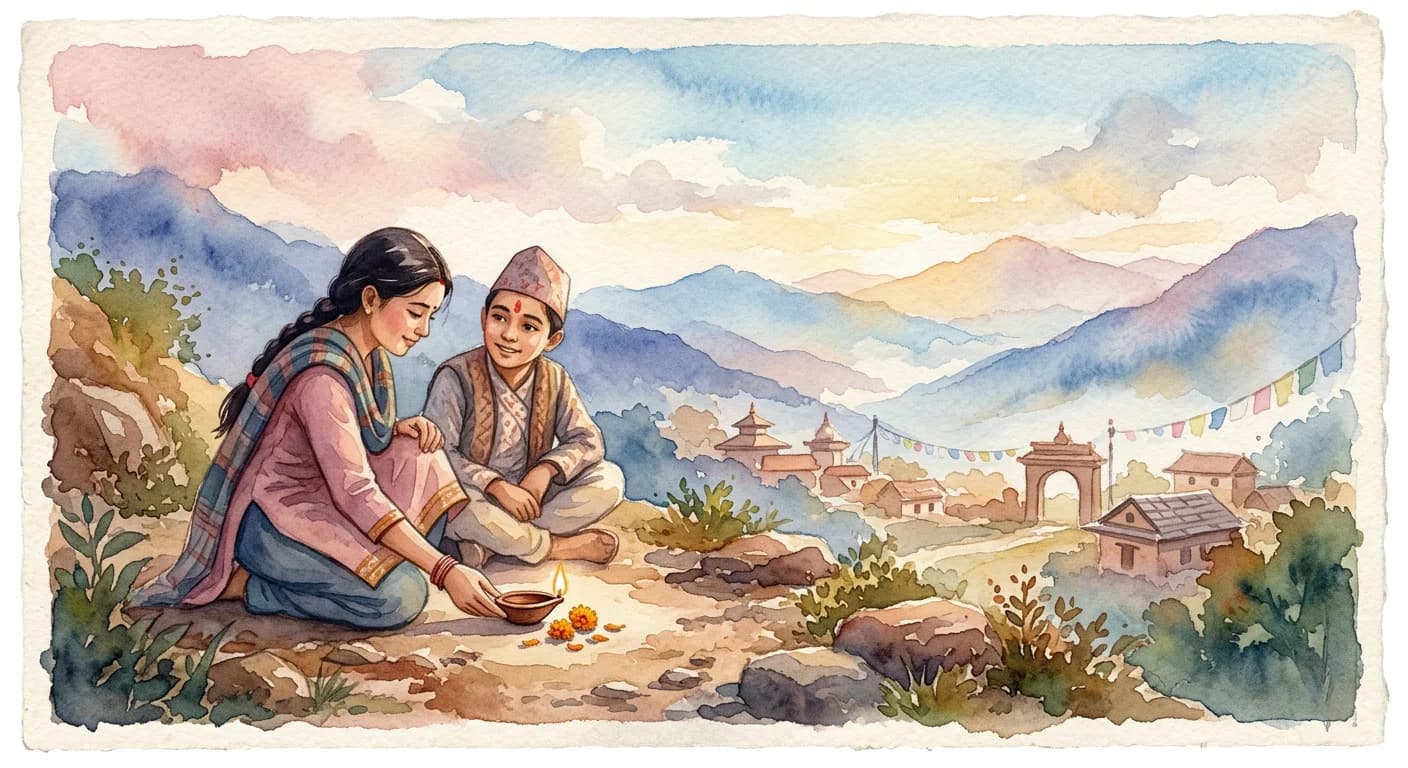
During Tihar, Sita meticulously prepares the 'saptarangi tika' and garlands for her younger brother, Ram. As she applies the colorful marks to his forehead, her heart swells with 'Bhaido,' silently wishing him a long, healthy, and prosperous life, a prayer she offers every year with unwavering devotion.
Sister's Concern
When news arrived that her brother, Prakash, faced a challenging business decision, his elder sister, Maya, immediately called to offer advice and emotional support. Her deep 'Bhaido' compelled her to ensure he felt supported and knew she was always there, ready to help him navigate life's difficulties.
The Deeper Meaning
Bhaido reflects a collectivist philosophy where individual well-being is intrinsically linked to familial harmony and support. It highlights the belief that a sister's pure intentions and ritualistic blessings can genuinely influence her brother's destiny, emphasizing the spiritual power of love and selfless devotion within the family unit. This outlook prioritizes enduring relationships and mutual protection as fundamental to a fulfilling life, viewing family as a sacred and protective institution.
Did You Know?
The 'Bhaido' bond is so central that during Bhai Tika, sisters traditionally offer brothers a special garland made of 'makhamali' (globe amaranth) flowers, believed to never wilt, symbolizing their everlasting love and prayers.
How It's Used
Used to refer to the bond between a brother and sister, especially from the sister's perspective, and often invoked during festivals and family gatherings.