Догшин (Dogshin)
/DOG-sheen/
Meaning
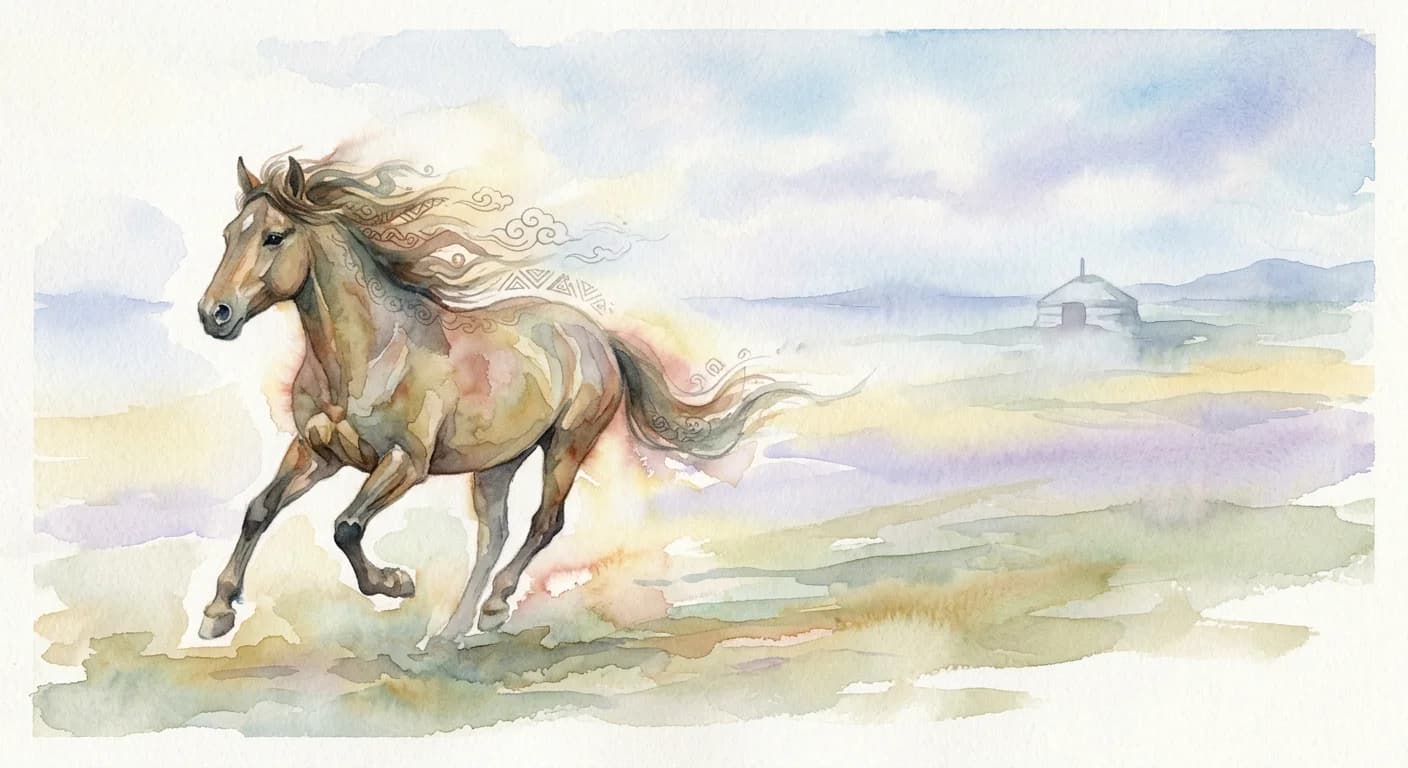
Догшин (Dogshin) describes a profound, untamed ferocity, not born of malice, but of an inherent, primal wildness. It embodies a raw, powerful energy that commands both respect and a healthy dose of caution, particularly when referring to majestic animals like horses. This term captures the essence of something beyond human dominion, a formidable and awe-inspiring force that is simultaneously magnificent and potentially dangerous due to its unrestrained nature.
Literal Translation
Fierce, untamed, wild
The Story Behind the Word
The existence of 'dogshin' is deeply rooted in Mongolia's nomadic, equestrian culture. For centuries, the survival and prosperity of Mongolians depended on their relationship with horses, which were both vital partners and powerful, often untamable, creatures. This word reflects a worldview where humans are not masters of nature, but rather live in respectful, sometimes challenging, coexistence with its raw forces. It acknowledges the inherent wildness in creatures, recognizing it as a source of strength and beauty, even if it means difficulty or danger. Dogshin reveals a profound understanding of animal psychology and a reverence for the untamed spirit, which is seen as a natural, even divine, characteristic.
Experience It
The Dogshin Stallion
The young rider approached the black stallion with trepidation. Its eyes held a wild, untamed fire, a clear sign of its dogshin spirit. Though magnificent, he knew taming it would be a test of will, a dance with a primal force.
River's Dogshin Flow
After the heavy rains, the river roared through the canyon, its waters churning with a dogshin fury. It was beautiful in its raw power, yet undeniably dangerous, reminding everyone of nature's untamed might.
What Gets Lost in Translation
English speakers might mistakenly equate 'dogshin' with simply 'aggressive' or 'vicious.' However, dogshin carries no inherent negative moral judgment; it's about untamed power and spirit, not malicious intent. It's a quality that can be admired, even if it makes a creature difficult to control, unlike purely aggressive behavior which is generally undesirable.
Across Cultures
While direct equivalents are rare, the concept of 'dogshin' resonates with notions like the 'wild heart' of animals in Native American cultures, or the 'feral spirit' in some European mythologies. The Japanese concept of 'kami' for powerful natural forces, though broader, shares the reverence for awe-inspiring, untamable power. In English, 'spirited' or 'unbroken' hint at it, but lack the profound cultural weight and potential danger implied by dogshin.
The Deeper Meaning
Dogshin encapsulates a core Mongolian philosophical stance: that true power and beauty often reside in the untamed, the uncontrollable. It challenges the human impulse to dominate and instead advocates for respect, understanding, and a careful, humble interaction with forces beyond one's complete command. It highlights the value of wildness as an essential, awe-inspiring aspect of existence, rather than something to be subdued or feared outright.
Did You Know?
Mongolians believe that a horse with a dogshin spirit, once truly bonded, can become the most loyal and powerful companion, almost as if its untamed energy is channeled into fierce devotion.
How It's Used
Used to describe the temperament of animals, especially horses, that are wild, spirited, and difficult to control.