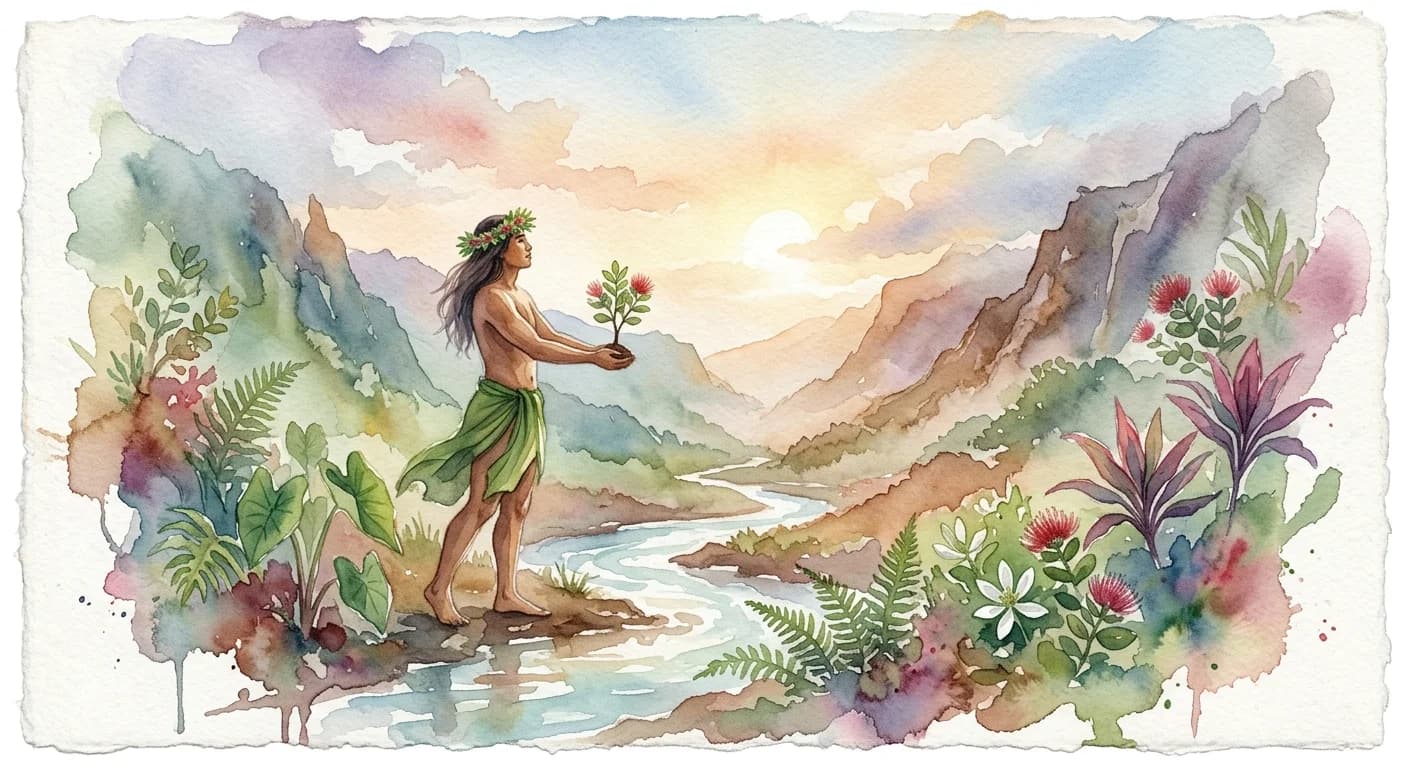
Kama'aina
/kah-mah-EYE-nah/
Meaning
Kama'aina designates someone who is truly 'of the land' in Hawaii, whether by birth or by a profound, long-standing immersion in its rhythms and values. It signifies more than just residency; it's a deep-seated identity forged through years of living aloha, respecting the 'aina (land), and understanding the intricate social fabric and traditions. A kama'aina embodies a stewardship and an inherent connection to the islands, reflecting a commitment to their well-being and a nuanced grasp of local etiquette and heritage.
Literal Translation
child of the land
The Story Behind the Word
The concept of 'kama'aina' is deeply rooted in Hawaiian worldview, where connection to the land ('aina) is paramount. In ancient Hawaii, one's identity was intrinsically tied to their ancestral lands and lineage. While the modern usage extends beyond direct lineage to include long-term residents, the core philosophy remains: true belonging comes from a reciprocal relationship with the environment and community. It reflects a culture that values shared responsibility, deep respect for nature, and a communal spirit. The word encapsulates the idea that time and genuine participation foster a profound understanding and love for a place, earning one an honored status within the local community.
Experience It
Local Discounts
At a local surf shop, a visitor asks about a discount. The shop owner smiles and says, 'Oh, that's just for kama'aina,' implying the discount is a gesture of appreciation for those who are truly part of the local fabric, not just passing through.
Island Navigation
A newcomer struggles to find a hidden beach. A friend remarks, 'Don't worry, a true kama'aina knows all the back roads and secret spots, they'll always find the best way there through instinct and experience.'
What Gets Lost in Translation
English speakers often misunderstand 'kama'aina' as simply 'local.' However, it carries a much deeper connotation than mere residency. It implies a cultural understanding, respect, and often a sense of stewardship that goes beyond just living on the islands. It's not just about where you live, but how you live in relation to the land and its people.
Across Cultures
Similar concepts appear in other cultures. In Japan, 'jimoto' (地元) refers to one's hometown or local area, often implying a deep connection. New Zealand's Māori culture has 'tangata whenua,' meaning 'people of the land,' specifically referring to indigenous Māori. These terms all highlight a profound, often ancestral or long-term, bond between people and their specific geographic place.
The Deeper Meaning
The word 'kama'aina' reveals a Hawaiian philosophy where identity is not just individual but deeply relational – to the land, to community, and to time. It underscores the belief that true belonging is earned through sustained presence, respect, and active participation in the well-being of a place, fostering a sense of reciprocal responsibility and interconnectedness.
Did You Know?
Many businesses in Hawaii offer 'kama'aina rates' or discounts, not just to native Hawaiians, but to any long-term resident with a local ID, as a way to acknowledge and support their sustained presence in the community.
How It's Used
Used to refer to someone who is a long-term resident or native of Hawaii, often implying a deep connection to the islands and their culture.