U.
HomeRegionsLanguagesEmotionsCollections
Find Your Word

“The limits of my language mean the limits of my world.”

— Ludwig Wittgenstein, Philosopher

Untranslatable

A curated collection of the world's most beautiful expressions—words that remind us language is humanity's greatest invention.

  • Home
  • Collections
  • Regions
  • Countries
  • Emotions
  • Tags
  • Contexts
  • Finder
  • Europe
  • Asia
  • Americas
  • Africa
  • Middle East
  • About
  • Contact
  • Privacy Policy
  • Terms of Service

2026 © Untranslatable. All rights reserved.

    1. Home
    2. /
    3. About
    4. /
    5. Dr. Kenji Tanaka
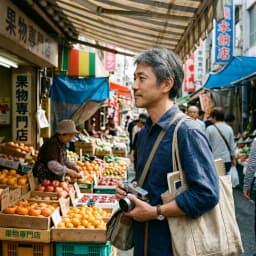
    Portrait of Dr. Kenji Tanaka

    Dr. Kenji Tanaka

    Unpacking the nuances of words that defy easy translation.

    AsiaJapaneseMandarin ChineseKoreanThai

    472 phrases · 72 languages · 5 regions

    About Dr.

    Dr. Kenji Tanaka is a cultural linguist and former university lecturer from Kyoto, Japan. His fascination with the spaces between languages began during his doctoral studies in comparative literature, where he often encountered concepts in Japanese and classical Chinese that resisted direct English equivalents. He spent nearly a decade teaching and researching linguistic anthropology before dedicating himself fully to documenting these 'untranslatables.' Kenji's work involves extensive field research, often immersing himself in local communities for months at a time, observing daily life and conducting interviews to grasp the full context of a word's meaning. He travels not just to collect data, but to understand the lived experience that gives rise to unique linguistic expressions. His travels have taken him from the remote villages of Hokkaido to the bustling markets of Southeast Asia. When not deciphering etymologies or drafting entries, Kenji can often be found tending to his meticulously maintained bonsai collection, a practice he finds remarkably similar to the delicate work of linguistic analysis.

    A few phrases by Dr. Kenji Tanaka

    See all 472 phrases
    • Burmese

      A-chit-a-nar

      /uh-CHIT-uh-nar/

      A-chit-a-nar describes a profound, almost spiritual, satisfaction that arises from encountering something of exceptional beauty, depth, or awe. It's a soul-stirring emotion that transcends mere appreciation, washing over one with a sense of wonder and deep contentment. This feeling often involves an element of the sublime, where the beauty is so overwhelming it can elicit tears or a deep, involuntary sigh, signifying a holistic connection to the world's inherent magnificence. It's a moment of being utterly present, profoundly moved, and deeply fulfilled by an aesthetic or spiritual experience.

      Lit. Not directly translatable, but implies 'satisfaction from beauty' or 'deeply moved'.

      Used to express profound satisfaction and awe when witnessing something exceptionally beautiful, moving, or spiritually significant.

      Myanmar
      contentment
    • Burmese

      A-thet-lu-ma-thit

      /uh-thet-loo-mah-tit/

      A-thet-lu-ma-thit encapsulates a profound, almost spiritual symbiosis with a place, typically one's homeland or a landscape deeply etched into one's soul. It signifies more than mere nostalgia; it's the visceral understanding that a piece of one's identity, one's very being, is inextricably woven into the fabric of that land. This deep-seated connection offers a unique solace and an enduring sense of belonging, manifesting as a persistent yearning for the familiar sensory tapestry of home, even when physically distant.

      Lit. Not directly translatable to a single English word or simple phrase.

      Used to describe the deep emotional bond one feels with their homeland or a place of deep personal significance.

      Myanmar
      belonging
    • Burmese

      A-thit-a-myar

      /uh-THIT-uh-myahr/

      A-thit-a-myar describes the profound, almost overwhelming sense of gratitude and humility experienced when receiving a gift, especially one given with significant personal sacrifice or from someone with little to spare. It's not merely appreciation for the item itself, but a deep recognition of the giver's profound generosity and the intrinsic humanity in their selfless act. This term encapsulates the weighty understanding that the gift transcends material value, carrying with it a powerful emotional and moral obligation of respect and reverence for the giver's spirit.

      Lit. Often interpreted as 'great giving' or 'generous gift,' though the nuance is deeper than a simple translation.

      Used to express deep gratitude and acknowledge the significant generosity of a giver, especially when the gift is substantial relative to the giver's means.

      Myanmar
      gratitude
    • Urdu

      Adab

      /AH-dahb/

      Adab is a profound, multifaceted virtue that transcends mere politeness, embodying an ingrained ethical framework guiding respectful social interactions and personal conduct. It signifies a cultivated refinement of character, encompassing humility, kindness, and deep consideration for others, rooted in moral integrity and spiritual awareness. This cherished quality is diligently nurtured through upbringing and education, fostering a harmonious balance between individual dignity and communal well-being. Ultimately, Adab represents the ideal of a truly cultured and refined individual, whose presence elevates every encounter.

      Lit. manners, etiquette, politeness, literature, culture

      Used to describe someone's good behavior, cultivated manners, and moral character, often in the context of social interactions or as a general descriptor of a person's refined nature.

      Pakistan
      belonging