U.
HomeRegionsLanguagesEmotionsCollections
Find Your Word

“The limits of my language mean the limits of my world.”

— Ludwig Wittgenstein, Philosopher

Untranslatable

A curated collection of the world's most beautiful expressions—words that remind us language is humanity's greatest invention.

  • Home
  • Collections
  • Regions
  • Countries
  • Emotions
  • Tags
  • Contexts
  • Finder
  • Europe
  • Asia
  • Americas
  • Africa
  • Middle East
  • About
  • Contact
  • Privacy Policy
  • Terms of Service

2026 © Untranslatable. All rights reserved.

    /
    /
    1. Home
    2. /
    3. Asia
    4. /
    5. A-thet-lu-ma-thit
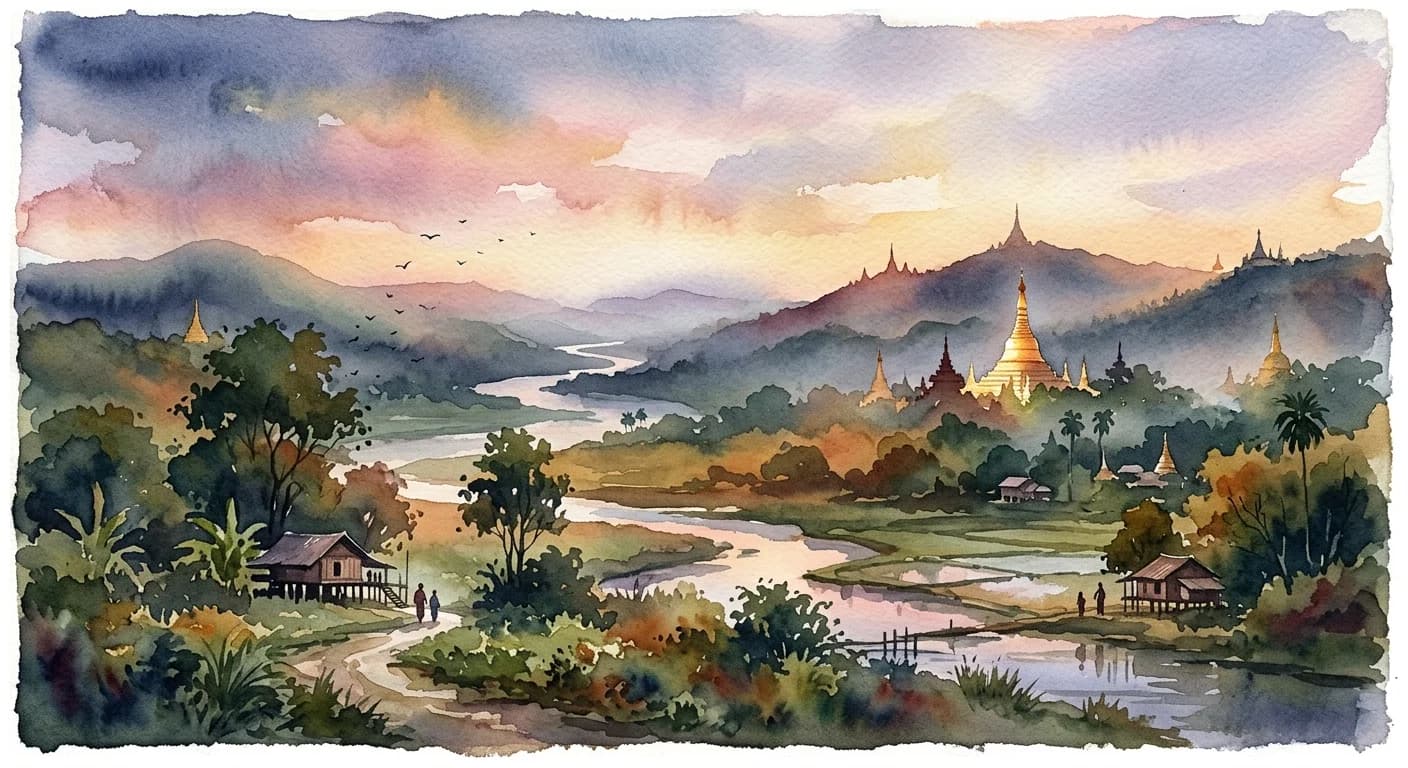
    Artistic representation of A-thet-lu-ma-thit
    Burmese•
    🇲🇲Myanmar

    A-thet-lu-ma-thit

    /uh-thet-loo-mah-tit/

    Meaning

    A-thet-lu-ma-thit encapsulates a profound, almost spiritual symbiosis with a place, typically one's homeland or a landscape deeply etched into one's soul. It signifies more than mere nostalgia; it's the visceral understanding that a piece of one's identity, one's very being, is inextricably woven into the fabric of that land. This deep-seated connection offers a unique solace and an enduring sense of belonging, manifesting as a persistent yearning for the familiar sensory tapestry of home, even when physically distant.

    Literal Translation

    Not directly translatable to a single English word or simple phrase.

    The Story Behind the Word

    The concept of "A-thet-lu-ma-thit" is deeply rooted in Myanmar's agrarian history and Buddhist philosophy, where connection to land is paramount. For centuries, life revolved around the rhythms of the earth – the rice paddies, the rivers, the specific trees of one's village. This fostered a communal identity intrinsically linked to the physical environment. Buddhist teachings emphasize impermanence, yet paradoxically, they also encourage a deep appreciation for the present and one's immediate surroundings, fostering a mindful connection to place. The word reflects a worldview where identity is not solely individual but deeply relational, extending to the ancestral land that has sustained generations. It speaks to a collective memory and a spiritual bond that transcends mere geography, suggesting that the land itself holds the echoes of one's forebears and personal history.

    Experience It

    Exile's Quiet Longing

    Living abroad for decades, Daw Mya still felt a pang of A-thet-lu-ma-thit whenever she saw images of the Irrawaddy River. The scent of rain on dry earth, the sound of temple bells carried on the breeze – these were not just memories, but a part of her soul calling her home.

    Homestead's Embrace

    Returning to his ancestral village, U Hla felt the A-thet-lu-ma-thit as his feet touched the familiar soil. The ancient banyan tree, the worn path to the pagoda, the exact shade of green in the rice fields – it all affirmed his deepest sense of self and belonging.

    The Deeper Meaning

    This word reveals a philosophy where human identity is profoundly intertwined with geographical and ancestral roots. It suggests that one's inner landscape is shaped by the outer, and that true belonging extends beyond social ties to include a spiritual communion with the physical environment. It speaks to a worldview where the land is not merely property but a living entity that nurtures and defines the self across generations.

    Did You Know?

    While difficult to translate directly, the phrase 'A-thet-lu-ma-thit' literally translates to something like 'life not new' or 'spirit not new,' hinting at an ancient, enduring bond.

    How It's Used

    Used to describe the deep emotional bond one feels with their homeland or a place of deep personal significance.

    Emotions
    belonging,comfort,longing,nostalgia,peace
    Contexts
    family,nature,travel
    🇲🇲Myanmar

    by Dr. Kenji Tanaka·Written Mar 10, 2026·Updated Apr 3, 2026

    Related Words

    Explore more
    Dolce far nienteItalian

    Dolce far niente captures the profound joy and effortless pleasure derived from simply existing without obligation or purpose. It's the art of savoring moments of pure, unadulterated idleness – lying in the sun, watching the clouds drift, or enjoying a leisurely coffee – not as a break from work, but as a valuable state in itself. This 'sweetness of doing nothing' is a conscious embrace of stillness and contentment, allowing the soul to breathe and the senses to fully engage with the present.

    SobremesaSpanish

    Sobremesa is the cherished, often extended period immediately following a meal, particularly lunch or dinner, where diners remain seated at the table to enjoy conversation, coffee, and digest not just the food, but the company itself. It’s a dedicated time for unhurried social bonding, storytelling, and shared laughter, transforming a simple meal into a profound communal experience. Far from just clearing the dishes, sobremesa is an integral part of Spanish social life, often lasting for hours.

    Wabi-sabiJapanese

    Wabi-sabi is the profound appreciation for the ephemeral, the imperfect, and the incomplete aspects of existence. It is about discovering beauty in the subtle textures of age, the unique character of flaws, and the gentle decay that marks the passage of time. This philosophy encourages a quiet acceptance of impermanence and a mindful connection to the natural world, finding elegance in simplicity and authenticity.

    IkigaiJapanese

    Ikigai is more than just a reason to get out of bed; it's a deeply personal and evolving sense of purpose that brings genuine fulfillment and joy to one's life. It represents the sweet spot where your passions, talents, needs of the world, and what you can be paid for beautifully converge. Discovering your ikigai often leads to a life lived with intentionality, resilience, and a profound connection to one's contributions. It's the intrinsic motivation that fuels a meaningful existence, regardless of external circumstances.