Wak'a
/WAH-kah/
Meaning
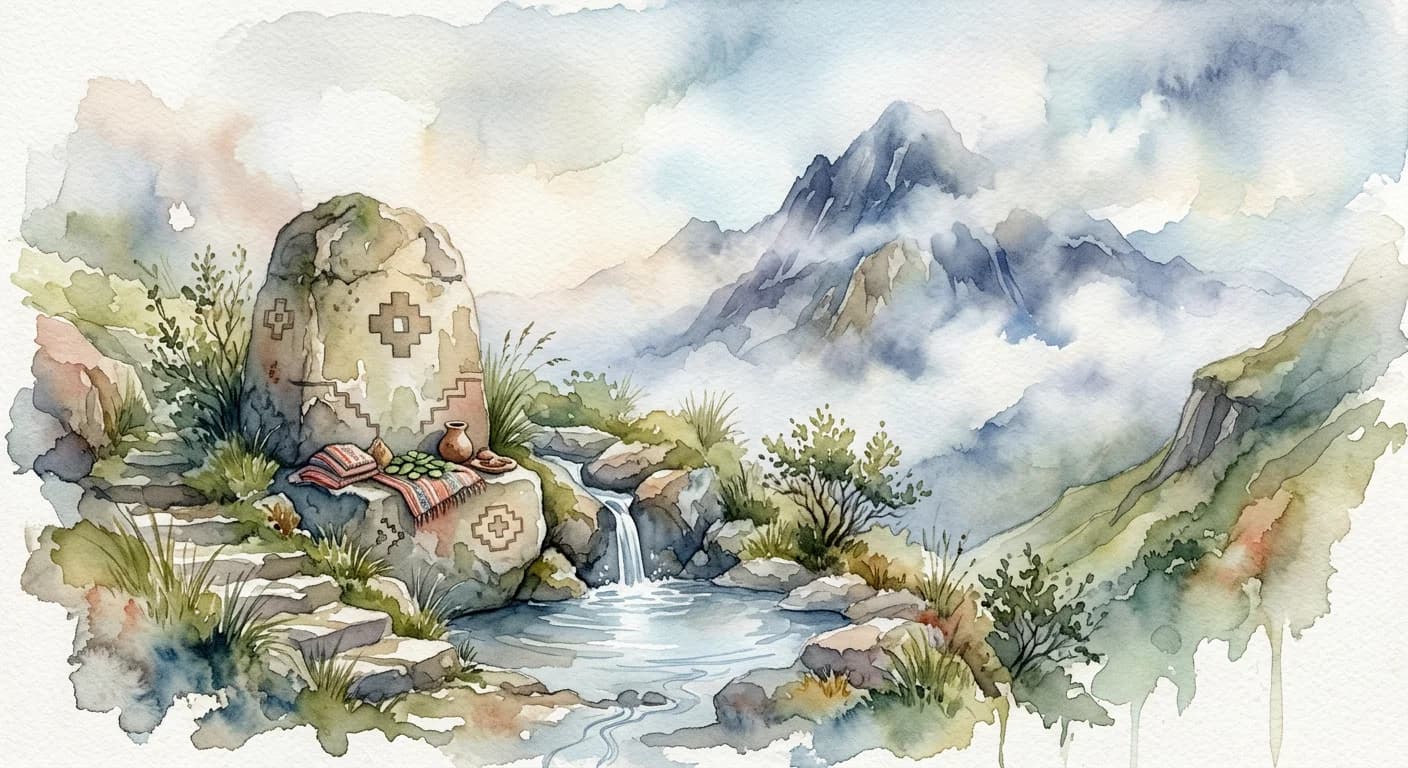
Wak'a is not merely a sacred place or object, but a living embodiment of the divine in the Andean world. It signifies a point of potent spiritual energy, a nexus where the physical and unseen realms converge, pulsating with the life force of Pachamama (Mother Earth) and the ancestral spirits. These sacred sites, whether a towering mountain peak, a bubbling spring, an ancient ruin, or a ceremonial artifact, are revered as active participants in the cosmic order, essential for maintaining balance and harmony within the community and the natural world.
Literal Translation
Sacred place/object
The Story Behind the Word
The concept of wak'a is deeply interwoven with Andean cosmology, reflecting a worldview where all elements of existence are interconnected and imbued with spiritual significance. For millennia, indigenous Andean peoples have understood the land itself as sentient and sacred, with wak'as serving as vital organs or energy centers within this living landscape. These sites are often linked to specific deities, ancestral heroes, or pivotal historical events, making them powerful anchors for collective memory, identity, and spiritual practice. The reverence for wak'as underscores a reciprocal relationship between humans and the divine; by honoring these sacred places through offerings and rituals, communities seek to maintain 'ayni' (reciprocity) with the forces that sustain life, ensuring bountiful harvests, healthy communities, and cosmic equilibrium. This belief system reveals a profound respect for nature and a holistic understanding of well-being that transcends a purely material existence.
Experience It
Pilgrimage to Ausangate
A group of Quechua pilgrims embarks on a arduous journey to the glacial peak of Mount Ausangate, a revered Apu (mountain deity) and a powerful wak'a. They carry coca leaves and chicha, preparing to make offerings and perform rituals at its base, seeking blessings for their crops and protection for their families from this magnificent, living mountain spirit.
Ancestral Huaca
An elder points to a cluster of ancient, weathered stones near a village, explaining to a child, 'This is a wak'a. Our ancestors built it to honor the spirits of the river. When you pass by, remember to offer a small stone or a prayer, to show your respect and keep the connection strong.'
The Deeper Meaning
Wak'a embodies a profound philosophical understanding of animism and pan-spiritualism, where the sacred is not confined to a separate, transcendent realm but is immanent within the natural world. It reveals a worldview that rejects the human-nature dichotomy, instead emphasizing a symbiotic relationship where humans are co-creators and caretakers of a living, spiritual landscape. This concept highlights the Andean belief in the interconnectedness of all life and the importance of maintaining 'pacha' (cosmic order) through respectful interaction with these powerful sacred entities.
Did You Know?
Many of the most famous Inca ruins, such as Machu Picchu and Sacsayhuaman, were originally considered powerful wak'as, strategically built to align with astrological events and harness telluric energies.
How It's Used
Used to refer to sacred natural sites, ancestral spirits, or objects of religious significance within the Andean spiritual tradition.