U.
HomeRegionsLanguagesEmotionsCollections
Find Your Word

“The limits of my language mean the limits of my world.”

— Ludwig Wittgenstein, Philosopher

Untranslatable

A curated collection of the world's most beautiful expressions—words that remind us language is humanity's greatest invention.

  • Home
  • Collections
  • Regions
  • Countries
  • Emotions
  • Tags
  • Contexts
  • Finder
  • Europe
  • Asia
  • Americas
  • Africa
  • Middle East
  • About
  • Contact
  • Privacy Policy
  • Terms of Service

2026 © Untranslatable. All rights reserved.

    /
    /
    1. Home
    2. /
    3. Americas
    4. /
    5. Samincha
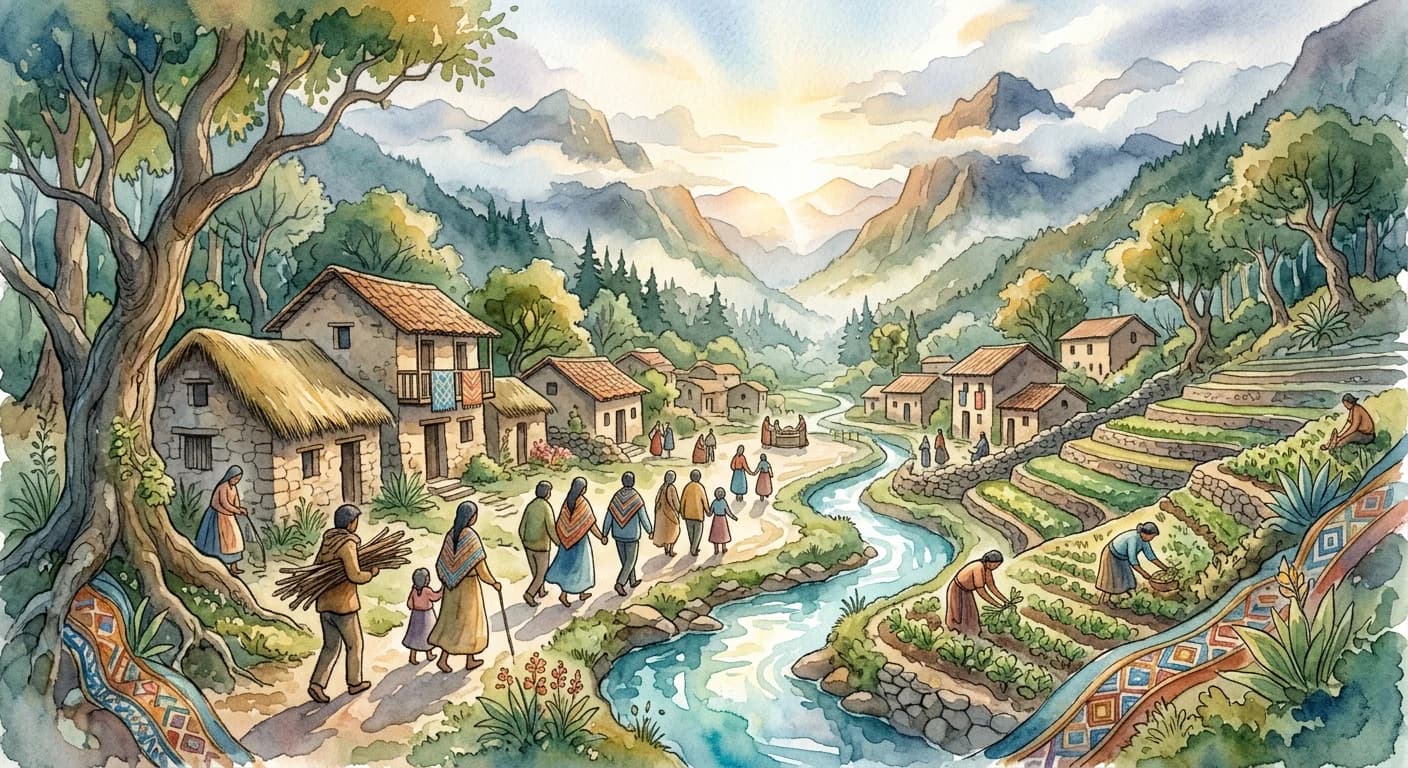
    Artistic representation of Samincha
    Quechua•
    🇧🇴Bolivia🇪🇨Ecuador🇵🇪Peru

    Samincha

    /sah-MEEN-chah/

    Meaning

    Samincha encapsulates a profound, almost spiritual, experience of mutual belonging and shared destiny between a community and its Pachamama (Mother Earth). It's the intrinsic understanding that the vitality of the land, its rivers, and its mountains is inextricably linked to the well-being and prosperity of the people. This concept is not merely about sustainable practices; it's a living covenant, a collective embrace of responsibility to nurture the earth as one would nurture a family member, ensuring a harmonious existence for all generations, past, present, and future.

    Literal Translation

    Often translated as 'shared life' or 'collective existence', though it encompasses more than just living together.

    The Story Behind the Word

    The concept of Samincha is deeply rooted in the Andean cosmovision, predating the Inca Empire and enduring through colonial times. It stems from an agricultural society where survival was directly dependent on the land's fertility and the community's cooperation. The philosophy sees the earth not as a resource to be exploited, but as a sentient being, Pachamama, with whom humanity shares a reciprocal relationship. This word embodies the core Andean principle of Ayni (reciprocity) and Mink'a (communal work), extending it to the entire ecosystem. It reveals a worldview where humans are an integral part of nature, not separate from or superior to it, and collective well-being is paramount, reflecting a profound ecological consciousness born from centuries of living in intimate connection with the Andean landscape.

    Experience It

    Community Crop Rotation

    During the planning for the next planting season, elders consult with the younger farmers, deciding to fallow certain fields to allow the soil to regenerate. This collective decision, prioritizing long-term soil health over immediate maximum yield, is a clear act of samincha, ensuring the land remains bountiful for future harvests and generations.

    River Clean-up Effort

    After heavy rains bring debris into the community's vital water source, villagers of all ages gather to clear the riverbanks and purify the water. They understand that a healthy river means healthy families and crops, embodying samincha through their united effort to protect a shared resource.

    The Deeper Meaning

    Samincha reveals a philosophy of deep ecological interconnectedness and intergenerational justice. It posits that human existence and flourishing are entirely dependent on a harmonious relationship with the natural world, fostering a collective identity rooted in stewardship and respect. This worldview challenges anthropocentric perspectives, placing communal and ecological well-being at its ethical core.

    Did You Know?

    The spiritual bond of samincha often involves rituals like 'pagapus' or offerings to Pachamama, expressing gratitude and seeking balance, highlighting its sacred dimension.

    How It's Used

    Used within Quechua-speaking communities to describe the shared responsibility and connection to the land and community.

    Emotions
    belonging,gratitude,peace
    Contexts
    community,family,nature,seasons
    🇧🇴Bolivia🇪🇨Ecuador🇵🇪Peru

    by Annelise Dubois·Written Mar 10, 2026·Updated Apr 3, 2026

    Related Words

    Explore more
    Dolce far nienteItalian

    Dolce far niente captures the profound joy and effortless pleasure derived from simply existing without obligation or purpose. It's the art of savoring moments of pure, unadulterated idleness – lying in the sun, watching the clouds drift, or enjoying a leisurely coffee – not as a break from work, but as a valuable state in itself. This 'sweetness of doing nothing' is a conscious embrace of stillness and contentment, allowing the soul to breathe and the senses to fully engage with the present.

    SobremesaSpanish

    Sobremesa is the cherished, often extended period immediately following a meal, particularly lunch or dinner, where diners remain seated at the table to enjoy conversation, coffee, and digest not just the food, but the company itself. It’s a dedicated time for unhurried social bonding, storytelling, and shared laughter, transforming a simple meal into a profound communal experience. Far from just clearing the dishes, sobremesa is an integral part of Spanish social life, often lasting for hours.

    Pura vidaSpanish

    More than just 'pure life,' "Pura vida" encapsulates a profound philosophy of embracing the present moment with unwavering optimism and gratitude. It's a daily commitment to finding joy in simple pleasures, accepting life's challenges with a positive spirit, and prioritizing well-being over material possessions. This ubiquitous phrase reflects a national identity built on resilience, community, and an deep appreciation for nature's bounty.

    MamihlapinatapaiYaghan

    Mamihlapinatapai encapsulates that profound, unspoken moment when two individuals lock eyes, each silently acknowledging a mutual desire or intention, yet both hesitate to be the first to act upon it. It's a delicate dance of anticipation, a shared gaze brimming with common understanding and a quiet longing for the other to break the ice. This intricate look carries the weight of a shared, uninitiated potential, a silent conversation where both parties are perfectly aware of what could happen, but neither makes the first move.