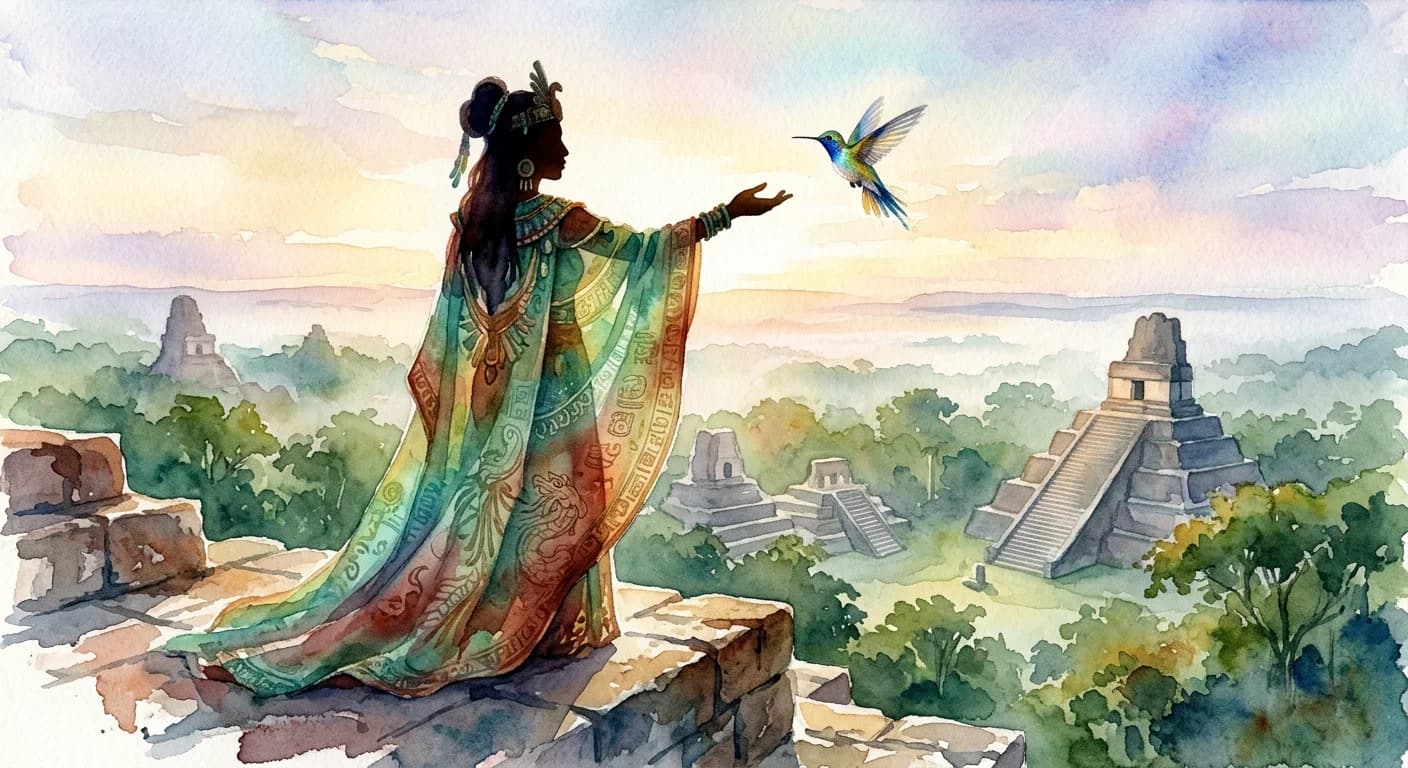
Tlahtoani
/tlah-TOH-ah-nee/
Meaning
The 'tlahtoani' was the revered embodiment of leadership in ancient Nahuatl society, far more than a mere political head. This figure was 'he who speaks,' possessing the sacred authority to articulate the will of the gods and the collective needs of the people, guiding their destiny through eloquent pronouncements and decisive action. Their power was inextricably linked to their oratorical skill and ability to maintain cosmic and social order, ensuring the prosperity and spiritual well-being of their community. It signifies a profound connection between speech, governance, and the very fabric of existence.
Literal Translation
he who speaks
The Story Behind the Word
The existence of 'tlahtoani' reveals a worldview where effective leadership was fundamentally intertwined with eloquent communication and divine mandate. In Mesoamerican cosmology, the spoken word possessed immense power, capable of shaping reality and influencing the gods. A tlahtoani was not merely a military chief or an administrator, but a divinely chosen orator whose pronouncements were believed to resonate with cosmic forces, ensuring the fertility of the land, the success of warriors, and the harmony of society. This emphasis on speech reflects a culture that valued wisdom, rhetorical prowess, and the ability to mediate between the earthly realm and the spiritual, making the leader a living conduit for collective destiny. Their existence underscores a sophisticated understanding of governance where moral authority, derived from the ability to 'speak' for the community and its deities, superseded brute force.
Experience It
Addressing the Council
Before the planting season, the assembled elders listened intently as the tlahtoani rose. With measured words and gestures, he invoked the rain gods and outlined the community's agricultural plans, his voice weaving a tapestry of hope and command that unified their purpose.
Declaring War
Facing an invading force, the tlahtoani stood atop the pyramid, his voice echoing across the plaza. He passionately recounted the injustices suffered, igniting the warriors' resolve with his powerful rhetoric, transforming their fear into a collective roar for battle.
The Deeper Meaning
The concept of 'tlahtoani' underscores a philosophy where leadership is not merely about command, but about articulation and representation. It posits that true authority stems from the ability to effectively voice the collective consciousness and sacred traditions of a people, transforming abstract ideals into actionable decrees. This reveals a worldview where the leader is a vital bridge between the spiritual and the temporal, the past and the future, through the potent act of speech.
Did You Know?
The most famous tlahtoani was Moctezuma II, the last ruler of the Aztec Empire before the Spanish conquest, whose reign saw both immense power and ultimate tragedy.
How It's Used
Used to refer to rulers, leaders, or speakers in ancient Nahuatl-speaking societies, especially in historical and academic contexts discussing the Aztec Empire.