In tlilli in tlapalli
/een TLIL-lee een tla-PAH-lee/
Meaning
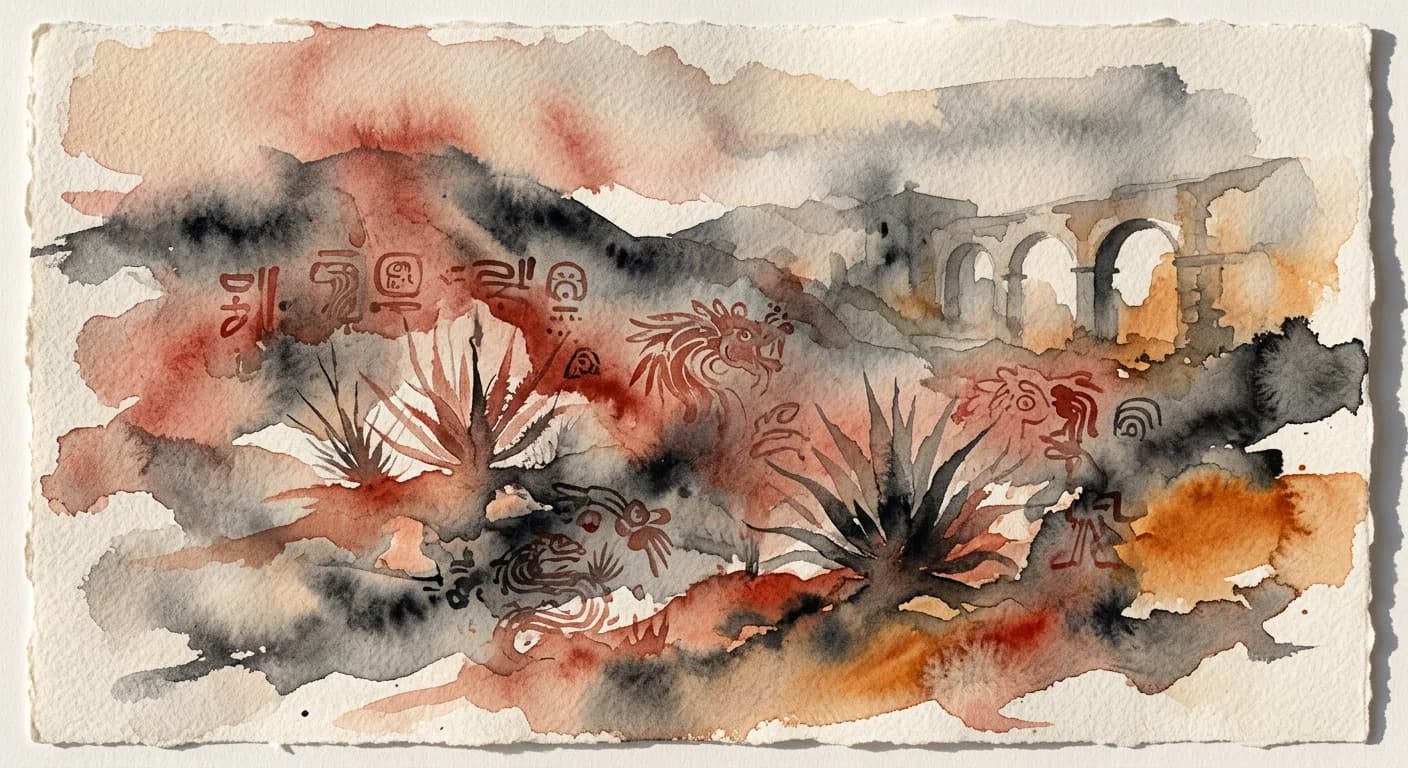
This Nahuatl phrase, literally "the black, the red," transcends mere pigment to embody the very soul of Mesoamerican knowledge and artistic expression. It refers to the fundamental colors used in ancient codices and murals, where black ink from soot and vibrant red ochre brought history, mythology, and spiritual insights to life. More profoundly, it symbolizes the dualistic worldview where complementary opposites, like light and shadow, creation and destruction, converge to form a balanced and meaningful cosmos, signifying the enduring legacy of pre-Hispanic intellectual and visual culture.
Literal Translation
the black, the red
The Story Behind the Word
In tlilli in tlapalli is not just a description of colors; it is a profound metaphor for wisdom, learning, and the sacred act of creation in ancient Mesoamerica. The scribes and artists, known as tlacuiloque (those who write and paint), were highly revered figures, entrusted with preserving the collective memory, religious beliefs, and historical narratives of their people. They meticulously crafted codices and adorned temple walls, using these elemental colors to capture complex cosmological ideas and ancestral knowledge. This phrase encapsulates the belief that true understanding emerges from the interplay of distinct yet interconnected elements, mirroring the dualistic philosophical bedrock of cultures like the Mexica (Aztec), where life's richness is found in the dynamic tension between opposing forces, such as day and night, male and female, sky and earth. It emphasizes that art and writing were not separate from philosophy or spirituality, but were the very vessels through which these profound concepts were transmitted across generations.
Experience It
Studying Ancient Wisdom
A young Nahuatl scholar carefully unrolls a reproduction of the Codex Borgia, tracing the intricate designs. He remarks, 'Within these pages, within this in tlilli in tlapalli, lies the accumulated knowledge and spiritual journey of our ancestors, waiting to be understood.'
Artistic Legacy
An art historian lectures on the vibrant murals of Teotihuacan. She explains, 'The mastery of in tlilli in tlapalli by these ancient artists allowed them to convey not just scenes, but entire worldviews, echoing deep philosophical truths through their chosen palette.'
The Deeper Meaning
This phrase reveals a core Mesoamerican philosophical principle: duality is not opposition but complementarity. True understanding, knowledge, and even existence itself, emerge from the harmonious interplay of seemingly opposing forces. Black (representing the earth, night, wisdom) and red (representing blood, fire, life, sacrifice) combine to create a complete vision, suggesting that balance and synthesis are essential for cosmic order and intellectual enlightenment.
Did You Know?
Beyond ink and ochre, 'in tlilli in tlapalli' was also a metaphor for the educated person or orator, someone who possessed profound knowledge and the ability to articulate it beautifully.
How It's Used
Used to refer to the traditional art, writing, or worldview of ancient Mexico, particularly in contexts discussing codices, murals, and Mesoamerican philosophy.