Ubuntu
/oo-BOON-too/
Meaning
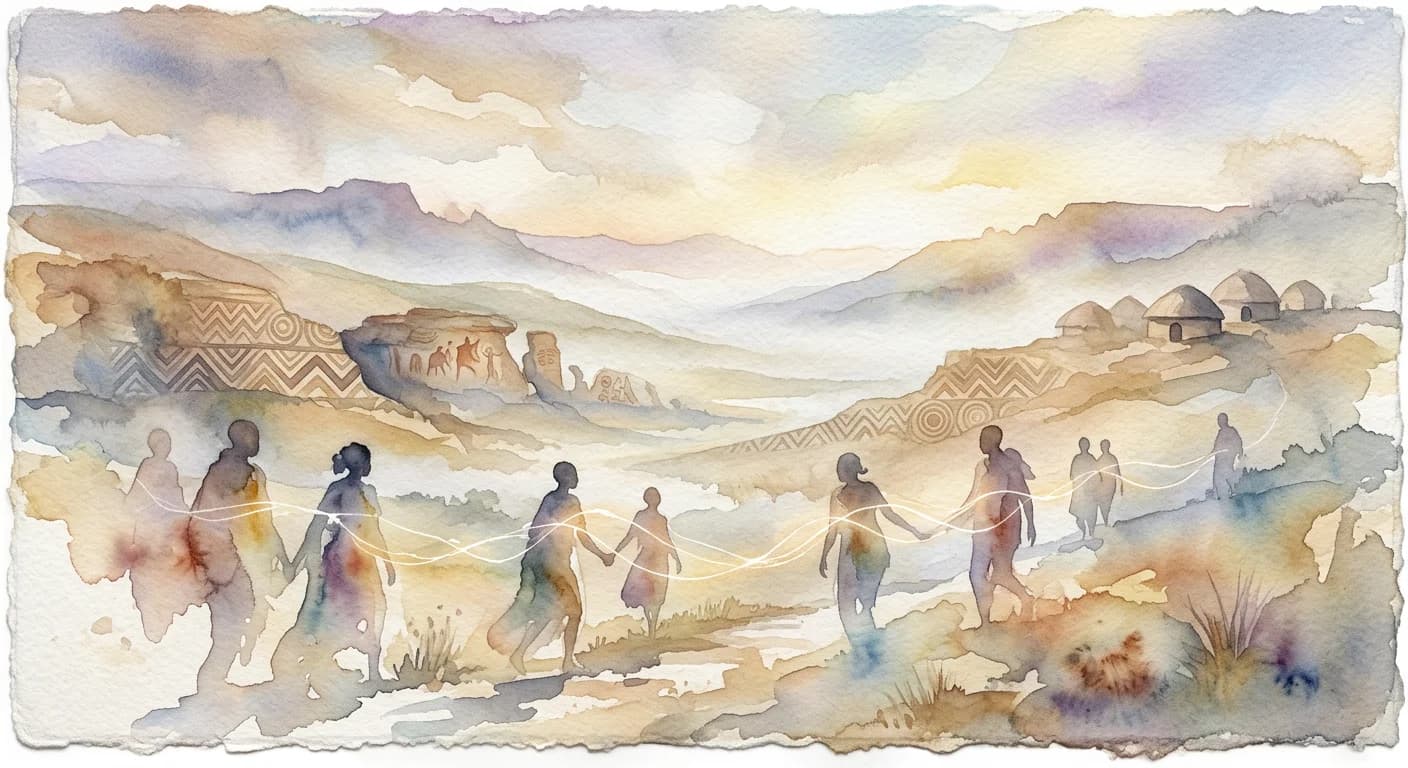
Ubuntu is a profound African philosophy that translates to 'I am because we are,' signifying that an individual's humanity is inextricably linked to the humanity of others. It embodies the belief that our existence and well-being are deeply intertwined with the community. This concept emphasizes compassion, reciprocity, dignity, and the understanding that true fulfillment is found not in isolation, but through collective flourishing and mutual support. It's a call to recognize and affirm the humanity in everyone, fostering a sense of interconnectedness.
Literal Translation
Humanity towards others
The Story Behind the Word
Ubuntu is a cornerstone of Nguni Bantu cultures, including Zulu and Xhosa, and has been a guiding principle for social and ethical conduct for centuries. It emerged from societies where survival and prosperity were inherently communal, necessitating strong bonds of reciprocity and mutual care. In these contexts, an individual's identity and moral standing were largely defined by their relationships and contributions to the collective. The philosophy gained global prominence through figures like Nelson Mandela and Desmond Tutu, who championed it as a pathway to reconciliation and justice in post-apartheid South Africa. It reflects a worldview where personhood is not an inherent state but is achieved through interaction and recognition by others, emphasizing harmony over individualism and collective responsibility over self-interest.
Experience It
Community Harvest Share
A family has an exceptionally bountiful harvest of maize, more than they can consume. Instead of selling the surplus for maximum profit, they share a significant portion with their neighbors, knowing that some families faced leaner yields. This act demonstrates Ubuntu, recognizing that the community's overall well-being is paramount, and their good fortune is best shared to uplift everyone.
Reconciliation Dialogue
During a community meeting, two individuals who have had a long-standing dispute are encouraged to speak openly about their grievances, not to assign blame, but to understand each other's pain and find a path to reconciliation. The elders guide the discussion with the spirit of Ubuntu, emphasizing their shared humanity and the need to restore harmony for the good of the entire group, fostering forgiveness and mutual respect.
The Deeper Meaning
Ubuntu reveals a relational ontology, where being is fundamentally about belonging and relating. It posits that personhood is not an inherent, isolated state but is achieved and affirmed through interaction, empathy, and contribution to the community. This philosophy challenges Western individualism, suggesting that true self-realization is found in recognizing and nurturing the humanity of others, fostering a deep sense of collective responsibility and interconnectedness.
Did You Know?
The open-source operating system 'Ubuntu' was named after this philosophy, aiming to bring the spirit of collaboration and sharing to the world of software development.
How It's Used
Emphasizing community, compassion, and our shared humanity.