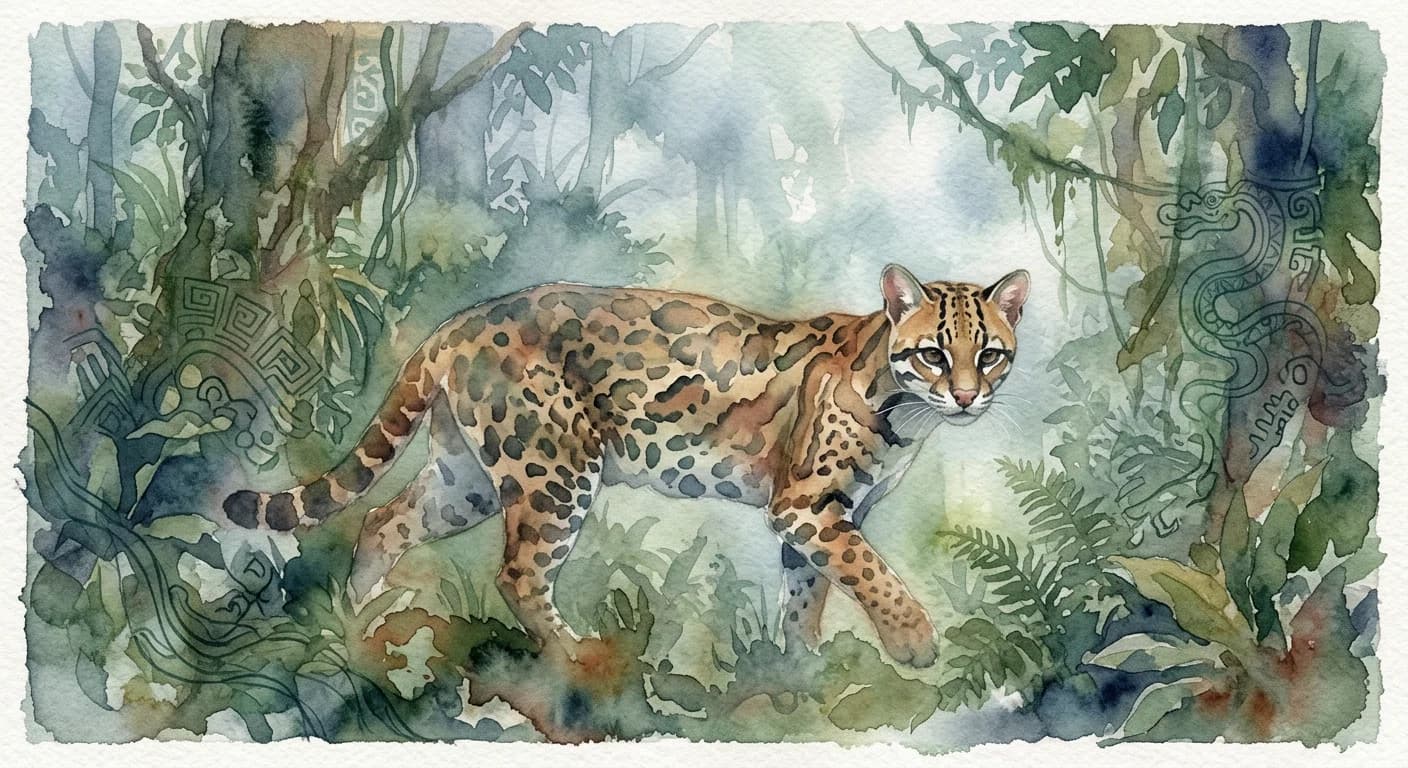
Ocelotl
/oh-seh-LOHT-l/
Meaning
The term 'ocelotl' transcends a mere zoological classification; it embodies the spirit of the jaguar, a creature of unparalleled strength, stealth, and primal grace. For the Nahua peoples, the ocelotl is a powerful deity and a symbol of nocturnal mystery, often associated with the underworld, warriors, and royalty. Its piercing gaze and formidable presence evoked both awe and reverence, signifying a deep connection to the untamed forces of nature and the sacred balance of the cosmos.
Literal Translation
Jaguar
The Story Behind the Word
The 'ocelotl' in Nahuatl culture is far more than just an animal; it is a vital cosmic force. Revered by the Aztecs and other Mesoamerican civilizations, the jaguar symbolized the sun's nocturnal journey through the underworld, representing regeneration and transformation. Warriors, particularly the elite Jaguar Knights, emulated its ferocity and cunning, believing they absorbed its power. Its image permeated art, architecture, and religious rituals, signifying rulership, fertility, and the untamed wilderness. This deep reverence reveals a worldview where humans are intricately connected to and dependent on the natural world, seeing animals not just as creatures, but as manifestations of divine power and cosmic order.
Experience It
Warrior's Vision
A young Aztec warrior, preparing for battle, meditates before a stone carving of an ocelotl. He seeks to absorb its strength and stealth, praying for the jaguar's spirit to guide his hand and protect him in the coming conflict, hoping to embody its fearlessness.
Royal Lineage
During a coronation ceremony, the new tlatoani (ruler) dons a magnificent headdress adorned with ocelotl pelts and feathers. This act symbolizes his divine right to rule, his connection to the powerful forces of the earth and night, and his responsibility to protect his people with the jaguar's ferocity.
The Deeper Meaning
The concept of 'ocelotl' reveals a profound Mesoamerican philosophy where the natural world is not separate from the spiritual, but an intrinsic part of it. It underscores the belief in animism, where powerful animals like the jaguar possess souls, divine attributes, and serve as conduits to higher realms. This worldview emphasizes respect for nature's raw power and the interconnectedness of all life, urging humanity to live in harmony with these potent forces.
Did You Know?
The Aztec calendar featured an 'Ocelotl' day sign, indicating a day of strength, danger, and often associated with the sun god's power and the earth's fertility.
How It's Used
Used in Nahuatl language to refer to the jaguar.