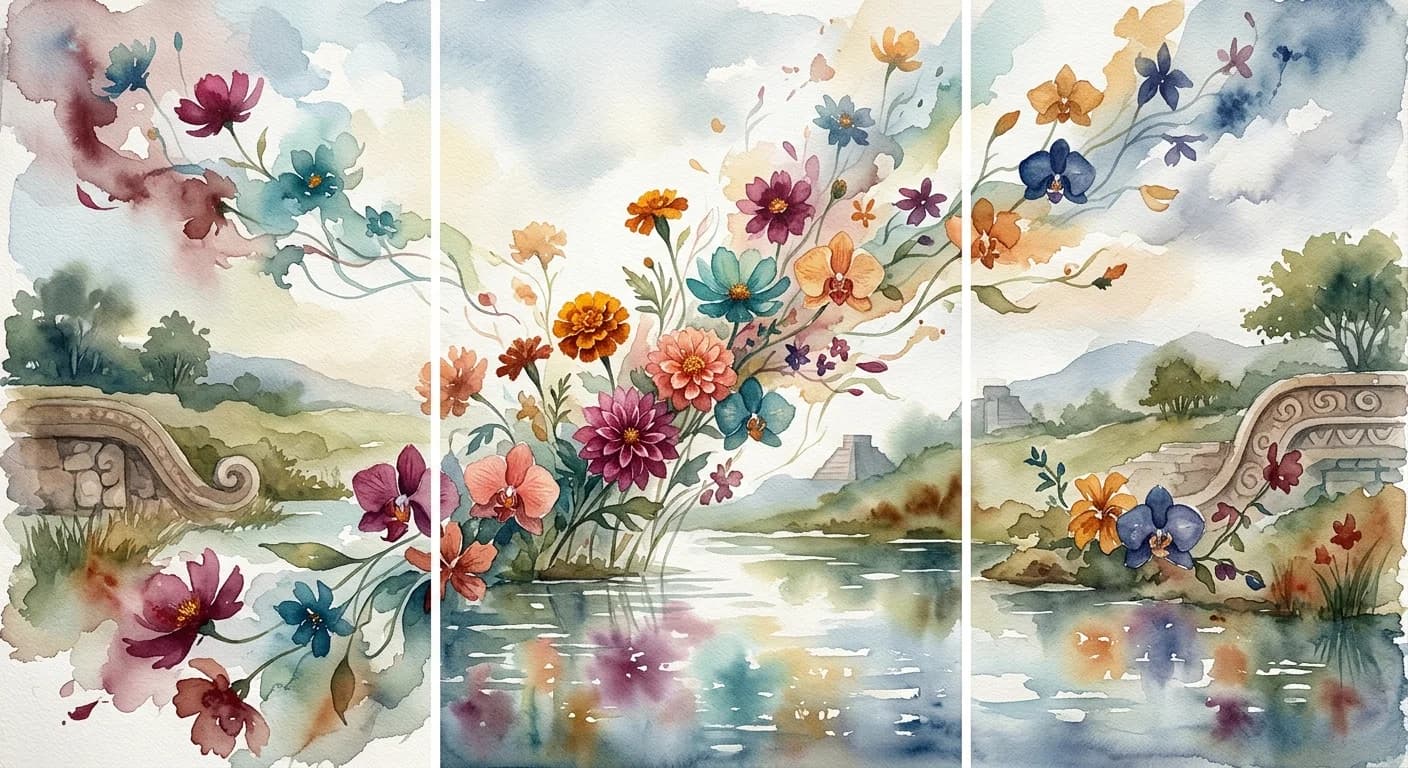
Xochicuicatl
/sho-chee-KEE-kah-tl/
Meaning
Xochicuicatl, literally 'flower song,' transcends a simple description of flora; it is a profound Nahuatl poetic and musical form that encapsulates the fleeting beauty of existence. These lyrical compositions celebrate the vibrant, yet transient, nature of life, art, and the cosmos itself. They are deeply philosophical meditations on the ephemeral quality of earthly joys and achievements, urging contemplation on the wonder and ultimate impermanence of all things beautiful. Thus, a xochicuicatl acts as a conduit for spiritual and aesthetic appreciation, linking humanity to the sacred cycles of the natural world.
Literal Translation
flower song
The Story Behind the Word
The concept of xochicuicatl is deeply rooted in the Nahua worldview, which held a profound reverence for the natural world and an acute awareness of life's impermanence. In a culture where human sacrifice was practiced to sustain the cosmos, the beauty of a flower, though brief, was seen as a precious and sacred manifestation of divine creation. Xochicuicatl emerged as a refined artistic expression, often performed in solemn ceremonies or philosophical discussions ('tlamatinime'), where poets and sages would ponder the nature of truth, beauty, and the afterlife. It reflects a core belief that art and poetry could offer a glimpse into the divine, providing solace and meaning in a world understood to be transient. This tradition highlights the Nahua people's sophisticated philosophical thought and their ability to find profound spiritual meaning in the delicate balance of life and death, beauty and decay.
Experience It
A Poet's Lament
During a gathering of scholars, a revered tlamatini (sage) recites a xochicuicatl, his voice echoing with the melancholic beauty of blossoms that open with the dawn only to wither by dusk. His verses speak not just of petals, but of the fleeting dreams of humanity, prompting quiet reflection among his listeners on the transient nature of their own lives and achievements.
Festival of Flowers
Amidst the vibrant celebrations of Xochilhuitl, the 'Flower Festival,' a young maiden sings a xochicuicatl, her melody intertwining with the scent of marigolds and cempasúchil. Her song praises the earth's bounty and the ephemeral joy of the moment, reminding everyone to cherish the present beauty before it, like the flowers, fades away.
The Deeper Meaning
Xochicuicatl embodies the Nahua philosophical concept of "in tlilli in tlapalli" (the black ink, the red paint), representing wisdom and art. It reveals a worldview that doesn't shy away from the inevitability of death but rather embraces it as part of life's beautiful, cyclical process. The transient nature of the flower becomes a powerful metaphor for human existence, urging a deep appreciation for the present moment and the creation of lasting beauty through art and knowledge, even if individual lives are brief.
Did You Know?
Ancient Nahuatl texts describe 'flower and song' (in xochitl in cuicatl) as a metaphor for truth, art, and poetry itself – suggesting that profound insights and artistic expression are as beautiful and fleeting as a blooming flower.
How It's Used
Used in classical Nahuatl poetry and song to refer to lyrical compositions celebrating beauty, life, and the natural world, often with philosophical undertones.