Tlahcuilo
/tlah-KWEE-loh/
Meaning
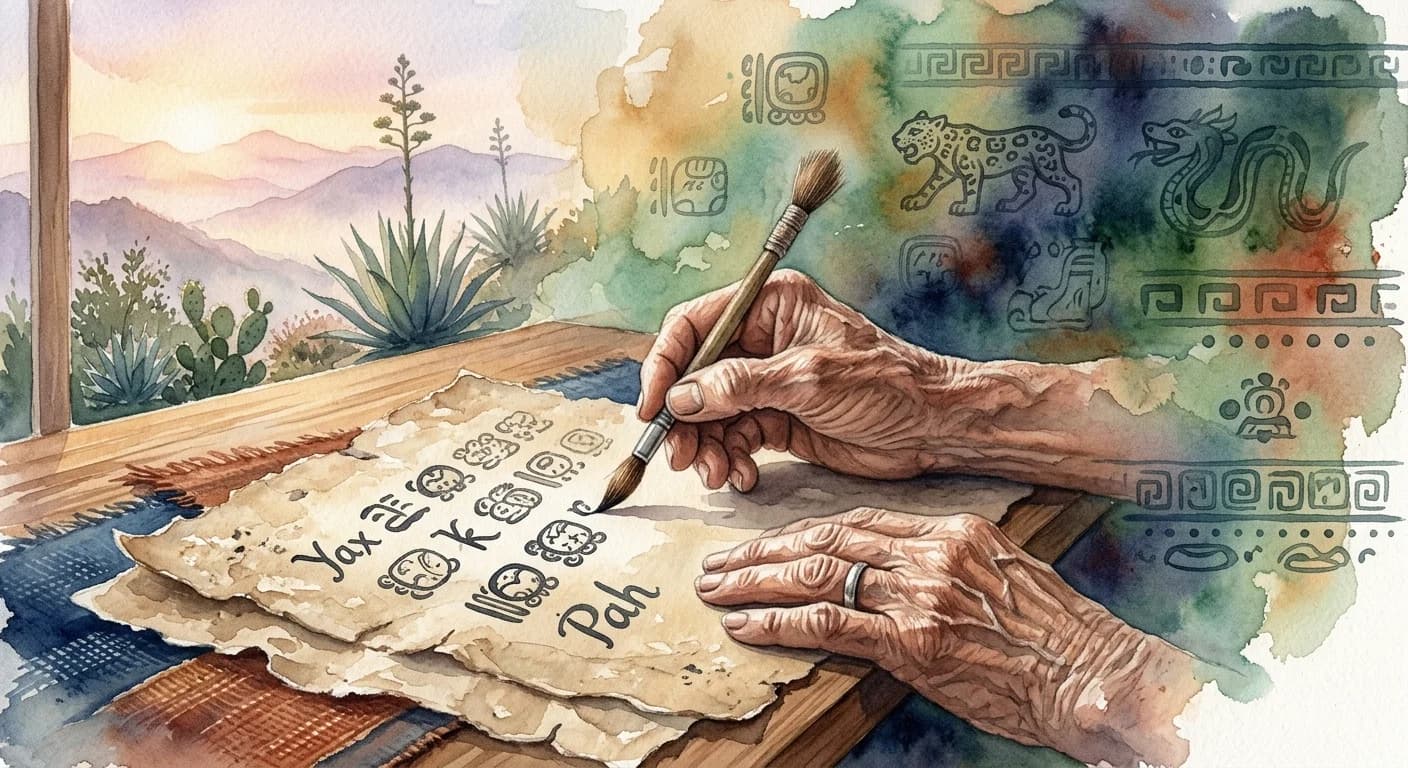
The 'tlahcuilo' was far more than a mere scribe; they were the living memory and artistic voice of ancient Mesoamerican societies, particularly among the Nahua peoples. These revered individuals were masters of intricate pictographic and ideographic systems, meticulously crafting codices that served as encyclopedias of history, cosmology, religious rites, and astronomical wisdom. Their work was a sacred act, translating cosmic order and ancestral knowledge into tangible form, thereby safeguarding the collective identity and spiritual continuity of their communities.
Literal Translation
The literal meaning is debated, but it is often associated with 'one who writes' or 'one who paints'.
The Story Behind the Word
The existence and veneration of the tlahcuilo reveal a profound appreciation for recorded knowledge and visual communication within Mesoamerican cultures. Unlike alphabetic writing systems, Nahuatl codices were not meant to be 'read' aloud word-for-word, but rather served as mnemonic devices and visual narratives, interpreted by trained readers. This highlights a holistic worldview where art, history, religion, and science were inextricably linked. The tlahcuilo embodied the intellectual and spiritual elite, reflecting a societal structure that valued the preservation of tradition and the intricate understanding of the cosmos as paramount to maintaining order and justifying power. Their creations were not just documents, but living testaments to a rich, complex civilization, demonstrating how deeply intertwined the act of creation was with cultural survival and identity.
Experience It
Recording the Royal Lineage
In the bustling calm of the imperial palace, a tlahcuilo meticulously painted the lineage of the new tlatoani onto a deerskin codex. Each glyph and figure was chosen with precision, ensuring the divine right and historical legitimacy of the ruler were visually affirmed for generations to come, a testament to the enduring power of ancestral ties.
Depicting a Cosmic Event
Under the watchful eye of astronomers, a tlahcuilo rendered the recent celestial phenomenon – a comet streaking across the night sky – into a calendrical manuscript. The precise symbols and colors captured not just the event, but its spiritual implications and potential omens, integrating the ephemeral with the eternal in a visual narrative.
The Deeper Meaning
The tlahcuilo embodies a philosophy where knowledge is not merely information, but a sacred trust, a bridge between the past, present, and future, and between the human and divine. Their work reflects a cyclical view of time and a deep reverence for cosmic patterns, emphasizing that understanding and recording these patterns were essential for maintaining societal balance and spiritual harmony. Through their art, they demonstrated that truth was often revealed through intricate visual narratives, rather than solely through linear text.
Did You Know?
Many tlahcuilome (plural of tlahcuilo) were believed to possess spiritual insight, as their ability to interpret and record cosmic and historical events was seen as a divine gift, connecting them directly to the gods.
How It's Used
Used to refer to the scribes and artists of pre-Hispanic Mesoamerica, specifically those who created and worked with codices.