U.
HomeRegionsLanguagesEmotionsCollections
Find Your Word

“The limits of my language mean the limits of my world.”

— Ludwig Wittgenstein, Philosopher

Untranslatable

A curated collection of the world's most beautiful expressions—words that remind us language is humanity's greatest invention.

  • Home
  • Collections
  • Regions
  • Countries
  • Emotions
  • Tags
  • Contexts
  • Finder
  • Europe
  • Asia
  • Americas
  • Africa
  • Middle East
  • About
  • Contact
  • Privacy Policy
  • Terms of Service

2026 © Untranslatable. All rights reserved.

    /
    /
    1. Home
    2. /
    3. Americas
    4. /
    5. Tlamanalli
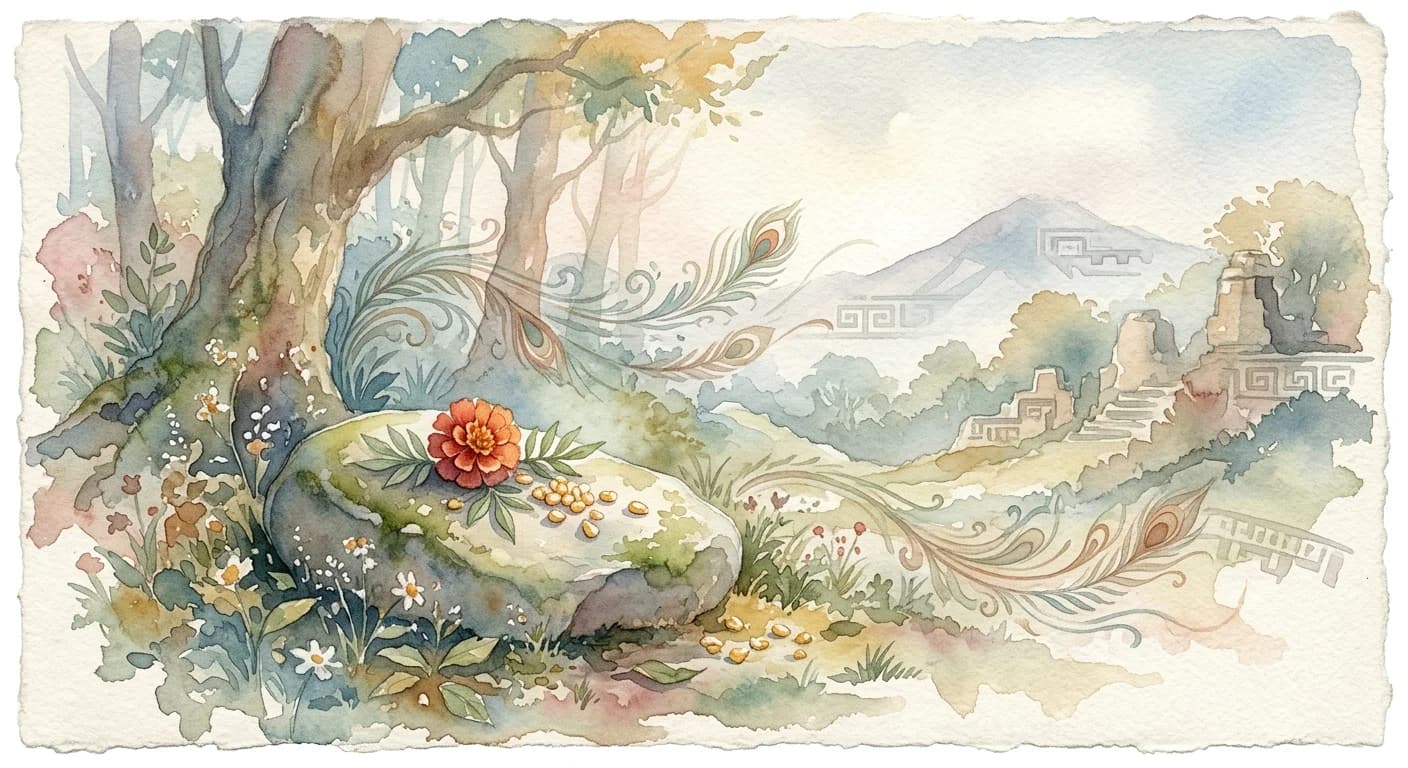
    Artistic representation of tlamanalli
    Nahuatl•
    🇲🇽Mexico

    Tlamanalli

    /tlah-mah-NAH-lee/

    Meaning

    Tlamanalli transcends a simple offering; it is a sacred communion, a deliberate act of presenting sustenance and beauty to the divine and ancestral realms. This deeply spiritual tribute, often laden with vibrant flowers, precious foodstuffs, and symbolic objects, embodies profound gratitude, reverence, and a fervent desire to maintain cosmic equilibrium. It is a tangible expression of reciprocity, forging an unbreakable bond between humanity and the intangible forces that govern existence, ensuring harmony and continued blessings within the Mesoamerican cosmovision.

    Literal Translation

    offering/tribute

    The Story Behind the Word

    The concept of tlamanalli is deeply rooted in the Mesoamerican worldview, where the universe was seen as a dynamic, interconnected system requiring constant maintenance and energetic exchange. Humans, by offering tlamanalli, participated actively in this cosmic metabolism, providing sustenance (often metaphorical, sometimes literal, like blood offerings) to deities who, in turn, sustained the world through rain, fertility, and light. This reciprocal relationship, known as 'tlaocolli' (compassion/mercy) from the gods and 'tlazohcamati' (gratitude) from humans, underpinned all religious and social structures. Tlamanalli was not about appeasement out of fear, but a fundamental duty and privilege, reflecting a profound understanding that all life is interconnected and dependent on a respectful, balanced exchange. It reveals a culture that perceived itself as an integral part of a living cosmos, rather than separate from it.

    Experience It

    Offering to Tlaloc

    Before the planting season, a farmer carefully arranged a tlamanalli of maize, jade beads, and copal incense at a mountain shrine. He hoped this heartfelt offering would honor Tlaloc, the rain deity, ensuring abundant water for his crops and the prosperity of his community.

    Ancestral Remembrance

    On the Day of the Dead, a family prepared an elaborate tlamanalli on their altar, featuring their ancestors' favorite foods, drinks, and marigold flowers. This vibrant tribute was a way to welcome their spirits home, showing continued love and respect, and seeking their guidance.

    The Deeper Meaning

    Tlamanalli embodies a profound philosophy of cosmic reciprocity and interconnectedness. It posits that human existence is not passive but an active participation in maintaining universal balance. By giving, one receives; by honoring the sacred, one sustains life itself. This worldview emphasizes gratitude, responsibility, and the idea that all beings, human and divine, are part of a continuous, interdependent cycle of exchange, where material offerings serve as conduits for spiritual energy and communication.

    Did You Know?

    Ancient tlamanalli often included 'paper banners' (amacalli), intricately folded and painted, serving as symbolic prayers or representations of the offerings themselves, carrying messages to the gods.

    How It's Used

    Used historically in Nahuatl-speaking communities to describe offerings made in religious or ceremonial contexts.

    Emotions
    belonging,gratitude
    Contexts
    celebration,farewell,greeting
    🇲🇽Mexico

    by Annelise Dubois·Written Mar 10, 2026·Updated Apr 3, 2026

    Related Words

    Explore more
    SobremesaSpanish

    Sobremesa is the cherished, often extended period immediately following a meal, particularly lunch or dinner, where diners remain seated at the table to enjoy conversation, coffee, and digest not just the food, but the company itself. It’s a dedicated time for unhurried social bonding, storytelling, and shared laughter, transforming a simple meal into a profound communal experience. Far from just clearing the dishes, sobremesa is an integral part of Spanish social life, often lasting for hours.

    Pura vidaSpanish

    More than just 'pure life,' "Pura vida" encapsulates a profound philosophy of embracing the present moment with unwavering optimism and gratitude. It's a daily commitment to finding joy in simple pleasures, accepting life's challenges with a positive spirit, and prioritizing well-being over material possessions. This ubiquitous phrase reflects a national identity built on resilience, community, and an deep appreciation for nature's bounty.

    MamihlapinatapaiYaghan

    Mamihlapinatapai encapsulates that profound, unspoken moment when two individuals lock eyes, each silently acknowledging a mutual desire or intention, yet both hesitate to be the first to act upon it. It's a delicate dance of anticipation, a shared gaze brimming with common understanding and a quiet longing for the other to break the ice. This intricate look carries the weight of a shared, uninitiated potential, a silent conversation where both parties are perfectly aware of what could happen, but neither makes the first move.

    UbuntuZulu/Xhosa

    Ubuntu is a profound African philosophy that translates to 'I am because we are,' signifying that an individual's humanity is inextricably linked to the humanity of others. It embodies the belief that our existence and well-being are deeply intertwined with the community. This concept emphasizes compassion, reciprocity, dignity, and the understanding that true fulfillment is found not in isolation, but through collective flourishing and mutual support. It's a call to recognize and affirm the humanity in everyone, fostering a sense of interconnectedness.