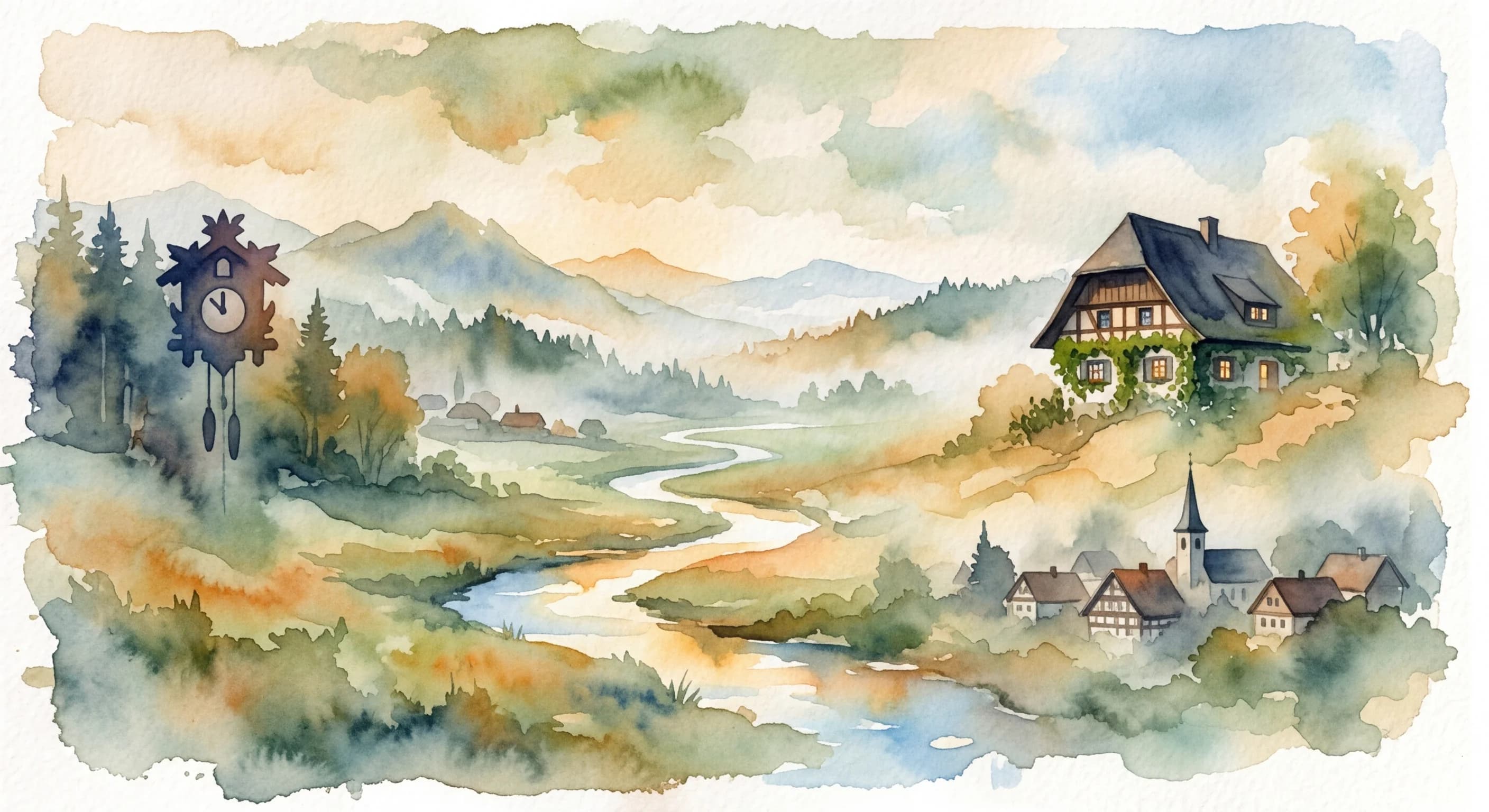
Heimat
/HY-maht/
Meaning
Heimat transcends the mere physical dwelling of 'home'; it embodies a profound, almost spiritual connection to a specific place—a region, a village, or even a landscape—that shapes one's identity from childhood. It's the grounding sensation of belonging, where one feels completely understood, rooted in shared history, dialect, and cultural practices. This deep emotional attachment is often imbued with nostalgia, representing an idealized sanctuary of authenticity and personal heritage that offers comfort and stability in an ever-changing world.
Literal Translation
Home
The Story Behind the Word
The concept of Heimat emerged strongly in 19th-century Germany, particularly during periods of rapid industrialization and urbanization. As people moved from rural areas to cities, a longing for a perceived simpler, more authentic life in their place of origin grew. This was further fueled by nationalist sentiments, where 'Heimat' became intertwined with national identity and a romanticized view of German landscapes and traditions. Post-WWII, it took on an even deeper resonance as a psychological refuge amidst destruction and displacement, representing a lost or deeply desired sense of stability and belonging. It reflects a cultural emphasis on roots, community, and the profound impact of one's environment on personal identity, revealing a society that values deep, enduring connections to place over transient experiences.
Experience It
Return to the Alps
After decades abroad, Markus returned to his childhood village in the Bavarian Alps. As he breathed the crisp mountain air and heard the familiar church bells, a profound sense of 'Heimat' washed over him, feeling instantly reconnected to the land and the memories embedded within its peaks and valleys.
A City Dweller's Heimat
Though born and raised in Berlin, Lena found her 'Heimat' in the vibrant Kreuzberg district. The familiar street art, the Turkish market's aromas, and the diverse community where she felt truly herself, despite the urban sprawl, solidified her deep sense of belonging there.
The Deeper Meaning
Heimat reveals a core German philosophical inclination towards rootedness and the profound influence of environment on identity. It posits that true selfhood is not merely an internal construct but is deeply interwoven with a specific, beloved place, its history, and its people. This reflects a longing for authenticity and stability, suggesting that a genuine sense of belonging is essential for human flourishing and provides a moral compass in life.
Did You Know?
The 'Heimatfilm' genre, popular in post-WWII West Germany, depicted idyllic rural life, often with themes of love and nature, providing escapism and a longing for stability amidst societal upheaval.
How It's Used
Used to describe one's homeland, native region, or a place that evokes a deep sense of belonging and identity.