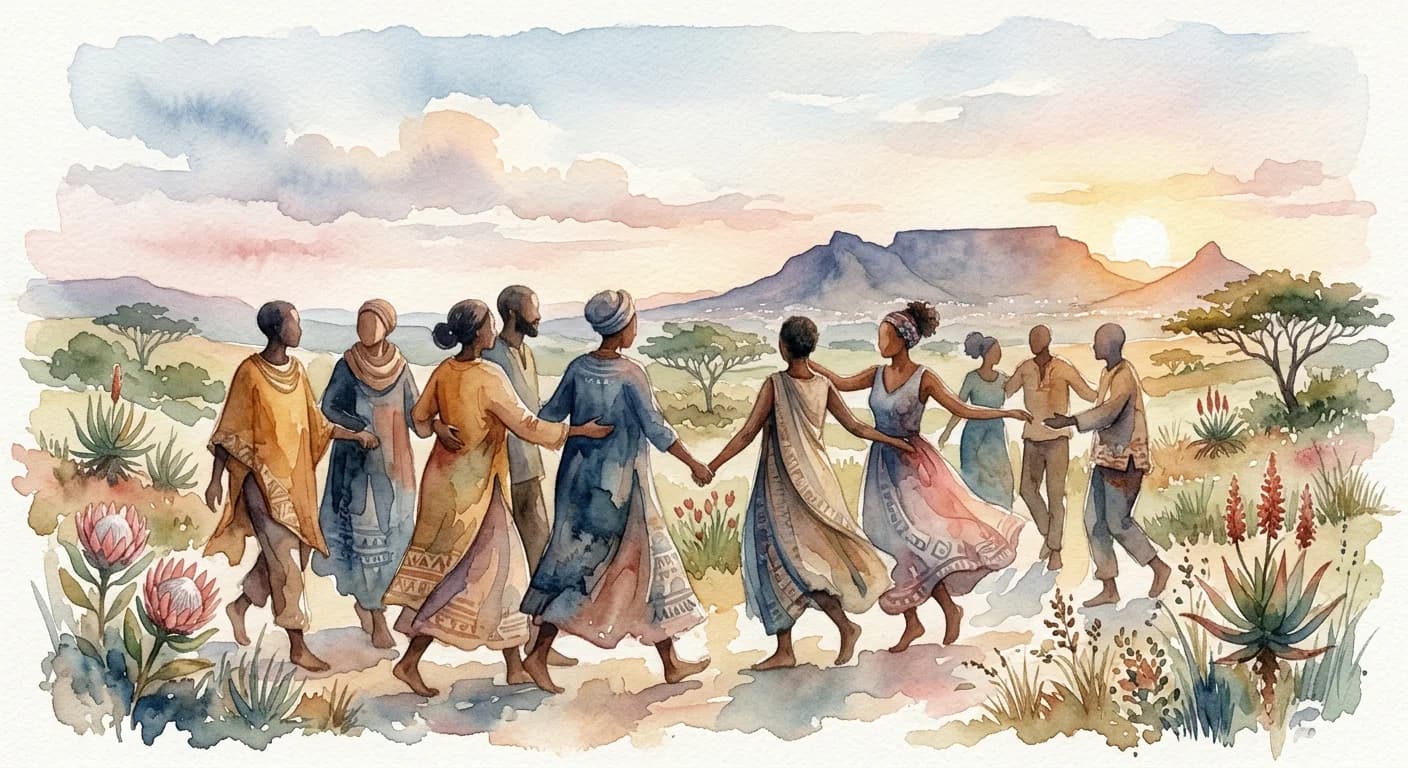
Ubuntu
/oo-BOON-too/
Meaning
Ubuntu is a profound Nguni Bantu philosophy asserting that our humanity is inextricably woven into the fabric of our relationships with others. It champions the radical idea that 'I am because we are,' emphasizing that a person's well-being and identity are affirmed through community, compassion, and collective flourishing. Far more than just empathy, it's a call to active participation in building a harmonious society, where generosity, kindness, and mutual respect are not merely virtues but the very essence of existence.
Literal Translation
humanity
The Story Behind the Word
Ubuntu is deeply ingrained in the spiritual and social foundations of Southern African communities, particularly among Nguni-speaking peoples. Its origins trace back through generations, reflecting a pre-colonial communal worldview where individual survival and prosperity were understood to be impossible outside the collective. This philosophy exists because the traditional African social structure prioritized the group over the individual, fostering a deep sense of shared responsibility and mutual aid for survival and thriving in often challenging environments. It reveals a world where personhood is not an inherent trait but is achieved and continuously affirmed through interaction, care, and contribution to the community, shaping judicial systems, conflict resolution, and daily interactions.
Experience It
Sharing the Harvest
After a bountiful harvest, a farmer notices his neighbor's crops were damaged by a storm. Instead of solely celebrating his own fortune, he immediately shares a significant portion of his yield with his neighbor, understanding that their community's strength relies on everyone having enough. This act is not charity, but an embodiment of Ubuntu, recognizing their interconnected fate.
Community Reconciliation
During a village dispute, elders facilitate a dialogue where both parties are encouraged to express their grievances and seek understanding, rather than punishment. The focus is on restoring harmony and repairing damaged relationships within the community, ensuring that all members can once again function as a cohesive unit. This process reflects Ubuntu's emphasis on collective well-being over individual retribution.
The Deeper Meaning
Ubuntu reveals a deeply relational ontology, where existence and personhood are not solitary states but are co-created and sustained through community. It challenges Western individualism by positing that true self-realization comes not from self-containment, but from active engagement, empathy, and contribution to the collective. This worldview sees ethical action as inherently tied to the well-being of the 'we,' rather than solely the 'I.'
Did You Know?
Nelson Mandela famously championed Ubuntu, stating it's about 'caring for others and being generous,' and that 'a person with Ubuntu is open and available to others, affirming of others.'
How It's Used
Used to describe a philosophy of life, a community spirit, and a recognition of shared humanity. It's often invoked in discussions about ethics, social justice, and reconciliation.