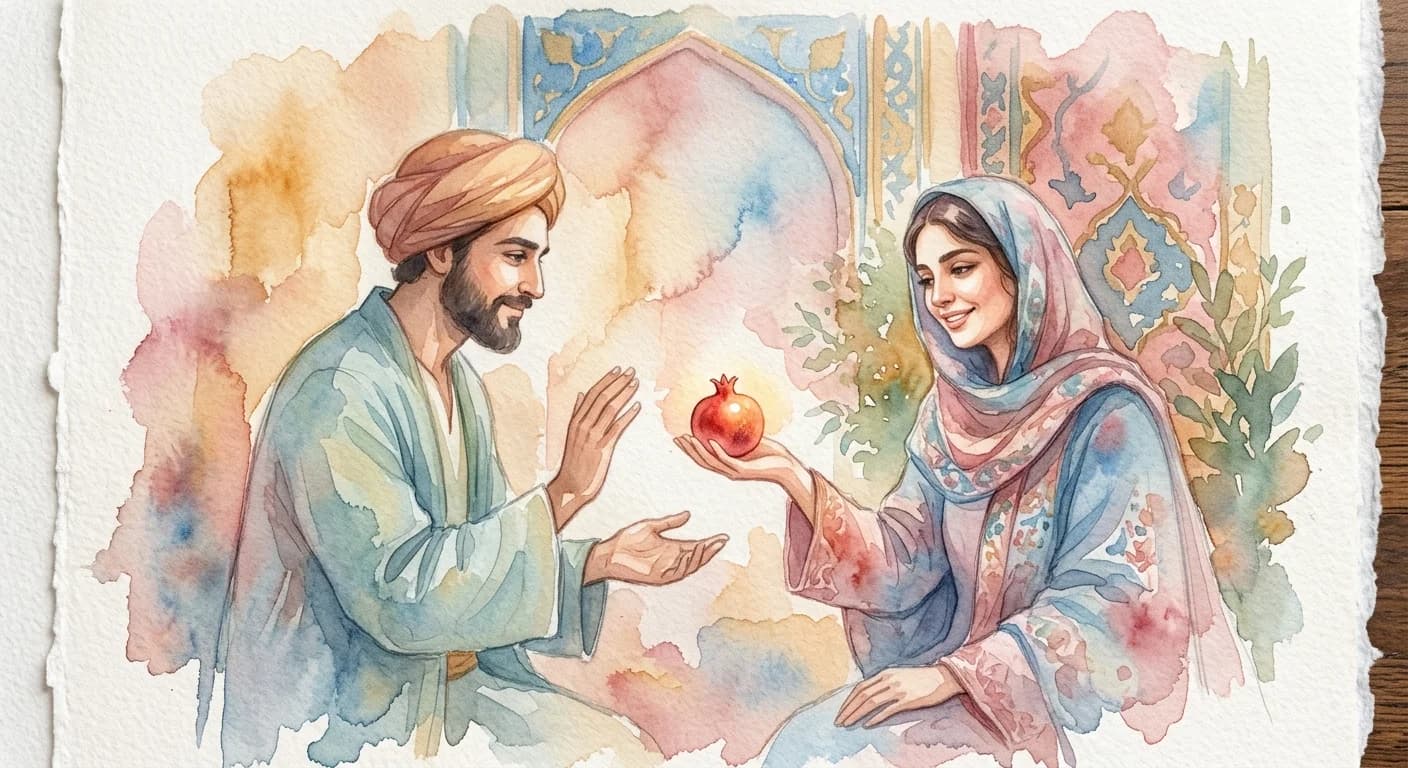
Taarof
/TAH-rohf/
Meaning
Taarof is the intricate Persian art of performative politeness, a delicate social ballet where generosity and humility are expressed through a ritualized exchange of offering and refusing. It's a deep-seated cultural code dictating that one must initially decline overtures like gifts, food, or payment, even if desired, to allow the giver to demonstrate their magnanimity. This elaborate dance of deference and self-deprecation ultimately aims to foster social harmony, respect, and a profound sense of mutual honor within interactions, often creating a beautiful tension between genuine intention and polite theatricality.
Literal Translation
The literal meaning is debated, but it is often associated with concepts of 'offering' or 'showing' in a polite, deferential manner.
The Story Behind the Word
Taarof is deeply rooted in ancient Persian courtly traditions, Sufi mysticism emphasizing humility and self-effacement, and a collective cultural value placed on maintaining social harmony (ru-dar-vasi). It reflects a society that prioritizes group cohesion and mutual respect over individualistic directness. The philosophy behind Taarof suggests that outright acceptance or refusal can be seen as impolite or even arrogant; instead, a series of polite denials and insistence allows both parties to demonstrate virtue—the giver's generosity and the receiver's humility. This elaborate social choreography reveals a world view where interactions are not merely transactional but are opportunities to affirm one's character and strengthen social bonds, making every exchange a testament to shared cultural values and a subtle performance of respect.
Experience It
The Dinner Invitation
A host offers a guest a second helping of ghormeh sabzi. The guest, though still hungry, politely insists, 'No, thank you, I'm quite full.' The host, knowing this is Taarof, insists further, 'Please, just a little more, it would be my pleasure.' After a few more rounds of polite refusal and insistence, the guest finally accepts, demonstrating humility before the host's generosity.
Paying the Bill
At a restaurant, two friends finish their meal. As the bill arrives, both immediately reach for it, each insisting, 'It's on me!' A playful but firm back-and-forth ensues, with each friend trying to out-Taarof the other in an effort to demonstrate generosity, until one 'reluctantly' allows the other to pay, having adequately performed their part in the ritual.
The Deeper Meaning
Taarof reveals a profound philosophical insight into the performative nature of social interactions and the value placed on indirect communication. It suggests that true respect and generosity are not just about the act itself, but the ritualized manner in which they are offered and received. It underscores a worldview where the 'how' of an interaction is as important, if not more so, than the 'what,' fostering a society built on layers of nuanced deference and mutual honor rather than blunt transactional efficiency.
Did You Know?
The most extreme form of Taarof is 'Taarof-e-shekasteh' (broken Taarof), where someone offers something clearly impossible or absurd, humorously acknowledging the ritual while simultaneously breaking it.
How It's Used
Taarof is used in almost every social interaction in Iran, from accepting or declining offers of food and drink to paying for services and expressing gratitude. It can manifest in simple gestures of politeness or more elaborate displays during formal occasions.