U.
HomeRegionsLanguagesEmotionsCollections
Find Your Word

“The limits of my language mean the limits of my world.”

— Ludwig Wittgenstein, Philosopher

Untranslatable

A curated collection of the world's most beautiful expressions—words that remind us language is humanity's greatest invention.

  • Home
  • Collections
  • Regions
  • Countries
  • Emotions
  • Tags
  • Contexts
  • Finder
  • Europe
  • Asia
  • Americas
  • Africa
  • Middle East
  • About
  • Contact
  • Privacy Policy
  • Terms of Service

2026 © Untranslatable. All rights reserved.

    /
    /
    1. Home
    2. /
    3. Europe
    4. /
    5. Nervensäge
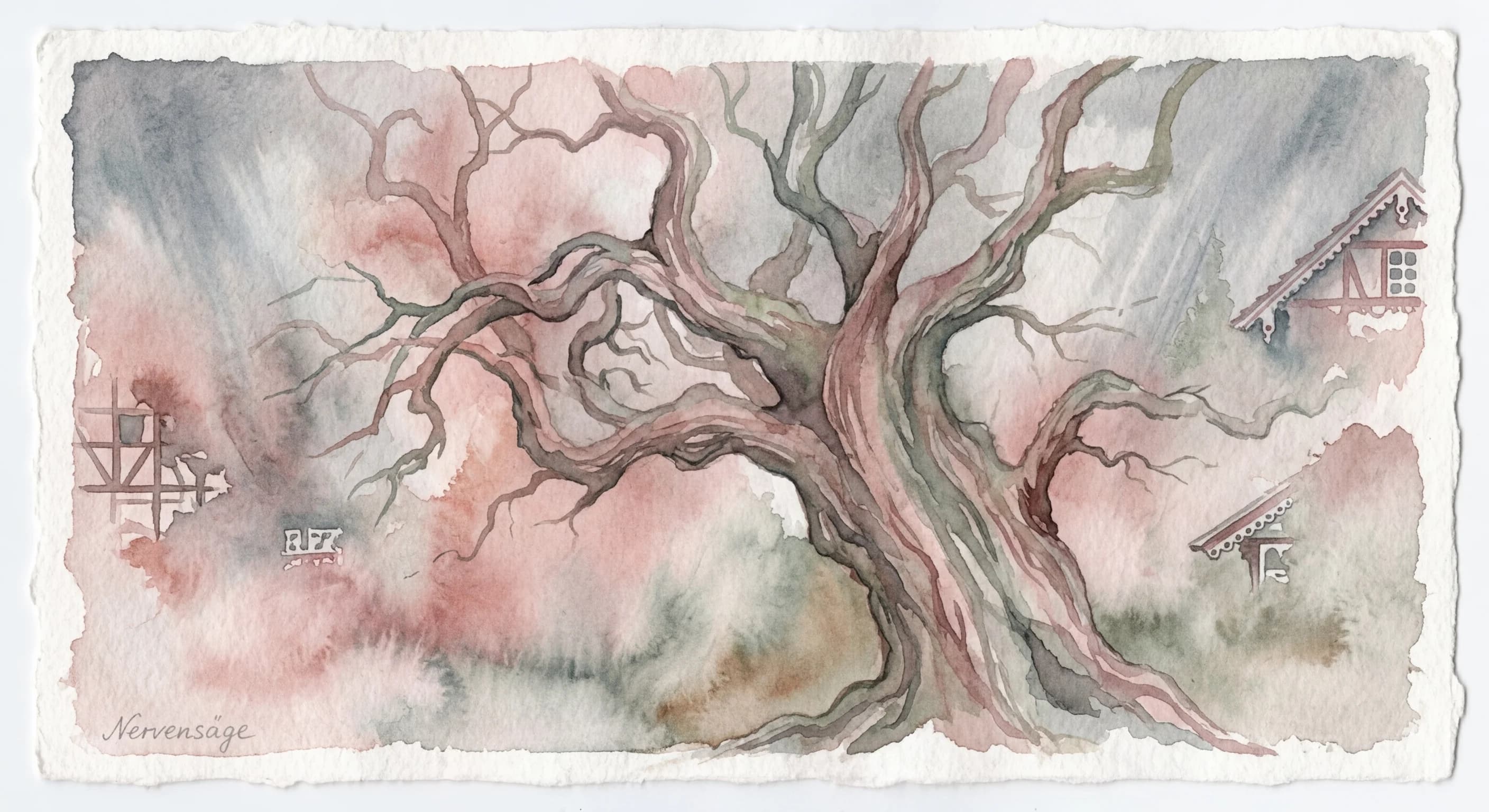
    Artistic representation of Nervensäge
    German•
    🇦🇹Austria🇩🇪Germany🇨🇭Switzerland

    Nervensäge

    /NER-fuhr-zey-guh/

    Meaning

    A "Nervensäge" is more than just an annoyance; it's a person whose persistent, often repetitive actions or words metaphorically saw away at one's mental tranquility, leaving a frayed and exhausted state. This individual isn't merely bothersome; they possess an almost surgical ability to erode patience, chipping away at one's peace of mind with an incessant, grating presence. The term vividly conveys a visceral, almost physical discomfort, like a dull saw relentlessly working on one's nerves until they are raw.

    Literal Translation

    Nerve saw

    The Story Behind the Word

    The existence of "Nervensäge" in the German lexicon speaks to a cultural appreciation for order, efficiency, and a certain degree of personal space and quietude. In a society that often values directness and precision, the concept of someone who deliberately, or even unknowingly, disrupts this equilibrium through incessant, unproductive chatter or behavior is particularly jarring. It reflects a low tolerance for gratuitous noise or repetitive, draining interactions, highlighting a cultural preference for meaningful communication and respectful boundaries. The word itself, with its blunt, almost industrial imagery, underscores a pragmatic approach to identifying and naming such irritations, rather than merely enduring them. It’s about recognizing a specific, debilitating form of social friction.

    Experience It

    Office Chatterbox

    During the morning meeting, Klaus kept interjecting with irrelevant anecdotes and questions, derailing the agenda multiple times. By the end, Anna leaned over to a colleague and whispered, "Klaus ist heute wieder eine echte Nervensäge, ich kann mich kaum konzentrieren!"

    Endless Complaining

    At the family dinner, Aunt Helga spent two hours recounting every minor inconvenience of her day, from traffic to a slightly overcooked potato. Her nephew, Michael, sighed internally, thinking, "Mutti, deine Schwester ist wirklich eine Nervensäge, ich brauche jetzt einen Schnaps."

    The Deeper Meaning

    This word reflects a cultural understanding of personal boundaries and the sanctity of inner peace. It suggests that persistent, draining social interactions are not just minor irritations but can actively erode one's well-being, akin to a physical assault on one's mental state. It implicitly values the right to mental quietude and highlights the impact of constant low-level friction on the human psyche.

    Did You Know?

    While "Nervensäge" is commonly used for people, it can also metaphorically describe an incessantly annoying sound, like a dripping faucet or a squeaky door, that grates on one's nerves.

    How It's Used

    Used to describe someone who is persistently irritating, annoying, and wears down the patience of others through their words or actions.

    Emotion
    anger
    Contexts
    family,social interaction,work
    🇦🇹Austria🇩🇪Germany🇨🇭Switzerland

    by Annelise Dubois·Written Mar 10, 2026·Updated Apr 3, 2026

    Related Words

    Explore more
    HyggeDanish

    Hygge is more than mere coziness; it's a holistic embrace of comfort, warmth, and belonging that nourishes the soul. It describes the intentional creation of an intimate atmosphere where simple pleasures, genuine connection, and mindful presence converge, fostering a profound sense of contentment and well-being. It's about finding joy and peace in the small, everyday moments, often shared with loved ones.

    SaudadePortuguese

    Saudade encapsulates a profound, melancholic longing for something or someone cherished that is absent, often with the bittersweet knowledge that it may never return. It's a deep emotional state tinged with nostalgia, evoking a sense of loss for past experiences, places, or people, yet also holding a tender appreciation for the beauty of what once was. This yearning is not merely sadness, but a complex tapestry of desire, memory, and a poignant acceptance of absence, holding the beloved in a warm, persistent embrace within the heart.

    GezelligDutch

    Gezellig encapsulates a profound sense of warmth, belonging, and convivial comfort, extending beyond mere coziness to embrace the social and emotional atmosphere. It's the feeling of being truly at ease, surrounded by good company, laughter, and a shared sense of contentment. This untranslatable term describes not just a physical space, but a holistic experience where time seems to slow down, fostering genuine connection and a deep sense of well-being.

    Dolce far nienteItalian

    Dolce far niente captures the profound joy and effortless pleasure derived from simply existing without obligation or purpose. It's the art of savoring moments of pure, unadulterated idleness – lying in the sun, watching the clouds drift, or enjoying a leisurely coffee – not as a break from work, but as a valuable state in itself. This 'sweetness of doing nothing' is a conscious embrace of stillness and contentment, allowing the soul to breathe and the senses to fully engage with the present.