Chai-pani
/CHAI-paa-nee/
Meaning
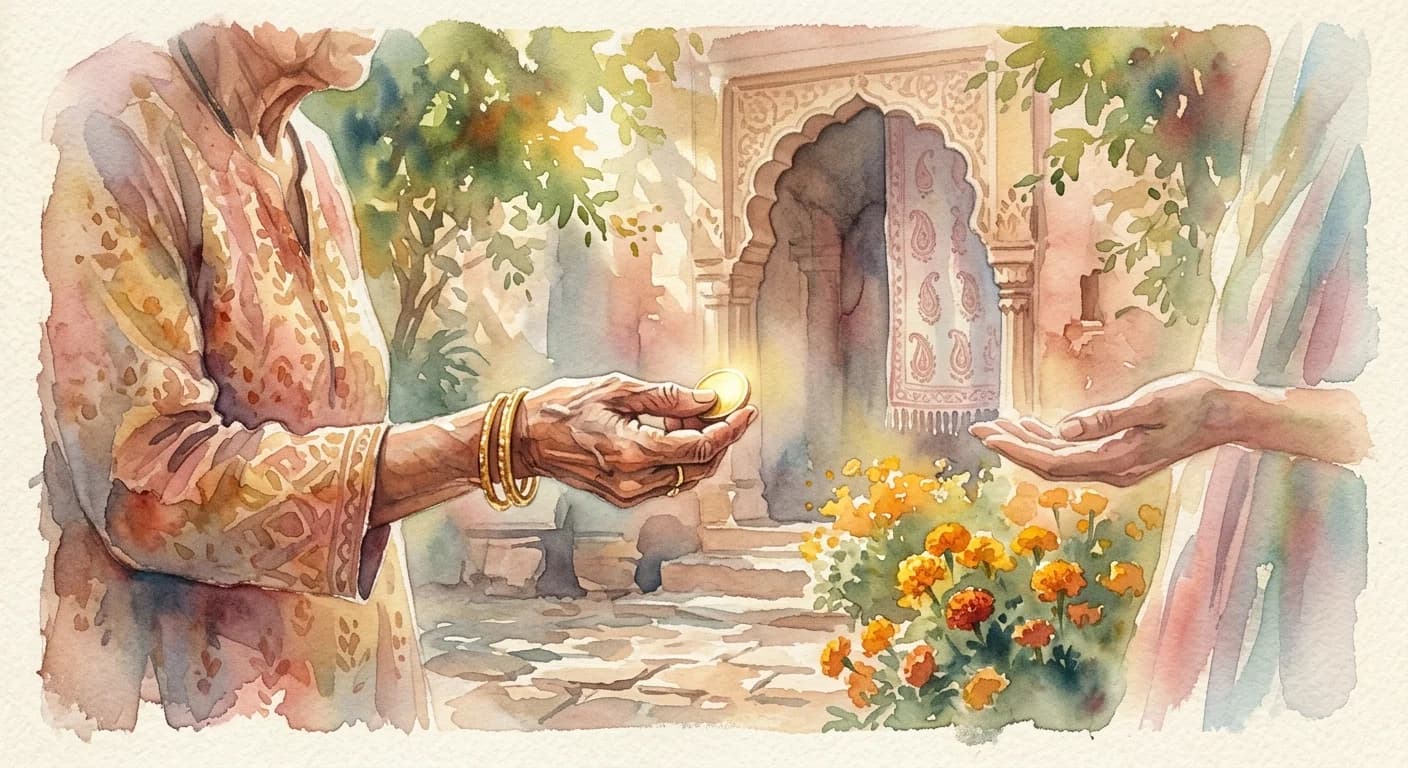
Chai-pani transcends a mere tip; it's a deeply ingrained cultural practice signifying a small, informal payment for minor services or everyday courtesies, often accompanied by a gesture of gratitude. This subtle exchange acknowledges the labor involved, whether it's a tea vendor, a porter, or someone helping with luggage, and helps oil the wheels of daily life. It fosters smooth interactions, builds community goodwill, and ensures that small acts of service are seen and appreciated, rather than taken for granted.
Literal Translation
Tea-water
The Story Behind the Word
The concept of chai-pani is deeply rooted in India's social fabric, where relationships and reciprocity often take precedence over purely transactional interactions. It reflects a collectivist culture where acknowledging mutual dependence and showing appreciation for even the smallest acts of service is vital for maintaining social harmony. Historically, in a society with varying economic strata, these small offerings often supplemented meager incomes, reinforcing a sense of community support. It's not just about money; it's about valuing human connection and the informal economy of favors and goodwill that underpins daily life. This practice reveals a world where personal connection and recognition can expedite processes more effectively than strict adherence to rules alone, reflecting a flexible and relationship-oriented worldview.
Experience It
Luggage at the Station
A family arrives at a bustling train station with heavy bags. A porter swiftly helps them navigate the crowd and load their luggage onto the train. As a gesture of thanks for his prompt and efficient service, the father hands him a small amount, saying, 'Yeh lo, chai-pani ke liye.' (Here, for tea-water.)
Quick Errand
A local shopkeeper needs a quick delivery from a nearby vendor. He asks a young boy running errands to fetch it for him. Upon the boy's return, the shopkeeper gives him a few rupees, explaining, 'Shukriya, beta. Apni chai-pani kar lena.' (Thanks, son. Get yourself some tea-water.)
The Deeper Meaning
Chai-pani reveals a philosophy of relational capitalism and social lubrication. It underscores the belief that human interactions are not purely transactional but are enhanced by gestures of appreciation and reciprocity. It reflects an understanding that fostering goodwill, even through minor financial acknowledgments, creates a more cooperative and efficient social environment, emphasizing the value of human connection in the everyday machinery of life.
Did You Know?
The phrase 'chai-pani' literally means 'tea-water,' highlighting its humble origins as an offering for a refreshing drink, symbolizing a small token of gratitude rather than a substantial payment.
How It's Used
Used to refer to small tips or payments for minor services, often in informal settings. It can also metaphorically refer to the general practice of greasing palms for small favors or smooth transactions.