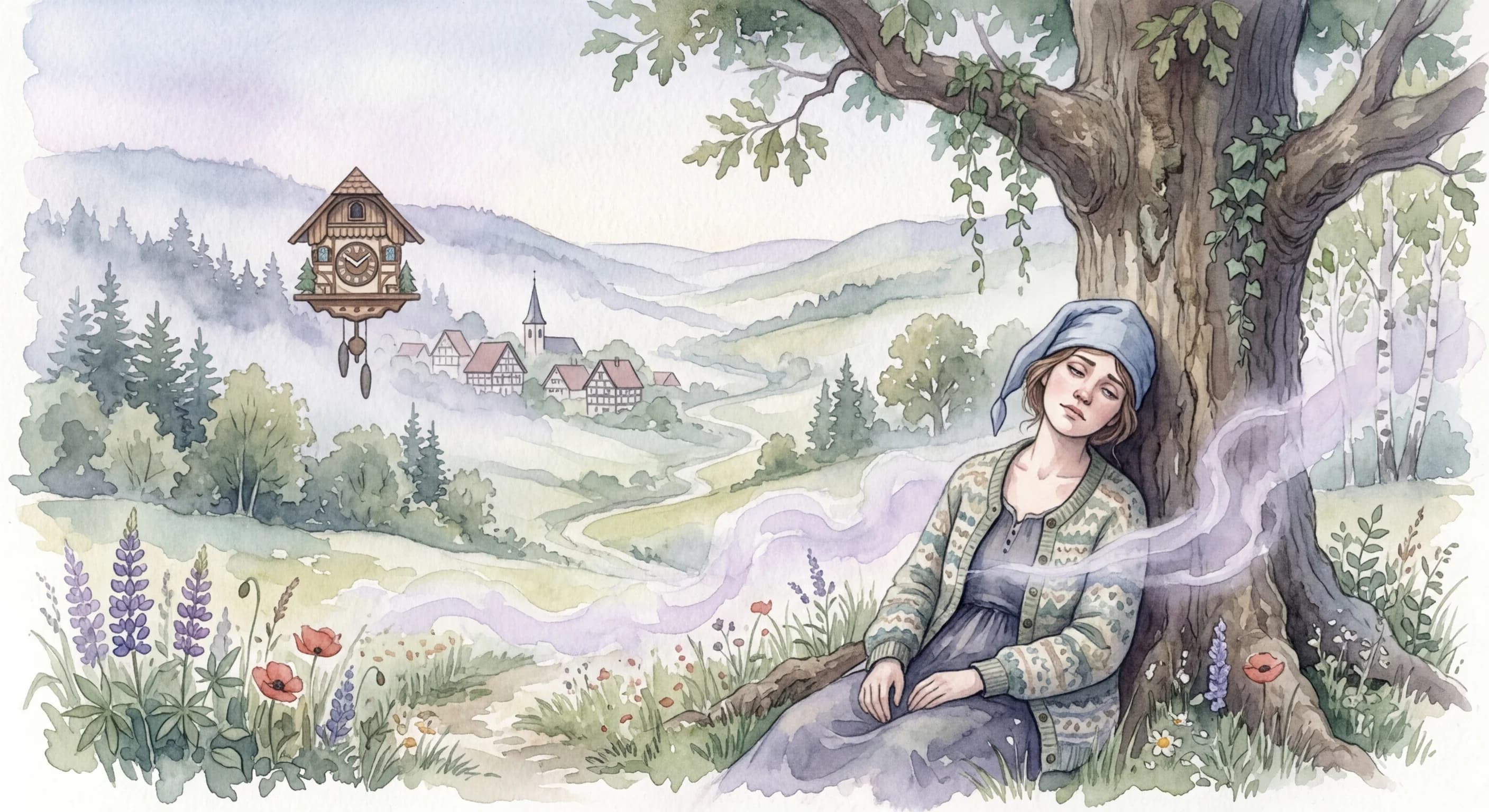
Schlafmütze
/SHLAHF-moot-seh/
Meaning
Schlafmütze, literally 'sleep cap,' is a charmingly gentle German colloquialism describing someone who is slow to grasp things, sluggish in action, or simply not fully present in the moment. It evokes the image of a person still wearing their nightcap, symbolically not yet fully awakened to the day's demands or realities. This term is not a harsh insult but rather a mildly chiding or even affectionate way to nudge someone towards greater alertness and engagement, suggesting they need to 'wake up' and join the flow of activity.
Literal Translation
Sleep cap
The Story Behind the Word
The concept of 'Schlafmütze' is deeply rooted in a German cultural appreciation for punctuality, efficiency, and being 'auf Zack' (on the ball). While not as severe as being 'lazy,' a Schlafmütze represents a minor deviation from these societal expectations. Historically, the sleep cap was a common item of nightwear, and its association with being 'not yet awake' or 'still in slumber' naturally extended to a metaphorical state of mental sluggishness. This term reflects a culture that values alertness and preparedness, even in informal social interactions. It highlights a preference for individuals who are sharp, engaged, and responsive, without being overly critical of those who occasionally fall short.
Experience It
Morning Meeting Slump
During the Monday morning team meeting, Klaus keeps asking questions about topics already covered. His colleague, exasperated but smiling, leans over and whispers, 'Na, du Schlafmütze, hast du den Kaffee noch nicht getrunken?' (Well, you sleepyhead, haven't you had your coffee yet?)
Missing the Joke
At a family gathering, Aunt Helga takes an unusually long time to understand a simple family joke that everyone else found hilarious. Her nephew playfully teases her, 'Ach, Tante Helga, du bist ja heute wieder eine richtige Schlafmütze!' (Oh, Aunt Helga, you're a real sleepyhead today!)
The Deeper Meaning
The term 'Schlafmütze' subtly reflects a cultural emphasis on active participation and mental acuity. It implies a mild disapproval of passivity or inattention, suggesting that one should always strive to be 'awake' and aware of their surroundings. It values presence and engagement, even in casual settings, underlining a societal preference for individuals who are responsive and 'on the ball' rather than disengaged or slow to react.
Did You Know?
The 'Schlafmütze' was a real piece of clothing, often made of soft fabric, worn to keep warm at night before central heating was common. So, the idiom has a very literal historical root!
How It's Used
Used informally to describe someone perceived as slow-witted, lazy, or out of touch with their surroundings. It can be said in jest or as a mild reprimand.