U.
HomeRegionsLanguagesEmotionsCollections
Find Your Word

“The limits of my language mean the limits of my world.”

— Ludwig Wittgenstein, Philosopher

Untranslatable

A curated collection of the world's most beautiful expressions—words that remind us language is humanity's greatest invention.

  • Home
  • Collections
  • Regions
  • Countries
  • Emotions
  • Tags
  • Contexts
  • Finder
  • Europe
  • Asia
  • Americas
  • Africa
  • Middle East
  • About
  • Contact
  • Privacy Policy
  • Terms of Service

2026 © Untranslatable. All rights reserved.

    /
    /
    1. Home
    2. /
    3. Asia
    4. /
    5. Mokita
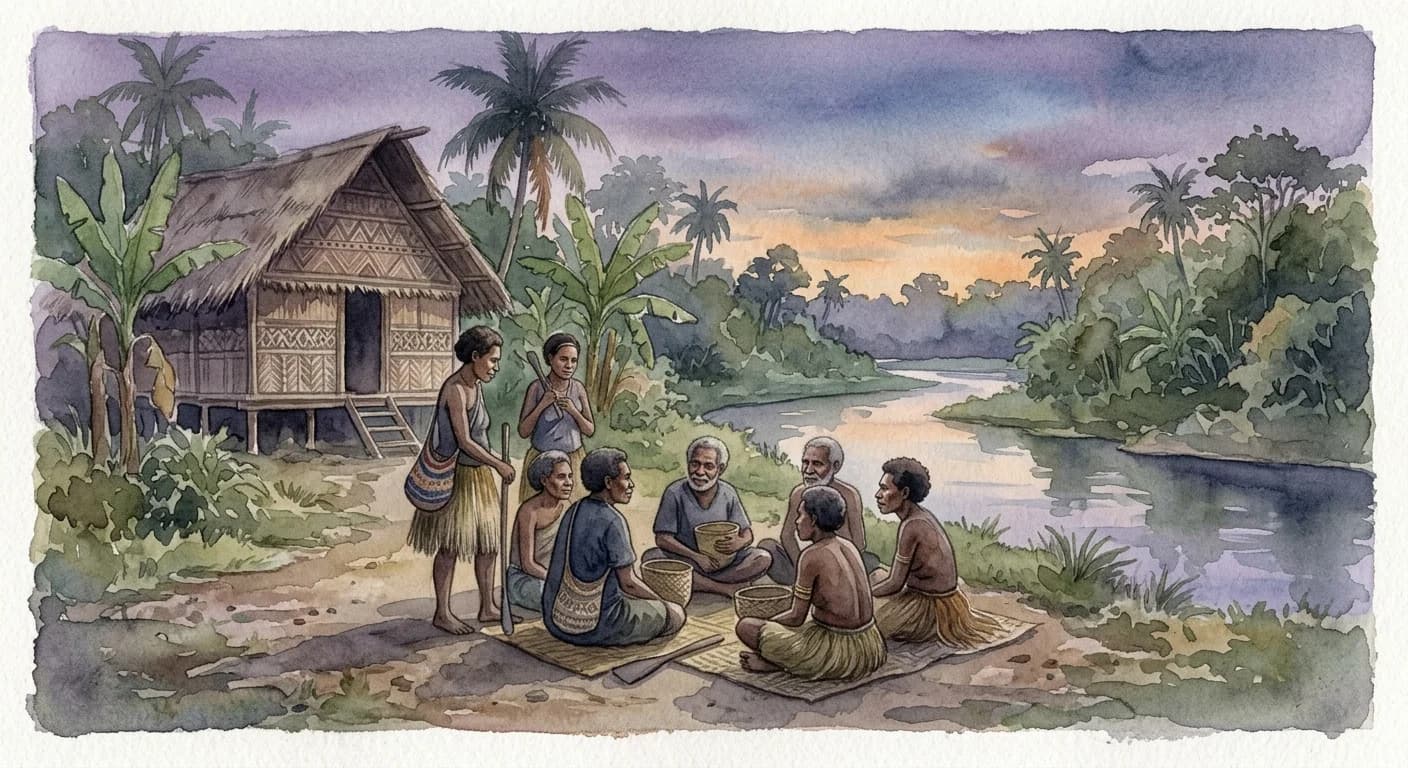
    Artistic representation of Mokita
    Kivila•
    🇵🇬Papua New Guinea

    Mokita

    /moh-KEE-tah/

    Meaning

    Mokita describes the profound, silent understanding shared within a community or among individuals regarding an obvious truth that remains unvoiced. It's the collective awareness of a situation, problem, or feeling that everyone implicitly recognizes but deliberately chooses not to articulate. This unspoken agreement often serves to preserve social harmony, prevent discomfort, or avoid direct confrontation, highlighting a cultural preference for indirect communication where silence carries immense weight and meaning.

    Literal Translation

    N/A

    The Story Behind the Word

    In many Papua New Guinean societies, particularly the Kivila, maintaining social cohesion and avoiding direct conflict are paramount. The concept of 'mokita' is deeply rooted in this cultural value, reflecting a sophisticated understanding of group dynamics and the power of unspoken communication. To voice an obvious truth that might shame, embarrass, or challenge someone directly could disrupt the delicate balance of community relations. 'Mokita' reveals a worldview where collective well-being often takes precedence over individual expression, and where wisdom is demonstrated not just by what is said, but by what is respectfully left unsaid. It's a mechanism for navigating complex human relationships with grace and subtlety, acknowledging shared reality without needing explicit confirmation.

    Experience It

    The Unfixed Roof

    For months, the village elder's roof has been leaking, a fact known to all, especially during the rainy season. Everyone offers help with other chores, brings food, but no one directly mentions the gaping hole in his thatch. It's a 'mokita,' a shared understanding that he's struggling, and direct mention would be an insult to his pride or an unnecessary reminder of his hardship.

    The Unspoken Departure

    A young man, restless for city life, has been slowly selling off his possessions. His family and friends sense his impending departure, and while they gather for meals and share stories, no one asks him about his plans. The 'mokita' is that he is leaving, and the silence allows him to depart on his own terms, preserving emotional composure for all involved.

    The Deeper Meaning

    Mokita reveals a philosophy where truth is not always best served by direct articulation. It emphasizes the wisdom of restraint and the importance of empathy in social interactions. This concept suggests that true understanding often transcends words, residing in the collective consciousness and the unspoken agreements that bind a community, prioritizing harmony and dignity above explicit verbalization.

    Did You Know?

    This concept illustrates how silence can be a powerful form of communication, conveying a shared understanding that is both profound and protective within close-knit communities.

    How It's Used

    Used to describe a situation where everyone knows the truth but no one says it out loud. It can be a personal realization or a collective unspoken agreement within a group.

    Emotions
    belonging,bittersweet
    Contexts
    community,family,friendship
    🇵🇬Papua New Guinea

    by Anya Petrova·Written Mar 14, 2026·Updated Apr 3, 2026

    Related Words

    Explore more
    SobremesaSpanish

    Sobremesa is the cherished, often extended period immediately following a meal, particularly lunch or dinner, where diners remain seated at the table to enjoy conversation, coffee, and digest not just the food, but the company itself. It’s a dedicated time for unhurried social bonding, storytelling, and shared laughter, transforming a simple meal into a profound communal experience. Far from just clearing the dishes, sobremesa is an integral part of Spanish social life, often lasting for hours.

    Wabi-sabiJapanese

    Wabi-sabi is the profound appreciation for the ephemeral, the imperfect, and the incomplete aspects of existence. It is about discovering beauty in the subtle textures of age, the unique character of flaws, and the gentle decay that marks the passage of time. This philosophy encourages a quiet acceptance of impermanence and a mindful connection to the natural world, finding elegance in simplicity and authenticity.

    IkigaiJapanese

    Ikigai is more than just a reason to get out of bed; it's a deeply personal and evolving sense of purpose that brings genuine fulfillment and joy to one's life. It represents the sweet spot where your passions, talents, needs of the world, and what you can be paid for beautifully converge. Discovering your ikigai often leads to a life lived with intentionality, resilience, and a profound connection to one's contributions. It's the intrinsic motivation that fuels a meaningful existence, regardless of external circumstances.

    NunchiKorean

    Nunchi is the sophisticated, almost telepathic, ability to instantly grasp the unspoken dynamics of any social situation, anticipating others' thoughts and feelings, and then responding with impeccable grace and timing. It's an acute form of social intuition, allowing one to navigate complex interpersonal landscapes by reading subtle cues like body language, tone, and context. Possessing good nunchi means effortlessly understanding the underlying emotional currents and adjusting one's behavior to maintain harmony and effectiveness, often without a single word exchanged.

    Featured in 1 collection

    🤝The Art of Togetherness